Cancer clinical trials: Stanford strives to enroll more diverse participants

Image by geralt,
Image by geralt

In a previous post, I described why I enrolled in a clinical trial at Stanford to treat my Hodgkin’s lymphoma. But I didn’t share the result: I received radiation therapy and chemotherapy — instead of the standard treatment of exploratory abdominal surgery — and I’m confident it helped me to be cancer free for the last 20 years.

However, my experience was unusual: Very few cancer patients participate in clinical trials and many aren’t even aware that they qualify for one. In order to advance cancer research, more participants are needed — especially ethnic and racial minorities who are vastly underrepresented in clinical trials. This is particularly important for diseases that occur more frequently or appear differently in non-white populations. For example, African American women have a 41 percent higher mortality rate for breast cancer than white woman, despite having a lower incidence rate, but only about 5 percent of clinical trial participants — for all diseases — are African American.

The Stanford Cancer Institute (SCI) knows this problem well.

“A key way participants learn about our cancer clinical trials is through physician referrals,” said Rachel Mesia, community engagement manager at SCI. “Physicians and oncologists practicing at Stanford educate their patients about clinical trials. They also network with physicians from other health-care practices to prompt them to make referrals.”

Participants also find Stanford cancer clinical trials through SCI’s clinical trials information service, which directs callers to an English- or Spanish-speaking outreach specialist who provides general clinical trials information and links callers to study coordinators.

Similarly, Mesia said SCI’s website and mobile app make it easier for patients to locate clinical trials that match their medical conditions using patient-friendly word searches. The mobile app will be updated in January to add new features.

“I’ve heard from many sick patients that they don’t have the energy to constantly go onto a search engine to see if any new clinical trials have opened up,” said Sarah Pelta, SCI’s communications manager. “That’s why were putting push notifications into our mobile app, as well as the ability to sign up for email notifications. So patients can just receive an email when a trial opens up that matches their search parameters.”

Also key to successful recruitment is the inclusion of stories from past clinical trial participants to help make a human connection. “From our website analytics and from speaking to patients, we know that patients really want to see what other patients are experiencing. So we’ve added patient photographs and videos to our website,” Pelta said.

SCI tackles the challenge of minority recruitment by reaching out to particular communities, in part by distributing information at community health and cancer patient events, Mesia said. “We also partner on educational presentations with a variety of community organizations, such as cancer support groups, social service organizations and churches,” she said. “And we participate in some ethnic-specific media interviews, including television, radio and newspapers.”

In addition, SCI has interactive kiosks dispersed throughout their cancer centers that provide basic clinical trials information and a search tool — in English, Spanish, Chinese and Russian.

Over the last six years, SCI has also held a Cancer Clinical Trials Awareness Week event to further increase visibility. In April 2017, this will be expanded to a month-long event highlighting genomics, immunology and other targeted approaches to cancer. Everyone is invited, and they’re planning to make the talks available online to expand access, Mesia told me.

The SCI has adequate participation overall, but they are still struggling to recruit minorities. “Currently our greatest disparity lies amongst the African American population,” Mesia said. “We’re doing okay with African Americans who are existing cancer patients at Stanford, but there is an issue when we look at our catchment area as a whole.” One barrier is that fewer African Americans live near Stanford’s cancer centers, and those living in more distant Bay Area counties have significant commute challenges, she said. “The reality is that some people’s personal lives make it unfeasible to be part of a Stanford clinical trial.”

But that just means the SCI staff need to work even harder. “We need social and health equity for all populations who are getting cancer,” Mesia said.

This is a reposting of my Scope blog story, courtesy of Stanford School of Medicine.

Cancer clinical trials: Why I chose to participate, but so many others don’t

Photo by geralt
Illustration by geralt

When I was 29 years old, I was one of the healthiest people I knew. I biked 10 miles to work, played ultimate frisbee, slept at least eight hours each night and ate nutritious, organic food. And then I found an enlarged lymph node in my neck.

My life suddenly became a whirlwind of doctor appointments and diagnostic tests: chest X-rays, blood tests, CT scans, a lumbar puncture, lymph node biopsy and a lymphangiogram. The tests showed another enlarged lymph node near my heart, and I was diagnosed with stage IIA Hodgkin’s lymphoma.

Unbelievably, I had cancer. I was faced with scary medical decisions that could impact both my survival and fertility. How do you make those kinds of decisions? As a scientist, I immediately started researching Hodgkin’s and talking to medical experts.

According to my physician, the standard treatment for stage II Hodgkin’s entailed exploratory abdominal surgery in order to biopsy my organs and check for further signs of the disease, as well as removal of my spleen. This would be followed by radiation therapy to my chest and neck.

Most people choose the standard treatment — it’s the gold standard for a reason, right? However, I wasn’t convinced that I wanted the surgery, because my diagnostic tests showed no sign of the disease below my diaphragm. I didn’t want to unnecessarily lose my spleen, which plays a vital role in the immune system by filtering blood and fighting certain deadly bacteria.

Luckily, my physician recommended another treatment option: a Hodgkin’s clinical trial at the Stanford Cancer Institute. This phase III clinical trial was testing whether a specialized chemotherapy cocktail was more effective at treating stage II Hodgkin’s than the standard abdominal surgery, and the investigators’ previous clinical trials had shown excellent results with similar chemotherapies.

So I struggled with whether I wanted radiation therapy combined with exploratory surgery or chemotherapy — both were scary and both would have long-term side effects. However, it wasn’t really my decision. I could only decide whether or not to enroll in Stanford’s clinical trial, and then the treatment option would be randomly selected for me. Eventually I decided I could live with this lack of control, because both treatments were going to be effective.

People typically participate in a clinical trial to “advance medicine” or “improve the lives of others,” according to the Center for Information and Study on Clinical Research Participation. While I was happy to contribute to scientific research, I enrolled in the clinical trial for myself — to get the best care. I knew that other study participants came from across the world to Stanford since it was one of the premier places for Hodgkin’s treatment, and I lived just five miles away.

I was fortunate in many other ways as well; I had personal health insurance. I also had flexible hours as a research scientist and could work full-time during treatment, so I didn’t have financial worries. In addition, I was used to communicating with doctors as peers, so I didn’t fear being a ‘guinea pig.’

These types of barriers — limited access to trials, financial concerns and trust issues — prevent many people from participating in clinical trials. Nationwide, only about 3 percent of adults with cancer participate in clinical trials. As a result, about 40 percent of all oncology clinical trials fail to meet their minimum patient enrollment, which has a major impact on cancer research.

Researchers use many tactics to attract trial participants. In an upcoming post, I’ll share what I learned about Stanford’s efforts to boost the enrollment of minorities in its oncology clinical trials.

This is a reposting of my Scope blog story, courtesy of Stanford School of Medicine.

When is snoring worth worrying about? A Q&A with a Stanford sleep surgeon

Illustration by Clker-Free-Vector-Images

I’m a sensitive sleeper when it comes to snoring. When I visit my dad, his snoring — through walls and doors — keeps me awake. Pondering an upcoming holiday visit got me wondering: “Is that annoying snoring something to worry about?”

Snoring results from interrupted breathing during sleep. When someone’s upper airway repetitively collapses, vibrations from the soft palate and tongue can create the characteristic sound of snoring.

“Habitual snoring is a nuisance to bed partners,” said Stanford sleep surgeon Stanley Yung Liu, MD, DDS. “Many patients seek care because they’ve been asked to leave the bedroom and sleep on the living room couch.”

But snoring is often more than a nuisance. According to Liu, a patient should see a sleep specialist if snoring is accompanied by daytime complaints of sleepiness, headaches, or mood disturbances such as feeling anxious, irritable or depressed.

“Asleep patients are often unaware of breathing interruptions that have serious health risks,” Liu said. “Snoring is a warning sign of obstructive sleep apnea (OSA) — but not every snorer has sleep apnea, and not everyone with sleep apnea snores. Snoring and OSA can lead to serious health risks such as arrhythmia, high blood pressure, neurocognitive impairment and accidents due to sleepiness.”

While the bed partner is frequently the first to ‘diagnose’ snoring and OSA, the gold standard diagnostic test is an overnight sleep study called a polysomnography. Performed at a sleep lab or at home, the study can track sleep disturbances and loss of oxygenation due to breathing interruptions.

Treatment greatly varies depending on whether a patient’s snoring is associated with obstructive sleep apnea and at what level — none, mild, moderate or severe. Liu explained the main treatments options:

CPAP (Continuous positive airway pressure) is used for patients with all levels of snoring and OSA. A patient wears a nasal, oral or full-face mask that delivers positive air pressure to the upper airway during sleep. This stents open the airway, and prevents snoring and airway collapse.

An oral appliance may be recommended for patients with snoring and mild OSA, when CPAP is not well tolerated. Nearly 40 percent of American patients are unable to use CPAP adequately. Worn like a night guard, the oral appliance pushes the lower jaw forward and stabilizes the airway.

Surgical solutions for snoring and OSA can also be highly effective. Contemporary treatment planning is patient specific with consideration of upper airway anatomy, disease severity and patient preference.”

Finally, Liu doesn’t want patients to get discouraged if one treatment option doesn’t work. He recommends going to a sleep center like Stanford, which has a comprehensive ‘playbook’ of solutions that can be individually adapted. “We can get folks sleeping on living room couches back into their bedrooms, and waking up feeling refreshed!”

This is a reposting of my Scope blog story, courtesy of Stanford School of Medicine.

Motor control problems may be core issue for people with autism

Photograph by Michael Phillips

If you’ve ever had an MRI scan, you know that it can be hard to lie still in the noisy, claustrophobic scanner. People often move involuntarily, requiring scientists to correct or eliminate the imaging data during movement.

Recently, a collaboration of Rutgers University and Columbia University researchers used this seemingly unhelpful data to further their understanding of a neurodevelopmental disease.

“We asked ourselves, ‘What could these involuntary movements, which researchers usually consider a nuisance, tell us about autism?’” Elizabeth Torres, PhD, an associate professor of cognitive psychology at Rutgers University, said in a news release.

The neuroscientists analyzed functional magnetic resonance imaging (fMRI) data for 1048 participants, aged 6 to 50 years old, including individuals with autism spectrum disorders and healthy controls. The data was publicly available primarily through the Autism Brain Imaging Data Exchange databases.

The researchers determined that people with autism had more problems controlling their head movements than healthy controls. They also found that motor control problems were exacerbated with the presence of secondary neuropsychiatric diagnoses, lower verbal and performance intelligence and autism severity, as reported in a recent paper in Scientific Reports.

“For the first time, we can demonstrate unambiguously that motor issues are core issues that need to be included in the diagnosis criteria for autism,” Torres said in the release.

In addition, they found that psychotropic medications, commonly used to treat people on the autism spectrum, were associated with lower levels of motor control. These medications include anti-convulsants and anti-depressants. Autistic people who were taking more than one psychotropic medication moved the most during the fMRIs, and their movement worsened over the scanning session.

The researchers conclude in their paper, “Nevertheless, it remains to be demonstrated if changes in head micro-movements directly capture targeted changes in symptomology brought about by a specific medication.” Their findings are also complicated by the simultaneous presence of autism and other diseases, such as attention deficit hyperactivity disorder. So more research is needed.

This is a reposting of my Scope blog story, courtesy of Stanford School of Medicine.

Genetic counselor offers insights on testing for inherited heart conditions

Illustration by waldryano

Genetic tests are now available for many conditions — everything from Alzheimer’s to familial hypercholesterolemia. But genetic testing isn’t necessarily the best option for everyone, and some of the tests aren’t highly accurate yet.

However, clinicians agree that genetic testing is important for people with hereditary heart conditions in their families. That’s why Stanford created the Stanford Center for Inherited Cardiovascular Disease, which specializes in caring for patients and their families with genetic disorders of the heart and blood vessels. Genetic counseling is a key part of the center, so I spoke with Colleen Caleshu, MSc, their lead genetic counselor to learn more.

What inspired you to become a genetic counselor?

“When I was in college, I was very interested in the science and molecular basis of disease. I was considering a PhD in genetics, but I was also drawn to peer counseling and psychology courses. When I looked at genetic counseling programs, they required an unusual combination of science and humanities such as psychology, ethics, genetics and biochemistry. Before going to graduate school, I spent a year with a research team that focuses on the psychological impact of familial breast cancer risk — that experience solidified that genetic counseling was what I wanted to do. For me, it comes down to a combination of loving the science and being intellectually challenged by a field that is moving really quickly, while also really being able to help people.”

What cardiovascular diseases does genetic testing identify?

“Genetic testing isn’t yet useful for all diseases or for all people. For cardiology, we recommend genetic testing when a patient is diagnosed with an inherited disease. The two most common inherited cardiac diseases are familial hypercholesterolemia and hypertrophic cardiomyopathy. We also care for patients with several other inherited heart muscle, arrhythmia and aorta diseases. If you put all of these genetic cardiac diseases together, greater than one in a 100 people have one in their genes.”

What is a typical genetic counseling appointment like?

“The clinic appointment is about an hour long. It involves establishing a relationship with the patient and their family to understand: Who are they? What are they experiencing? What are their values? What do they most need help with right now? Then we often shift to the medical side of things with a comprehensive four-generation family history. This involves a lot of detective work with the patient and afterwards — calling family members and searching medical records, death certificates and autopsy reports. The rest of the visit is a mixture of medical and genetics education, as well as psychological counseling. All medical conditions can have a psychological impact, but the genetic nature of these diseases mean they can strike healthy people at an unusually early age compared to most heart diseases. And they have reproductive and family planning implications.

Our genetic counselors also function within a broader, multidisciplinary team, including a cardiologist who gives his assessment, diagnosis and management recommendations. And all of this is based on a separate, hour-long intake appointment with a nurse that happens prior to the clinic appointment. “

How can genetic counseling help?

“Genetic counseling definitely benefits both the patient and the patient’s family — by helping them cope better with the familial heart condition and by helping healthy family members get the necessary medical workup and tests.

For example, a patient came to us a few years ago after being diagnosed with hypertrophic cardiomyopathy. Several generations of his family had the disease, and two of his siblings died suddenly from it a few years apart. He was really wrestling with whether or not to get an implanted defibrillator. He came to our center to get everything we offer.

We had several visits with him and his family members. At one point we had more than 10 family members in the room — the patient, siblings, nieces and nephews — grappling with a lot of pain and grief. We provided grief counseling and we addressed what it meant medically and psychologically for each family member. Using genetic testing, we were able to identify a disease-causing genetic variant in the original patient and his family. By proactively checking the heart of other family members, we were also able to diagnose people who didn’t know they had the disease — including members who went on to get implanted defibrillators to protect them from sudden death. Genetic counseling can absolutely save lives.”

This is a reposting of my Scope blog story, courtesy of Stanford School of Medicine.

Bread baking becomes business for Stanford infectious disease researcher

basketfulli_corrected
Photograph courtesy of Fiona Strouts

Making bread is an art, science and passion project for Fiona Strouts, PhD, a Stanford research scientist in infectious diseases.

Her baking began as a hobby several years ago, but now Strouts operates a business, L’atelier du Pain, and sells her whole-grain bread at the Portola Valley Farmers Market. I exchanged emails with her recently about her work as a professional baker and Stanford researcher.

How did you start baking bread?

“I learned to make bread about eight years ago from my Italian housemate when I lived in London during graduate school. She taught me to make 100 percent whole-wheat sourdough bread that we would bake together on the weekends. The bread was fairly dense, and provided good fuel for cycling.

I now make whole-grain, naturally leavened breads using mostly California-grown wheat. The favorite seems to be the Sprouted Lentil & Rye bread. But my personal favorite for every-day eating is the Sonora Field Blend; it has great flavor and aroma. Sonora wheat was one of the first varieties planted in California in the early 1800s.” 

I’ve heard that you grind your own wheat. Why?

“Yes, I stone-grind my own wheat because I want to capture the flavor and nutrients, which come mostly from the germ and bran portions of the wheat berry. I buy bags of wheat berries directly from farmers, and then mill them into flour right before I mix the dough. Milling the wheat myself also ensures that the flour is 100 percent whole grain. Wheat is very nutrient-dense compared with other grains, but only when it is in the truly whole-grain form — nothing added and nothing removed from the original wheat grain.”

Why did you decide to turn your hobby into a business?

“A number of things inspired me, and they all came together a few months ago. I grew up in France, and in the village where my parents live there was a local baker and friend. The highlight of the week was going to the market on Saturday and then stopping by his house to pick up bread. There would be others from the village there and we’d share a savory pastry and a glass of wine before picking up the bread and going home for lunch. I miss that sense of community and I wanted to re-create something similar.

Then, almost a year ago I started learning more about all of the farmers in California who are passionate about sustainable agriculture and who are growing different varieties of wheat —both ancient and modern. I loved discovering the different flavors and properties of these wheats for bread making.

In addition, I’ve always been very interested in health and population health. Making whole-grain, naturally leavened breads is a way to provide a healthy option for people.”

How do you juggle baking, running a business and doing research?

“Good question! It takes organization and prioritization. I used to bike race, and the training required a lot of discipline. But starting the business was less structured and it took longer than I thought it would, as I was doing it in my spare time. I spent several weekends practicing baking large batches of bread and sharing it with some of my labmates, which I think they appreciated. The market is one day per week and it’s a manageable scale for one person. I’ve reduced my full-time equivalent [work] hours accordingly to be able to do both and my advisor has been very supportive.”

Explain your research at Stanford. Has it given you any insights into bread making?

“I work in the lab of David Relman, MD, on a project focused on improving the diagnosis and prognosis of systemic infections in humans, using sequencing of both microbial nucleic acids and host transcripts derived from blood. I am trying to understand what those blood profiles look like during states of health. And whether we’re able to detect the presence of bacteria in the blood of healthy people, to help interpret what we see in sick individuals with suspected infections.

My background has helped me understand sourdough bread making from the aspect of microbial fermentation and the effects of time and temperature. I’ve actually become quite a keen home fermenter. I have various other projects going — including yoghurt, kefir, kombucha, shoyu and miso — for which I converted the dishwasher into a fermentation chamber with a little space heater. Both baking and cooking are science, so it has also helped more generally in figuring out the properties of different types of wheat. I run a lot of bread experiments at home!”

This is a reposting of my Scope blog story, courtesy of Stanford School of Medicine.

How primary care physicians can embrace population health

Photo by Guillaume
Photo by Guillaume

The Centers for Medicare & Medicaid Services’ new payment model, called the Quality Payment Program, issues a powerful challenge to primary care physicians: Improve the quality of care and save money, by focusing on population health.

What, exactly, does that mean? In part, it means that physicians will need to consider why some groups of people are healthy and why others are not — so they make care decisions that improve the health of many people.

It sounds daunting. However, it is vital, said J. Lloyd Michener, MD, professor and chair of the Duke Department of Community and Family Medicine in a recent article in Medical Economics. 

“Small practice physicians must participate in population health; it’s the future and it’s how they’re going to get paid,” Michener said. “It’s going to be really hard not to participate in this model of care.”

There are some straightforward steps physicians can take, he said, urging physicians to:

  • Build partnerships with other care providers and health-care systems
  • Ensure electronic health records, claims data systems and other software tools capture the necessary data such as patient identification and provider-performance measures
  • Look for patterns in patient care

Population health management programs use software tools to aggregate patient data and provide a comprehensive clinical picture of each patient. Physicians then use the data to track and hopefully improve clinical outcomes while lowering costs.

For example, a primary care physician could look at all of her asthma patients that aren’t getting better, identifying how often they’ve been to the emergency room and why. This might lead to the realization that her patients are mixing up their prescription medications, so she needs to educate them further about when to use a rescue inhaler verses control inhaler. Or maybe the frequent ER visitors all live near each other, and there is an environmental issue.

Michener offered words of reassurance as well:

“Primary care physicians need to know that they have the power to quickly analyze groups of patient data and intervene when necessary to make better treatment and care decisions that lower the cost of care, improve outcomes, and raise their ability to earn income under a value-based payment system. That’s an incredibly effective way to deliver care.”

This is a reposting of my Scope blog story, courtesy of Stanford School of Medicine.

New models may help predict diabetes progression

Photo by InfoWire.dk

Diabetics exposed to consistently high blood glucose levels can develop serious secondary complications, including heart disease, stroke, blindness, kidney failure and ulcers that require the amputation of toes, feet or legs.

In order to predict which diabetic patients have a high risk for these complications, physicians may use mathematical models. For example, the UKPDS Risk Engine calculates a diabetic patient’s risk of coronary heart disease and stroke — based on their age, sex, ethnicity, smoking status, time since diabetes diagnosis and other variables.

But this strategy doesn’t provide the accuracy needed by doctors. In response, a research team at Duke University has developed machine-learning computer algorithms to search for patterns and correlations in EHR data from approximately 17,000 diabetic patients in the Duke health system.

The group, led by Ricardo Henao, an assistant research professor in electrical and computer engineering, has demonstrated more accurate predictions than the UKPDS Risk Engine. A recent news story explains:

“This new model can project whether a patient will require amputation within a year with almost 90 percent accuracy, and can correctly predict the risks of coronary artery disease, heart failure and kidney disease in four out of five cases. The model looks at what was typed into a patient’s chart — diagnosis codes, medications, laboratory tests — and picks up on which pieces of information in the EHR are correlated with the development of a comorbidity in the following year.”

The Duke researchers plan to improve the model by training their machine-learning algorithms on a larger data set of diabetic patients from additional hospitals.

However, relying on EHR data has drawbacks. For instance, a patient’s EHR may be incomplete, particularly if the patient doesn’t consistently see the same doctors. Another major challenge is gaining access to the medical records for research. The Duke team had to contact all 17,000 patients to get their informed consent and may encounter similar challenges for a larger scale project.

This is a reposting of my Scope blog story, courtesy of Stanford School of Medicine.
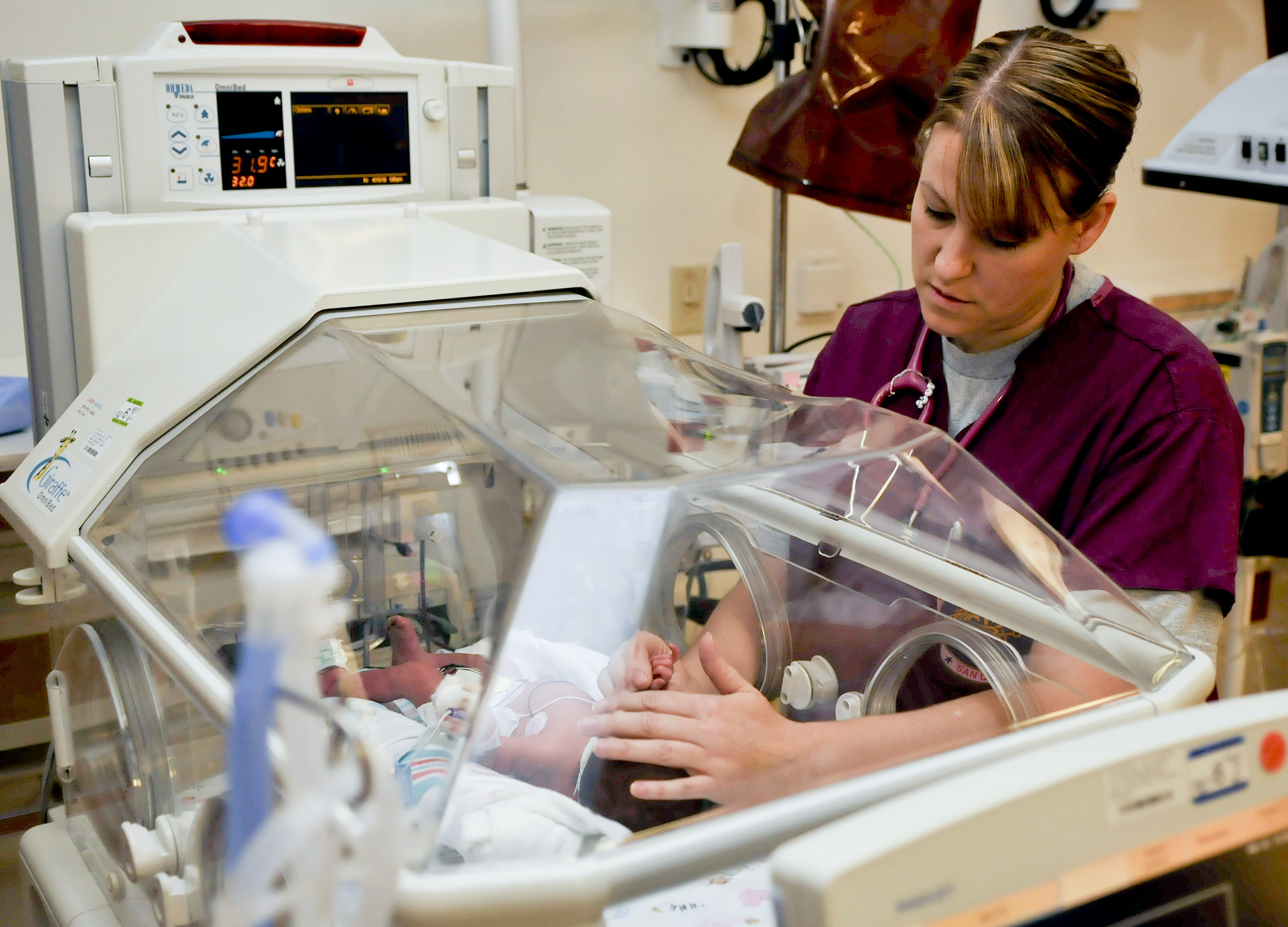
How does burnout affect NICU caregivers and their patients?

a_nurse_examines_a_newborn_baby
Photo by U.S. Navy

We’ve all felt burned out at work due to prolonged stress — physically and emotionally exhausted, unmotivated, frustrated and maybe even cynical. But in the health-care field, burnout can harm patients as well as workers.

That concern prompted Stanford researchers to investigate the prevalence of caregiver burnout in neonatal intensive care units (NICUs) to determine whether it is correlated with healthcare-associated infections. The study is reported in the Journal of Perinatology.

The research team analyzed survey data from the California Perinatal Quality Care Collaborative, including responses from over 2000 providers — physicians, nurses and other workers — in 44 California NICUs who cared for over 4000 very low birth rate infants. One quarter of the respondents reported symptoms consistent with burnout on average, but burnout prevalence varied from 7.5 to 54.4 percent within each NICU.

I spoke recently with the study’s lead author, Daniel Tawfik, MD, a critical care fellow at Lucile Packard Children’s Hospital.

What inspired you to investigate caregiver burnout in NICUs?

“Throughout my medical training, I received very little education on the concepts of mindfulness and medical provider well being. But the challenging experiences and stressful situations encountered every day in the hospital must have some impact on the providers’ mental health and the care they deliver to their patients. This study was a way to evaluate this relationship and hopefully spur greater awareness of burnout and encourage research to address its role in patient care.”

What did you find? Were there any surprises?

“We expected to find increased healthcare-associated infections in NICUs with high levels of burnout, since preventing infections in these vulnerable patients takes a great deal of vigilance.

We were a little surprised that there wasn’t a strong relationship apparent when we analyzed the data. This may be due to the relatively small number of NICUs and the fact that infections were fortunately not very common in this group of infants.

Although our most recent analyses show increased burnout among large NICUs, our research group previously reported improved outcomes among large NICUs. It’s possible that the largest NICUs have increased burnout, but they also have systems in place to improve the quality of care — counteracting the effect that burnout may have on quality indicators.

We were also a little surprised to find that physician burnout [approximately 17 percent] was less prevalent than non-physician burnout [approximately 28 percent]. But this discrepancy is also in line with our previous studies in which nurses reported lower ratings of safety culture and a desire for more respect and input in decision-making. It’s possible that these differences contributed to increased burnout among nurses, who made up the majority of our survey respondents in our new study.”

How can your results be used to improve NICU care?

“These results highlight the prevalence of burnout among NICU providers, particularly among nurses. Whether or not this burnout affects quality of care in measurable ways, it suggests that we need interventions to prevent and reduce burnout in NICUs and likely in other care settings.

The NICU at Lucile Packard Children’s Hospital is one of several NICUs around the country participating in the WISER randomized-controlled trial, which is evaluating the effectiveness of burnout interventions such as daily recall of positive events using the Three Good Things tool. The study is being led by Jochen Profit, MD, and Bryan Sexton, PhD, who have been my mentors and co-authors. It’s our hope that if this intervention proves beneficial that it could be expanded to other hospital units and clinics.”

This is a reposting of my Scope blog story, courtesy of Stanford School of Medicine.

Saliva tests may help identify marijuana-impaired drivers

Photo by ashton
Photo by ashton

As of the recent election, seven states and the District of Columbia have now legalized marijuana for recreational use and 19 other states have legalized medical marijuana. And this legalization has raised concerns about driving under the influence of marijuana.

A number of research groups are now focusing on ways to identify drivers impaired by marijuana. As recently reported by KQED, the Center of Medicinal Cannabis Research at the University of California, San Diego, are working to “gather data about dosages, time and what it takes to impair driving ability — and then create a viable roadside sobriety test for cannabis.” And a group of Stanford engineers have created a test called a ‘potalyzer.’

The Stanford effort was led by Shan Wang, PhD, a Stanford professor of materials science and engineering and of electrical engineering. He and his colleagues developed a mobile device that detects the amount of tetrahydrocannabinol (THC) molecules in saliva. (THC is the main psychoactive agent in marijuana.)

The test would allow police officers to collect a saliva sample from the driver’s mouth with a cotton swab, analyze it with the new device, and then read the results on a smartphone or laptop in as little as three minutes.

The technology combines magnetic nanotechnology with a competitive immunoassay. During the test, saliva is mixed with antibodies that bind to both THC molecules and magnetic nanoparticles. The mixture is placed on a disposable test chip, inserted into the handheld device and the THC-antibody-nanoparticles are detected by magnetic biosensors. The biosensor signal is then displayed on a Bluetooth-enabled device.

Wang’s group focused on developing a THC saliva test because it is less invasive and may correlate better with impairment than THC urine or blood tests. Also key is the need for a very sensitive test. A Stanford news release explains:

“Wang’s device can detect concentrations of THC in the range of 0 to 50 nanograms per milliliter of saliva. While there’s no consensus on how much THC in a driver’s system is too much, previous studies have suggested a cutoff between 2 and 25 ng/ml, well within the capability of Wang’s device.”

There is still a lot to do before police can deploy this ‘potalyzer’ device, including making it more user-friendly, getting it approved by regulators and investigating whether there is a better biomarker to detect marijuana impairment than THC. In addition, the test may not work well for THC edibles, the researchers wrote in a recent paper published in Analytical Chemistry.

On the upside, the Stanford technology could also be used to test for morphine, heroin, cocaine or other drugs — and for multiple drugs at the same time.

More research is needed, but there is now a new funding source in California: Proposition 64 allots millions of dollars per year to research marijuana and develop ways to identify impaired drivers.

This is an expanded version of my Scope blog story, courtesy of Stanford School of Medicine.