Photograph courtesy of Ianier67 via Creative Commons.
A friend once told me that it was 100 times harder for him to quit smoking cigarettes than to quit drinking alcohol. He was successful and hasn’t smoked a cigarette for over 10 years, but he’s a lucky minority. I have several other friends who still struggle with smoking cigarettes – willpower, counseling, exercising, nicotine replacement patches and antidepressants like Zyban haven’t been enough.
Clearly nicotine is highly addictive. About 45 million people in the U.S. smoke cigarettes, even though cigarette smoking leads to 1 of every 5 deaths each year. In a National Health Interview Survey, over half of the smokers reported trying to quit in the past year without success.
In the future, these smokers may get a vaccine to help protect them from nicotine addiction.
Researchers from Weill Cornell Medical College and Scripps Research Institute have developed a new vaccine that may treat nicotine addiction, by blocking the pleasurable sensations that nicotine creates in the brain. Dr. Ronald Crystal and his colleagues have demonstrated that they can prevent nicotine from reaching the brain in mice using a single injection of vaccine. If these findings are confirmed in people, this vaccine could be an effective therapy to help prevent nicotine addiction.
For more information about this research, check out my KQED Quest blog.
Photograph courtesy of Hacklock via Creative Commons.
I’m one of those grocery shoppers who turns the package around to check the ingredients, before I buy it for the first time. Checking food packages is relatively easy, because I expect only recognizable simple ingredients. As they say, would my Great Grandmother recognize this as food? What about sunscreen? How can you tell if it’s safe?
The Environmental Working Group (EWG) has done extensive research to evaluate the effectiveness and safety of over 1800 sunscreens on the market, so you don’t have to. Their sixth annual 2012 Sunscreen Guide lists the best and worst sunscreens. It’s worth a look to make sure your sunscreen isn’t on their “Hall of Shame.” The EWG also provides detailed information about potentially harmful sunscreen ingredients.
For more information about sunscreen safety, check out my KQED Quest blog.
Photograph courtesy of Euromagic via Creative Commons.
My nephew is one of the 6 million children in the United States with food allergies. He has a severe nut allergy, requiring an EpiPen (adrenaline) injection and immediate trip to the emergency room after contact with someone whose touched or eaten nuts. His rapid onset of life-threatening symptoms includes swelling of the throat, difficulty breathing, and hives. He isn’t alone. The number of children with peanut allergies has tripled in the last decade. Every three minutes a food allergy reaction sends someone to the emergency room and every 6 minutes the reaction is one of life-threatening anaphylaxis.
However, the 15 million people with food allergies now have hope. New clinical trials show promise for three experimental treatments: oral immunotherapy, sublingual immunotherapy and food allergy herbal formula-2. Scientists are also trying to understand how food allergies develop to help prevent them.
For more information on food allergies, check out my KQED Quest blog.
University College Hospital in London. Courtesy of Steve Parkinson via Creative Commons.
Standard prostate cancer treatments, such as prostatectomy surgery or radiotherapy, often lead to substantial side effects. These include erectile dysfunction (affecting 30-70%) and urinary incontinence (affecting 5-20%). However, these unwanted side effects could be reduced, if prostate cancer treatments could target just the cancer tumors while harming less of their surrounding healthy tissue.
A promising “proof of concept” research study has just demonstrated that a new technique to treat localized prostate cancer may significantly reduce side effects compared to standard treatments. This study was carried out by researchers from University College London and the results were just published in the peer-reviewed medical journal The Lancet Oncology.
This new treatment uses high-intensity focused ultrasound (HIFU) to target and destroy prostate tumors, while causing minimal damage to their surrounding nerves and muscles. A small ultrasound probe is placed close to the prostate through the patient’s rectum. This probe emits a narrow beam of intense sound waves that heat the targeted cells to 80 C for one second, killing a targeted area about the size of a grain of rice. The probe is then moved to focus and destroy additional cancerous areas. The procedure is performed in the hospital under general anesthesia and most patients are back home within 24 hours.
Surgeon Hashim Ahmed from University College Hospital in London demonstrates in a BBC News short video how this probe heats only a small target area.
The “proof of concept” HIFU study was primarily focused on assessing the frequency and extent of side effects, rather than the success of the prostate cancer treatment. Forty-one men participated in the study, ranging in age from 45 to 80 years old. All participants had localized prostate cancer ranging from low to high risk, where 30 men (73%) had intermediate to high-risk disease. They also had a prostate volume of 40 mL or less in order to avoid an excessively long procedure. They had received no previous prostate treatment.
The prostate cancer tumor locations were identified using multiparametric MRI (magnetic resonance imaging) and a template-prostate-mapping biopsy. The identified tumors were then targeted by the HIFU treatment. The men were followed up at one, three, six, nine and twelve months after the HIFU procedure. Each follow-up included: (1) a PSA blood test to measure the levels of prostate specific antigen protein being produced by the prostate, since PSA is generally elevated for men with prostate cancer; and (2) questionnaires that evaluated side effects. In addition, the MRI and biopsy tests were repeated as part of the 6 months follow-up and an additional MRI was performed after a year.
Researchers found that a year after the HIFU treatment, 89% of the men still had erectile function and all were still continent. In addition, there was a significant decrease in PSA levels compared to baseline and 95% of the men showed no evidence of disease on the final MRI scan.
Clearly this HIFU pilot study has demonstrated a promising reduction in treatment side effects. However, it was a small observational study of 41 men and followed them for only a year. The results need to be confirmed by much larger clinical trials that assess both the effectiveness and safety of HIFU compared with standard therapies. As a result, the researchers at University College London have started recruiting patients for a larger phase 2 trial that will follow patients for 3 years.
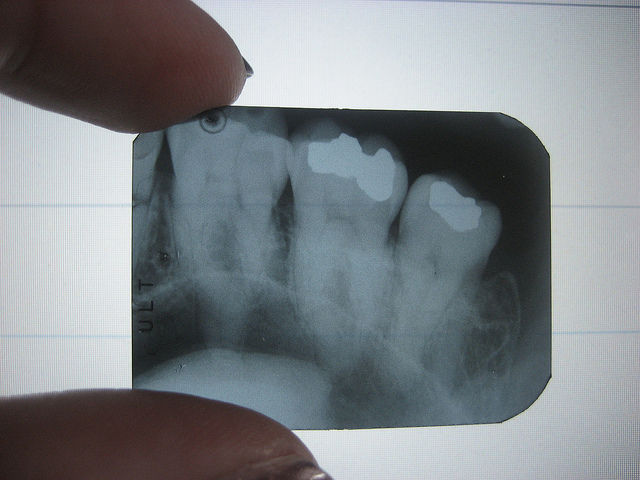
In the United States, it is common to have dental X-rays as part of your regular checkup or when you have tooth pain. These X-rays use a small amount of ionizing radiation to take a picture of your teeth, bones and gums in order to show tooth decay, impacted teeth, bone loss, and other mouth problems. Since ionizing radiation exposure is known to increase the risk of certain kinds of cancer, scientists have recently studied whether dental X-rays increase your risk of brain tumors.
An article was just published in the peer-reviewed medical journal, Cancer. It reported the results of a large study that examined the association between dental X-rays and the risk of the most common type of brain tumor (meningioma). The study was headed by researcher Elizabeth Claus, M.D., Ph.D. at the Yale University School of Medicine, in collaboration with the University of California at San Francisco School of Medicine, Brigham and Women’s Hospital, University of Texas M.D. Anderson Cancer Center, and Duke University of Medicine.
Recent news coverage sensationalized the results of this study, possibly alarming people and dissuading them from having dental X-rays. So here are the basics of the report. This research was a case-control study that compared the histories of 1433 people who had a confirmed meningioma brain tumor (the “cases”) with 1350 people without a brain tumor (the “controls”) who were matched to have the same age, sex and state of residence as the brain tumor cases. All participants were 20 to 79 years old, lived in the United States, and were enrolled in the study between May 2006 and April 2011. Both groups were contacted by telephone and interviewed for about an hour. This phone interview included questions about the onset, frequency and type of dental care they had received over their lifetime.
The researchers were interested in three types of dental X-rays:
Bitewings – a small X-ray view that shows the upper and lower back teeth simultaneously, where the patient bites down on a small holder filled with the X-ray film. Bitewings are frequently used during regular checkups to look for cavities.
Full-mouth – a series of about 14-21 X-ray films that are used to view the entire mouth for dental problems, usually performed during a person’s first visit to the dentist.
Panoramic – a single X-ray that shows a broad view of the entire mouth to provide information about the teeth, jawbones, sinuses, and other tissues of the head and neck. Panoramic X-rays are taken occasionally, often to evaluate wisdom teeth, using a machine that moves around the patient’s head.
This large case-control study showed that people with a brain tumor reported having dental X-rays significantly more frequently over their lifetime than the controls without a brain tumor. However, the differences were only significant for bitewing and panoramic type dental X-rays, and not for full-mouth X-rays which actually expose the mouth to a greater dose of radiation. This inconsistency demonstrates that further research is needed to prove any link between dental X-rays and brain tumors.
The biggest issue with this study is that participants were asked to recall their own history of dental X-rays throughout their lifetime, which makes the results less reliable. In particular, there is a fear of “recall bias” – the people with brain tumors may have been focusing on the potential causes of their cancer and therefore may have been more likely to recall dental X-rays than the control group, potentially biasing the results. Although more work, the researchers should have acquired the participants’ dental histories directly from medical records.
While this study does suggest that regular dental X-rays may be linked to an increased risk of developing a brain tumor, it does not prove an actual link. There could be other factors that contributed to this association. In order to establish a causal link, the researchers should consider performing a different kind of study that follows a group of people over time to see who develops a brain tumor.
More importantly, the recent sensationalized news headlines ignored the important fact that brain tumors are rare. Men and women in the United States have a 0.61% lifetime risk of being diagnosed with any type of primary malignant brain or central nervous system tumor, implying a 0.21% lifetime risk of developing meningioma. For instance, this is much smaller than the 12.2% lifetime risk of a woman developing breast cancer.
So this research study should not scare people away from having dental X-rays when recommended by their dentist. The American Dental Association recommends that dentists now evaluate the benefit of X-ray exposure for each patient, reducing the frequency of routine X-rays for healthy patients. In addition, dental X-rays now expose patients to less radiation than in the past.
See my KQED Quest blog on Dr. Mina Bissell’s pivotal breast cancer research at Lawrence Berkeley National Lab. She will be part of a free public lecture, Science at the Theater: Health Detectives. It will be held on April 23 at 7 pm at the Berkeley Repertory Theater.
Girls have always gone through puberty at varying ages. When I was 11 years old, I looked like a flat-chested scrawny little girl. Meanwhile, my best friend Judy at that age looked like a grown woman, basically the same as when she graduated from high school. This was a real problem for large-chested Judy because older men frequently hit on her, probably having no idea that she was only 11 years old and unprepared to cope with their advances.
Early maturation in girls is associated with lower self-esteem, less favorable body image, and greater rates of eating problems, depression, suicide attempts and risky behavior. Beyond the emotional issues, girls that go through puberty early are also at higher risk for some medical problems such as breast cancer, endometrial cancer, pre-diabetes and elevated blood pressure. These emotional and health concerns appear to worsen as the age of puberty onset lowers.
Although the timing of puberty always varies between different girls, the average age when girls enter puberty has fallen in the past two decades. A lot of reports and controversy have surrounded this finding, starting with a study published in 1997 in Pediatrics. Why this is happening is not fully understood. Ongoing studies are trying to determine whether this trend is continuing or whether the age of puberty onset for girls has stabilized.
The results of a new study on the timing of breast development in girls were just reported in Pediatrics by a research team led by Dr. Frank Biro, director of adolescent medicine at Cincinnati Children’s Hospital Medical Center. Dr. Biro and his colleagues studied 1239 girls ages 6 to 8 who were recruited from 3 diverse sites: East Harlem in New York, Cincinnati metropolitan area, and San Francisco Bay Area. The recruited group was 34% white, 31% black, 30% Hispanic, and 5% Asian. The data came from interviews with caregivers and physical examinations of the girls. Great care was taken to ensure that the examinations were performed by only well-trained certified staff, using identical well-established guidelines for determining the onset of puberty.
The researchers found that more girls are starting puberty at the age of 7 or 8 than previously reported 10 to 30 years earlier. At 7 years, 10.4% of white, 23.4% of black, and 14.9% of Hispanic girls had enough breast development to indicate the beginning of puberty. At 8 years, 18.3% of white, 42.9% of black and 30.9% of Hispanic girls had sufficient breast development. In comparison, the 1997 study found only 5% of white girls and 15.4% of black girls to have entered puberty at the age of 7.
So the new study shows that the age of entering puberty is continuing to fall for young girls, especially white girls. However, black and Hispanic girls still mature at younger ages than white girls. The cause of this concerning trend is not fully understood. Increased rates of obesity are thought to play a significant role, because body fat can produce sex hormones. Environmental chemicals are also suspected, since they might mimic effects of estrogen and speed up puberty, but this is still under study. Genetics may also play a role.
Breast Cancer and the Environmental Research Centers (BCERC) were established in 2003 as a consortium to study some of these issues, in partnership with the National Institute of Environmental Health Science (NIEHS) and National Cancer Institute (NCI). As Dr. Biro summarizes, “I think we need to think about the stuff we’re exposing our bodies to and the bodies of our kids. This is a wake-up call, and I think we need to pay attention to it.”
It seems like more and more food boasts that it is gluten-free on the packaging. Is this just another food fad being pushed by marketing agencies? Or is there a real medical need for a gluten-free diet?
Gluten is a protein present in wheat, barley, and rye that can be found in foods like bread, pasta, cake, cereal and beer. Gluten is also added as a stabilizing agent to some unexpected foods like ketchup and ice cream. Maintaining a gluten-free diet can be difficult and expensive, so most people on this restricted diet have Celiac disease.
Over 2 million people in the United States have Celiac disease, or 1 in 133 Americans. Celiac disease is a common genetic disorder in which a person has an autoimmune response to gluten. Symptoms can vary widely, but common symptoms include diarrhea, bloating, and abdominal pain. These symptoms are caused by the person’s immune system mistaking the gluten as a hostile organism. As the immune system attacks the gluten, the small intestines are inflamed and damaged. Currently people with Celiac disease have to rely on a lifelong gluten-free diet.
However, researchers have recently discovered the cause of this immune reaction, as reported in the peer-reviewed journal Science Translational Medicine. A large study was performed by scientists from Australia, the UK and Italy. These researchers recruited 226 volunteers with Celiac disease (age range 19-70 years, average age 50 years, 73% women) and a control group with similar characteristics. Prior to participating in the study, the volunteers with Celiac disease had been strictly gluten-free for at least 3 months and the normal controls for 1 month.
During the study, the volunteers ate foods with gluten — barley risotto, slices of wheat bread, rye muffins, or a combination of these over three days. Eating these foods induced an immune response in the volunteers, causing their bodies to produce gluten-specific T cells (a type of white blood cells that are important in the immune system). Blood samples were taken for each volunteer at the time of the first “grain eating challenge” and 6 days later. Researchers then performed complicated laboratory analysis of these T cells from the blood samples.
The researchers identified three key substances (specific peptides) in the gluten that caused most of the immune response. These key substances were found in all three grains — wheat, barley and rye. Effects of other gluten substances were found to be negligible in comparison.
This breakthrough in understanding Celiac disease should lead to new treatments, such as immunotherapy. In immunotherapy, a person is repeatedly exposed to toxins that cause an immune response, eventually causing the body to tolerate the toxins. This technique is commonly used to reduce allergic reactions — e.g., to grasses or pets. The researchers are now designing and testing an immunotherapy for Celiac disease, based on using the three identified key substances in gluten as the toxins. This new therapy is now being tested as a phase 1 clinical trial. Hopefully some day soon people that suffer from Celiac disease will be free of a gluten-free diet.
I’m one of those grocery shoppers that turns the package around to check the ingredients, before I buy anything for the first time. Checking food packages is relatively easy, because I expect only recognizable simple ingredients. As Michael Pollan says, would my Great Grandmother recognize this as food? However, what about sunscreen? You don’t really expect to know all the ingredients in sunscreen, so how can you tell if it is safe to use?
The Environmental Working Group has done extensive research to evaluate the effectiveness and safety of over 500 sunscreens currently on the market, so you don’t have to. Their fourth annual “2010 Sunscreen Guide” lists the best and worst sunscreens, and it allows you to look up information on your sunscreen. It is worth a look to make sure your current sunscreen isn’t on the “Hall of Shame” list. The Environmental Working Group also provides a lot of detailed information about sunscreen ingredients that can be damaging to your body.
This year there is concern over the large number of sunscreens with exaggerated SPF claims. There are substantially more sunscreens with high-SPF ratings in 2010, with one in six products claiming higher than SPF 50. The FDA believes that these higher ratings are “inherently misleading.” Many of these high-SPF sunscreens provide little protection from UVA radiation, the type of sunlight that doesn’t cause sunburns but does cause other skin damage and cancer. Scientists are worried that the high-SPF products will encourage people to stay out in the sun too long, increasing their risk of sun damage.
In general, most people do not use enough sunscreen to get the real benefit of the SPF rating promised on the bottle. According to the Environmental Working Group, “people typically use about a quarter of the recommended amount.” When under-applied, the typical effectiveness of SPF 100 to 15 sunscreens actually drops down to perform like SPF 3.2 to 2.
This year there is also significant concern over retinyl palmitate, which is a form of vitamin A that is found in 41 percent of sunscreens. Vitamin A is an anti-oxidant that slows aging, so it is commonly used in lotions. This may be a safe ingredient for night creams. However, a recent FDA study found that vitamin A results in the growth of cancerous tumors when used on skin that is exposed to sunlight. The National Toxicology Program is studying whether vitamin A exposed to sunlight forms free radicals that can damage DNA. Although these research studies are preliminary, the Environmental Working Group recommends that you avoid sunscreens with vitamin A (any form of retinyl or retinol).
You also need to be careful of products with hormone-disrupting compounds, such as oxybenzone which is found in about 60 percent of beach and sport sunscreens. Oxybenzone readily penetrates the skin and enters the bloodstream. This results in increased production of free radicals that may cause cancer and other health issues. The Centers for Disease Control and Prevention have found that 97 percent of Americans tested had oxybenzone in their bodies, and additional research is underway to better understand how this affects our health. So oxybenzone is considered one of the main toxic ingredients to avoid in sunscreens.
All these troubling facts may tempt you to give up on wearing sunscreen altogether. However, public health agencies still recommend using sunscreen, just not as a your first line of defense. Hats, clothing and shade are the most reliable sun protection. When that isn’t enough, then use the Environmental Working Group’s Sunscreen Guide to help you select a a relatively safe sunscreen.
I was surprised to find that my two favorite sunscreens, Neutrogena Sensitive Skin Sunblock and Alba Botanica Facial Sunblack, only rated a 4 out of 10 with “moderate” health concerns and UVA protection. So I’m also trying out some of the recommended sunscreens (rated 0-2) in search of a new favorite.
Orthopedic surgeons have found a helpful hand, or more precisely a robotic arm, that will allow them to perform more accurate knee surgeries. MAKO Surgical has released a Robotic Arm Interactive Orthopedic System that is designed to assist surgeons during knee resurfacing operations. This medical robotic arm has just been selected by R&D Magazine as a winner of the 48th Annual R&D 100 Awards, identifying it as one of the 100 most technologically significant products introduced into the marketplace over the past year.
More than 10 million Americans have knee osteoarthritis, and it is the most common cause of disability in the United States. Osteoarthritis occurs when the cartilage between two bones is worn down and the bones begin to directly rub against each other at the joint. The main problem for knees is the deterioration of the articular cartilage, the smooth lining that covers the ends of the leg bones where they meet to form the knee joint. This cartilage deterioration typically leads to pain, stiffness, limited range in motion of the knee, localized swelling, and the formation of bone spurs (small growths of new bone). The pain is usually worse after activity.
Knee osteoarthritis is diagnosed based on medical history, physical examination, x-ray imaging and possibly MRI (magnetic resonance imaging). Although many people with osteoarthritis don’t need surgery, in some cases surgery is required. Surgery may involve joint replacement in which the rough worn surfaces of the joint are replaced with a smooth artificial material, such as metal or plastic pieces.
Most people affected by osteoarthritis of the knee are older than 45 years. However, some younger active patients have early osteoarthritis. Such patients with arthritis in only one area of the knee can have partial knee resurfacing surgery, which is significantly less invasive than standard total knee replacement surgery. Partial knee resurfacing replaces only the deteriorated section of the knee with a small partial knee implant, without disturbing the knee’s healthy tissue. The benefits of this less invasive surgery can be significant: smaller incision, less bone removed, less discomfort, shorter hospital stay, less physical therapy required, and more rapid healing. Since less bone is removed (about 0.25” instead of 0.5”), future total knee replacement surgery can also be more easily performed, if necessary.
However, partial knee resurfacing can be a difficult operation to perform. Using the MAKO robotic arm system to assist with the surgery will hopefully provide increased stability and precision. It also allows the surgery to be performed for a greater number of patients, since it allows the replacement of the top (patellofemoral) portion of the knee joint instead of just the inner (medial) or outer (lateral) portion. The system provides patient-specific, pre-surgical planning with 3-D modeling based on CT (x-ray computed tomography) images. The system also provides real-time visual, tactile and auditory feedback during the surgery. This should enable the orthopedic surgeons to more precisely position the partial knee implants. Hopefully this new technology will help provide a more natural feeling artificial knee and a healthier active lifestyle to some people that suffer from knee osteoarthritis.






 Scientists Talk Funny