Earworms: Those Intrusive Songs Stuck in Your Head

manic looking man listening to music on headphones
Photograph courtesy of John Hayes Photography via a Creative Commons license.

If you could hear inside my sister’s head, it would often sound like “Deck the halls with boughs of holly, Fa la la la la, la la la la.” For years, she has had this “earworm” – a song that plays in her head without control. Her mind acts like a broken record player that repeatedly plays the same song again and again, especially during quiet times when she is alone.

Having a song stuck in your head is a common experience. Research has shown that 92% of people experience earworms at least once a week. So it isn’t surprising that many myths exist about them. One common belief is that annoying music is more likely to become stuck.  Another is that certain music characteristics, such as simplicity and repetitiveness, cause songs to become intrusive. It is also thought that having earworms is more likely for certain types of people, including musicians and women. Finally, some people believe that interrupting a song creates a sense of incompleteness that leads the song to remain in the consciousness, making it more likely to become an earworm.

Researchers from the psychology department at Western Washington University have investigated these common beliefs about earworms, as reported in a journal article recently published in Applied Cognitive Psychology. They conducted five studies on earworms: an online survey of 299 participants, an experimental diary study of 16 participants, and three lab experiments with 89, 123 or 139 participants.

In the online survey, participants answered questions about their most recent earworm, general music experience and basic demographics. The other research studies used methods to induce earworms. During the lab experiments, participants evaluated three songs, completed a puzzle (maze, Sudoku or anagram), and then reported the extent to which they heard the three songs playing in their heads while completing the puzzle. They completed either an easy or difficult puzzle.

Although annoying songs like advertising jingles can become stuck in someone’s head, this appears to be relatively rare. Researchers found that people generally know and like the songs that become intrusive.

They also found that the intrusive songs are virtually unique to each individual, which suggests that lists of the most potent earworms are misleading. Earworms are mainly formed from recent and repeated exposure to a song, so they’re influenced by listening tastes. This is supported by a previous study that identified music exposure as the primary trigger for earworms, followed by memory triggers.

Researchers found no gender difference in how earworms were experienced. However, musicians did report having earworms more frequently than non-musicians, as did people who listen to music almost constantly.

The researchers also interrupted some of the songs that they played, expecting the interrupted songs to trigger earworms more frequently than the songs played to completion. However, no difference was observed due to song interruption.

Finally, they analyzed how participants responded to completing the different puzzle tasks. Researchers found that the best way to stop an earworm is to perform a verbal task: solve an anagram, have an engaging conversation or read an interesting book. But you don’t want the task to be too easy or too challenging, or your mind will wander and the earworm may return. I guess this means that I should give my sister some engrossing novels and a book of anagrams for her birthday?

For more information about earworms, check out my KQED Science blog.

Spotlight on Red Meat

photo of raw steaks
Photograph courtesy of IwateBuddy via Creative Commons licensing

Overall meat consumption continues to rise in the U.S., and 58% of the meat consumed is red meat. People in the U.S. eat 5 ounces of meat per day on average.

Eating a lot of red meat is known to contribute to heart disease, presumably due to the large amount of saturated fats and cholesterol in the meat. Or that is what we used to think. New research published in Nature Medicine indicates that the real culprit is a chemical in the red meat called L-carnitine. In a series of experiments on humans and mice, researchers found that L-carnitine is broken down by gut bacteria to produce trimethylamine-N-oxide (TMAO), which previous research has linked to heart and artery damage. TMAO alters how cholesterol is metabolized so less is eliminated from the body, allowing more cholesterol to deposit and harden into the artery walls.

But the researchers also found that frequent meat eaters produced significantly more TMAO than vegetarians after consuming the same amount of L-carnitine. For instance, L-carnitine supplements (250 mg) were given to 74 healthy volunteers, including 23 who were long-term vegetarians or vegans. The lab tests showed that consuming L-carnitine increased the level of TMAO in the blood, but meat eaters made far more TMAO than vegetarians or vegans.

Fecal studies also showed that meat eaters and vegetarians had different types of bacteria in their guts, and the meat eaters had more of the bacteria involved in breaking down L-carnitine into TMAO.

“The bacteria living in our digestive tracts are dictated by our long-term dietary patterns,” explained the lead researcher Dr. Stanley Hazen in a press release. “A diet high in carnitine actually shifts our gut microbe composition to those that like carnitine, making meat eaters even more susceptible to forming TMAO and its artery-clogging effects.”

The main food sources for carnitine are red meat and full-fat dairy products. It is also found in fish, poultry, tempeh, wheat, asparagus, avocados and peanut butter. L-carnitine is also commonly available as a dietary supplement, which is advertised as a weight loss and body building tool despite a lack of supporting scientific evidence. Plus L-carnitine is added to many energy drinks.

So eating all this L-carnitine is bad, right? Unfortunately it isn’t that simple.

Carnitine plays a vital and complex role in cardiac metabolism. Some people have diseases that cause a carnitine deficiency, so they need to take carnitine supplements. Studies have also shown that carnitine may help treat some heart conditions, such as angina, arrhythmias, heart attacks and heart failure. For instance, a meta-analysis review study in the Mayo Clinic Proceedings recently showed that taking L-carnitine supplements reduces your risk of ventricular arrhythmias by 65% and risk of angina by 40%, although no reduction in risk was seen for heart attacks and heart failure.

In general, scientific studies have shown both positive and negative effects on cardiac health from taking carnitine supplements. These discrepant findings may be due to differences in how the carnitine is administered and the dose. For instance, carnitine given by an intravenous or intramuscular injection would bypass the gut bacteria, so it may not form TMAO. Larger carnitine studies are needed, which also take into account the volunteers’ long-term diet and the bacteria ecosystem in their guts.

For more information about L-carnitine studies, check out my KQED Science blog.

QUEST Goes National

KQED QUEST interview photograph
Aquarium of the Bay Curator Chris Spaulding sits down with radio reporter Amy Standen and cameraman Josia Hooper for QUEST. Photograph courtesy of KQED QUEST via creative commons licensing.

Affiliated with PBS and NPR, KQED public media has served Northern California for over 50 years. In February 2007, KQED started its large multimedia series, QUEST. QUEST explores the latest science and environmental news, trends and issues. It has reached more than 60 million viewers and listeners through television, radio and the Web. QUEST mainly covers stories that have a San Francisco Bay Area focus.

Now QUEST is expanding to a national audience, joining with QUEST partner organizations from North Carolina, Nebraska, Ohio, Wisconsin and the Northwest (Seattle). Together they have just received a $2.5 million grant from the National Science Foundation for a two-year collaborative multimedia science reporting initiative called QUEST Beyond Local.

The new series will focus on the “Science of Sustainability” in six key areas: climate, food, energy, water, health and biodiversity. Content will be developed for television, radio, the Web, educational assets and community outreach.

QUEST Beyond Local is scheduled to start broadcasting new content this summer. Stay tuned for my upcoming articles as a contributing author. Meanwhile, my health beat coverage has just moved  to KQED Science.

Air Pollution Lurks Inside Your Home

photo of stir-frying
Photograph by kfisto via Creative Commons licensing.

How would you like a job that involves grocery shopping at Trader Joes with the company credit card and cooking dishes like stir-fry? This describes Tosh Hotchi’s job, but he isn’t a chef. He is part of a research team that studies how to build healthy efficient homes, including how to improve the quality of air inside a home through better ventilation. Hotchi is helping to study a major source of indoor pollutants – cooking.

When people think of air pollution, they usually picture a factory spewing a plume of toxic chemicals. But indoor air pollution causes significant health effects such as respiratory illness, asthma attacks, cancer and premature death. Californians spend over 45 billion dollars each year on these health impacts, according to a study by the California Air Resources Board.

Scientists at the Lawrence Berkeley National Laboratory (Berkeley Lab) have investigated which indoor air pollutants cause the greatest health consequences. In a paper published in Environmental Health Perspectives, they reported that fine particles with a diameter of 2.5 mm or less, formaldehyde and acrolein are the worst indoor contaminants for nonsmoking households.

Fine particulates are found indoors mainly due to cooking, burning candles or incense, and outdoor sources that leak inside. Formaldehyde is mainly emitted by materials used in home construction and furniture, such as particle board, paneling and foam insulation. Acrolein in the home is primarily from cooking, especially oils. All three of these contaminates also come from tobacco smoke.

“Think about what your putting in your home,” says Melissa Lunden, a Berkeley Lab staff engineer. “Most of us have to cook, but do you need the candles, incense and air fresheners? Freshening your air requires taking stuff out, not putting more stuff in.”

Berkeley Lab scientists are now looking for ways to improve indoor air quality, by developing better standards for residential buildings and new tests to measure these hazardous pollutants. Since cooking is a major source of indoor air pollutants, they have also evaluated the effectiveness of cooking exhaust hoods. Their study results showed that indoor air quality can be significantly improved by simply cooking on the back burners of your stove, using higher fan settings, and turning the fan on before you start cooking. Further research on cooking-induced pollutants is underway using a new demonstration kitchen to study real-life cooking conditions. During these studies, Tosh Hotchi’s stir-fry and cookies are just a happy bonus for his coworkers like Melissa Lunden.

For more information about indoor air pollution, check out my KQED Quest blog.

How Hot Will It Get?

Muir Glacer melt, Alaska. 1882 photo taken by G.D. Hazard; 2005 photo taken by Bruce F. Molnia. Courtesy of the Glacier Photograph Collection, National Snow and Ice Data Center/World Data Center for Glaciology.

Stay tuned for the next Science at the Theater, a free public lecture hosted by Lawrence Berkeley National Laboratory. It will be held on Monday April 22 at 7 pm at the Berkeley Repertory Theater.

Scientists will talk about their latest research findings on how the earth’s climate is changing, from the arctic to the rainforest. Participating speakers will address critical questions: What happens when the permafrost thaws? What do computer models predict about our future climate – floods, droughts, hurricanes and heat waves? What role do our forests play in carbon absorption? What kind of carbon tax might actually work?

Come find out what to expect and if there is anything you can do about it!

Nerve Stimulation May Prevent Migraines

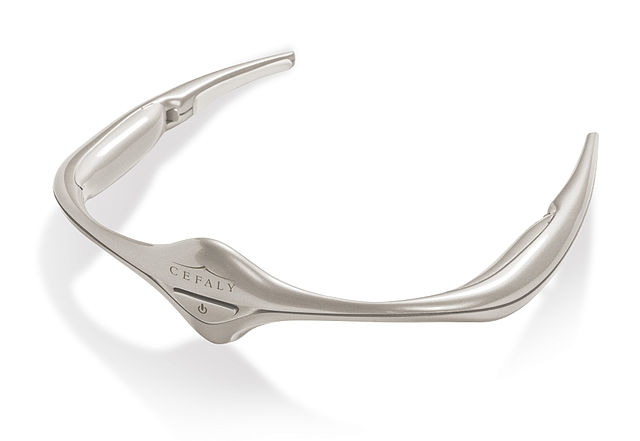
Photograph of the Cefaly anti-migraine device, courtesy of STX-Medssprl via Creative Commons licensing
Photograph of Cefaly anti-migraine device, courtesy of STX-Med via Creative Commons license

While shopping for groceries at Trader Joes, suddenly your peripheral vision disappears. This could be frightening, but you know what is coming — a one-sided pulsating pain, sensitivity to light and noise, nausea, vomiting and seeing flashing lights. You quickly drive home and cancel your plans, because you have a migraine coming. You need to lie still in a dark quiet room for the next 24 hours.

Migraines affect about 30 million Americans. This means that one in four households in the US have at least one member impaired by migraines. Women are three times more likely to be migraine sufferers than men.

Unfortunately, there is currently no cure for migraines. A migraine diary can help identify the headache triggers to avoid. Medications can also help reduce the number of attacks or ease the symptoms, but these medications are often ineffective or cause unpleasant side effects.

Instead migraine sufferers might find relief from a new non-medicinal alternative, a device called a supraorbital transcutaneous stimulator (STS) that stimulates the nerves around the eyes and forehead. A study recently published in Neurology tested the safety and effectiveness of this STS device designed to prevent migraines.

Conducted by researchers in five specialized headache clinics in Belgium, this study was a randomized controlled trial that compared the STS device with an identical-looking sham device. Study participants were aged 18 to 65 who routinely experienced a minimum of two migraine attacks per month. None of the 67 participants had taken anti-migraine medications in the three months leading up to the study.

Both the STS and sham devices used a self-adhesive electrode placed on the forehead that buzzed identically during treatment. Only the STS devices delivered electrical impulses. The participants wore one of the devices for 20 minutes per day for 90 days.

The participants’ migraine diaries indicated that the number of migraine attacks dropped by at least half for 38% of the participants using the STS device, compared with 12% for those using the sham device. Although the severity of the migraines was not reduced, people using the STS device had fewer days with headache, fewer total migraine attacks, and used fewer pain relief medications each month. Most importantly, there were no adverse effects seen in either group.

The study concluded that treatment with a STS device is “effective and safe as a preventive therapy for migraine.” However, only 67 migraine sufferers have been studied and the use of this device was only examined for three months. Larger studies with longer-term treatment are needed to confirm that this STS device is safe and effective.

For more information about migraines and the STS device, check out my KQED Quest blog.

Dreaming of Sleep

woman laying in bed
Photograph courtesy of Wiros via a Creative Commons license.

You lay in bed, tossing and turning. Your body is exhausted, but your mind is racing with the day’s activities. Or worse yet, you’re stressing out about all the things on your to-do list for tomorrow.

Insomnia has become a major health concern worldwide with about 15% of the global population seeking relief with sleeping pills or tranquilizers. In the US, 60 million prescriptions for sleeping pills are issued each year. The most commonly prescribed type of sleeping pill is non-benzodiazepines, also called z-drugs — zaleplon (Sonata), zolpidem (Ambien), zopiclone (Imovane), and eszopiclone (Lunesta). However, a recent scientific journal article has raised some concerns about using these drugs.

Researchers from Harvard Medical School, the University of Connecticut and the University of London performed a quantitative statistical analysis of 13 studies on the effectiveness of z-drugs and their associated placebo response. They selected only randomized double-blind placebo-controlled trials, which means that neither the 4378 participants nor the researchers knew who was given the drug and who the placebo. They obtained the data from the US Food and Drug Administration, using both published and unpublished trials in order to avoid “publication bias.”  Their research results were published in the British Medical Journal on December 17, 2012.

This large, well-designed study found that the z-drugs helped participants fall asleep more quickly, as measured subjectively by the participants and by equipment in a sleep lab. However, half the effect of the drug was found to be due to a placebo response. Specifically, participants on average fell asleep in the lab only 22 minutes faster if taking the z-drug compared to the placebo. This has raised concern on whether the benefits of taking z-drugs are worth the risk of adverse side effects, which include daytime fatigue, memory loss, problems with balance, dependency, and an associated risk of an earlier death.

Of course, how quickly you fall asleep is only one symptom of insomnia. Other important measures are the total sleep time, number of awakenings, sleep quality, and time spent awake after sleep onset. Although the study looked at these other outcomes, unfortunately there was insufficient data to make firm conclusions on these factors.

Hopefully there will be further research to analyze the effectiveness of z-drugs on all aspects affecting sleep quality. In addition, the demonstrated importance of the placebo response suggests that more attention should be directed at psychological interventions for insomnia.

For more information about z-drugs, check out my KQED Quest blog.

Think Before You Drink Grapefruit Juice

photograph of grapefruit
Courtesy of dullhunk via Wikimedia Commons

You follow the directions on your medication carefully, always taking the pills with the correct frequency and with or without food as directed. But have you discussed with your doctor or pharmacist whether ingesting grapefruit could cause an unintentional drug overdose?

A drug is normally metabolized in the gastrointestinal tract, but a liver enzyme called cytochrome P450 3A4 (CYP3A4) deactivates much of the drug so the body only absorbs about half of it. This process is taken into account when a doctor prescribes the necessary dose.

However, grapefruit, grapefruit juice, Seville bitter oranges (used in marmalade), limes and pomelos naturally contain chemicals called furanocoumarins. These furanocoumarins inhibit the CYP3A4 enzymes, causing the gut to absorb much more of the drug at a potentially toxic level. Sweet oranges, such as navel or Valencia, do not contain furanocoumarins.

This grapefruit-medication interaction was discovered back in 1989 by David Bailey, Ph.D., a clinical pharmacologist at the Lawson Health Research Institute. However, Bailey recently released an expanded list of medications affected by grapefruit in the peer-reviewed Canadian Medical Association Journal. The number of drugs that interact with grapefruit has significantly increased to more than 85 as new drugs have come on the market. More importantly, 43 of these drugs could interact with grapefruit and lead to serious side effects, such as kidney damage, blood clots, respiratory depression, abnormal rapid heart beats (torsade de pointes) and sudden death.

So it is important to carefully read the information leaflet that comes with your medications, as well as discuss with your doctor or pharmacist how your diet may affect your medication.

For more information about a potential drug overdose caused by ingesting risky citrus, please check out my KQED Quest blog.

Dynamic Duo: Antibiotics and Probiotics

Photograph of antibiotics.
Photograph of antibiotics, courtesy of sparktography via Creative Commons license.

When your cold or flu virus turns into a bacterial infection, taking antibiotics can seem like a miracle. You often start feeling better after just a day or two. Antibiotics work by killing bacteria or by stopping bacteria from multiplying. Antibiotics quickly make you feel better because the drug kills the majority of the targeted bacteria very quickly.

However antibiotics also kill beneficial bacteria and induce negative side effects — most commonly diarrhea, upset stomach, and vaginal yeast infection. For instance, antibiotics cause about one out of three people to get diarrhea by disrupting the balance of the intestinal flora, a collection of bacteria and other microorganisms in the digestive tract. This can result in an overgrowth of the Clostridium difficile bacteria that causes diarrhea. Similarly, antibiotics can disrupt the vaginal flora and cause an overgrowth of Candida yeasts to cause a yeast infection.

Probiotics are live bacteria, yeasts and other microbes intended to maintain or restore the supply of beneficial bacteria in the body, particularly the stomach and intestines. Probiotics are found naturally in certain foods, including yogurt, aged cheeses, kefir, miso, tempeh, and fermented cabbage. Dietary supplements are another common source of probiotics.

The use of probiotics to reduce antibiotic-induced side effects is now becoming more widely accepted by the medical profession. A recent study published in the Journal of the American Medical Association supports taking probiotics with antibiotics. A team of researchers from southern California combined and analyzed the results of 63 randomized controlled trials of probiotics for the prevention or treatment of antibiotic-associated diarrhea. The 11811 men and women included in this large combined study took a placebo or probiotics supplement along with their antibiotics. The people who took the probiotics were 42% less likely to develop diarrhea than those taking the placebo.

However, further research is needed to determine the most effective probiotics and dose. Of course it is also important to limit your use of antibiotics, using them only for bacterial infections when necessary.

For more information about using probiotics with antibiotics, check out my KQED Quest website.

Science Behind Vampire Folklore

Count Dracula as played by Bela Lugosi in the 1931 film Dracula, courtesy of Creative Commons license.

Legends of blood sucking creatures have existed for millennia. Why have people around the world always been so fascinated by vampires? Did vampire tales begin as a way to explain frightening phenomena that people actually witnessed? Although there is no scientific evidence for vampires, there is some scientific basis for vampire folklore.

The vampire has evolved over time in countless directions, moving in popular culture from a pure evil being to a conscience-bound but sexy seducer. The vampires of “Twilight” and “Vampire Diaries” act more human than Bram Stoker’s “Dracula.” However, in general vampires are predatory creatures in human form that survive by drinking the blood of the living through protruding fangs. They are potentially immortal but they can be killed by a stake through the heart, beheading and direct sunlight.

Many vampire behaviors can be explained by medical conditions, such as the rare blood disease porphyria. People with porphyria have an enzyme deficiency that interferes with the production of an important part of red blood cells, called heme. The skin of a porphyria sufferer burns, blisters and scars when exposed to sunlight, so they can only go out at night. This disease can also cause their mouth and urine to turn red, leading to the misbelief that they drink blood. And porphyria is hereditary, so there may have been concentrations of sufferers in certain areas throughout history.

Of course science can’t fully explain vampire myths. Some supernatural magic is required to do that, which is generally more entertaining. So dress up as a vampire on Halloween and just enjoy scaring everyone.

For more information about the science behind vampire folklore, check out my KQED Quest blog.