Great American Smokeout: Time to Quit

photo of cigarette stubs in ashtray
Photograph courtesy of olumi_day via a Creative Commons license.

Smoking used to be portrayed as being glamorous in advertisements and movies. In old films, actors constantly smoked cigarettes and a tough guy usually had one hanging out the side of his mouth. It’s debatable whether smoking still makes you look cool though, especially since there are fewer and fewer public places you’re even allowed to smoke. Plus we now better understand the health risks of tobacco products.

Tobacco use is the single largest preventable cause of disease and premature death in the United States, but nearly 44 million Americans still smoke cigarettes – 1 in every 5 adults. There are also 14 million cigar smokers and 2 million pipe smokers.

Tobacco use is not quite as widespread in California, where just over 1 in every 7 adults smokes cigarettes. In the past year, 61 percent of these smokers attempted to quit.

There are many good reasons to quit smoking, and health concerns usually top the list. Half of all smokers who keep smoking die from a smoking-related illness, including lung cancer, other types of cancer, heart attack, stroke, or lung disease. Women who smoke are also more likely to miscarry or have a baby with a low birth-weight.

There are both immediate and long-term health benefits when smokers quit. After quitting for:

  • 20 minutes, your heart rate and blood pressure drop.
  • 12 hours, the carbon monoxide level in your blood drops to normal.
  • 2 weeks – 3 months, your circulation improves and lung function increases.
  • 1 – 9 months, your coughing and shortness of breath decrease.
  • 1 year, your risk of heart disease due to smoking cuts in half.
  • 5 years, your risk of various cancers (mouth, throat, esophagus, and bladder) is cut in half.
  • 15 years, your risk of heart disease is the same as a non-smoker.

Cigarettes are also expensive. You can use a savings calculator to see how much money you would save if you quit smoking. For example, a pack of cigarettes costs $6.77 on average in California. If you smoke a half pack (10 cigarettes) per day, this adds up $24 per week or $1220 per year.

Of course, the nicotine in tobacco is very addictive so quitting can be difficult, but the chance of success is increased with help. There are many treatment options used to help smokers quit and many of these treatments are covered by health insurance.

The most effective quitting method is a combination of counseling, social support and the use of cessation medication. The most common form of counseling is through telephone-quit lines, which provide free support and advice from an experienced cessation counselor. The counselor can provide a personalized quit plan, self-help materials, the latest information on cessation medications, and social support. For instance, 1-800-QUIT-NOW is a free national counseling service. Many clinics and hospitals also have counselors and support groups that you can meet with face-to-face. Counseling and support groups are also available online.

There are a variety of cessation medications that are available either over the counter or with a prescription. Nicotine replacement therapies deliver nicotine to help reduce the severity of nicotine withdrawal symptoms. The nicotine dose is gradually reduced over time. Nicotine gum, lozenges and patches can be purchased over the counter, whereas nicotine inhalers or nasal sprays require a doctor’s prescription.

Bupropioin SR (Wellbutrin or Zyban) is a non-nicotine prescription medication that acts on the chemicals in the brain that are related to nicotine craving. It can be used alone or with nicotine replacement products. Verenicline (Chantix) is a non-nicotine prescription medication that blocks the effects of nicotine, so it should not be used in combination with nicotine replacement products.

It is important for smokers to speak with their doctor and/or a cessation counselor to make a personalized quit plan that is right for them. And this week is a good time to get started, just in time to take part in the Great American Smokeout on November 21. Smokers across the nation will use this Thursday to make a quit plan, or plan in advance and quit smoking.

The Great American Smokeout happens every year on the third Thursday of November. It started in California back in 1976 when nearly 1 million smokers quit for the day, then the American Cancer Society expanded the program nationwide the following year. It has drawn attention to the deaths and chronic diseases caused by smoking, resulting in laws that ban smoking in restaurants and other public places.

The Great American Smokeout is celebrated with rallies, parades, stunts, quit programs, and “cold turkey” menu items. For instance, the community is invited to receive up-to-date cessation information, resources and giveaways at UCSF Medical Center’s Great American Smokeout event from 9-10 am and 12-1 pm on the Parnassus, Laurel Heights, Mission Bay and Mount Zion campuses. UC Berkeley is also celebrating the event with a “cold turkey” give-away – get a free cold turkey sandwich in exchange for a pack of cigarettes from 11 am – 2 pm at Sproul plaza.

This is a repost of my KQED Science blog.

Controversy Over Calcium Tablets

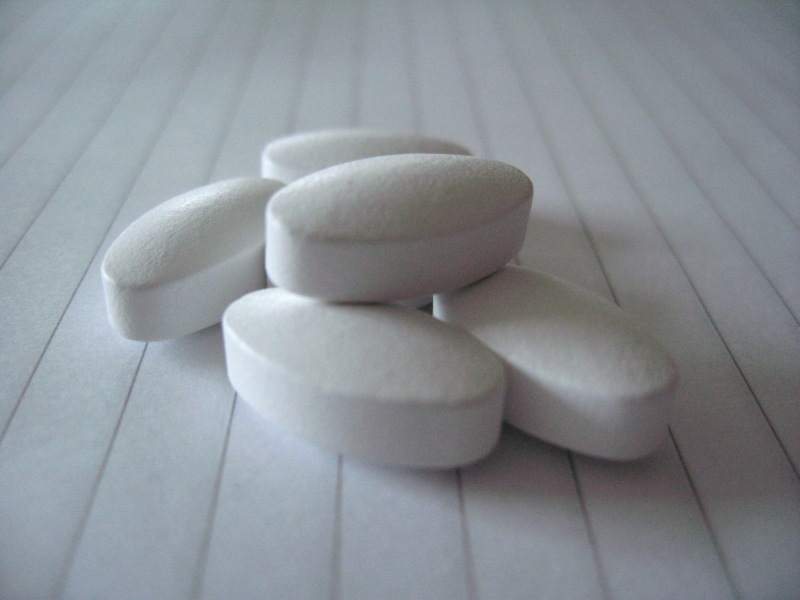
Photograph courtesy of Kham Tran via Wikimedia Commons.

You’ve probably seen the “got milk?” commercials featuring celebrities with milk mustaches, which advertise the nutritional benefit of drinking calcium-rich milk. Your body needs calcium to maintain strong bones and perform other important functions like moving your muscles. If you don’t get enough calcium by eating foods like milk or supplements, then your body pulls calcium from bone.

Your bones are alive. Your body constantly removes old bone and replaces it with new. But as you get older, you often lose bone faster than you can grow it so bones can become weak and break easily. Osteoporosis and low bone mass affect about 52 million people in the United States and result in a fracture every 3 seconds worldwide.

To help prevent Osteoporosis, the use of calcium supplements is common – 43% of U.S. adults and almost 70% of postmenopausal women regularly take calcium supplements. But are these effective and safe? Recent research studies have reported inconsistent results on the benefits and risks of taking calcium supplements.

Calcium supplements commonly cause indigestion and minor constipation, and they infrequently cause kidney stones. Several recent studies suggest that they also increase the risk of heart attacks, but other recent studies disagree.

At the center of the controversy is a 2010 study published in the British Medical Journal. The study analyzed data from 15 randomized, placebo controlled studies of calcium-only supplements. The authors conclude that calcium supplements are associated with a modest increased risk of having a heart attack. Due to the wide use of these supplements, this could affect a large portion of the population. They advise, “A reassessment of the role of calcium supplements in the management of osteoporosis is warranted.”

The authors speculate that taking a calcium supplement causes a dramatic increase in the amount of calcium in your blood, unlike when you gradually get calcium from eating dairy products. This may cause calcifications in your blood vessels and heart, leading to an increased likelihood of having a heart attack. High levels of calcium in the blood may also increase blood clotting and stiffen arteries, both known to cause heart problems.

Although several studies agree with the 2010 British Medical Journal study, they have been criticized by other scientists. The criticisms focus on their patient selection, the number of patients who didn’t take the supplements for the entire study, the methods of statistical analysis, and not monitoring the intake of other dietary nutrients that might alter calcium effects.

In addition, several other research studies recently found no risk of heart problems due to calcium supplement use. For instance, the 2010 Women’s Health Initiative trial analyzed data from over 36,000 women taking calcium and vitamin D supplements and it showed no significant increase in heart problems.

Further research is needed to sort out these inconsistent research findings. But experts seem to agree that it is best to get your recommended daily calcium by eating calcium-rich foods. “A reasonable approach is to preferentially encourage dietary calcium intake and discourage the routine use of calcium supplements,” advises Dr. Douglas Bauer, a professor at the UCSF Medical Center.

How much calcium you need depends on your age. The Institute of Medicine recommends healthy adults to eat foods containing 1000 to 1200 mg of calcium per day. But more calcium isn’t always better. They also recommend avoiding a calcium intake above 2000 to 2500 mg per day to reduce risk of health problems like kidney stones.

In order to meet these recommendations, a useful first step can be to track what you eat during a typical week using a food diary. After calculating how much calcium you usually eat each day, you may need to change your diet to include more calcium-rich foods.

The top calcium-rich foods are yogurt, cheese, milk, sardines, dark leafy greens (collard greens, kale, bok choy, and spinach), fortified cereals, fortified orange juice, and soybeans. For example, you can get the recommended daily 1000 mg of calcium by eating 1 packet of fortified oatmeal (100 mg), 1 cup of 1% milk (305 mg), 8 ounces of nonfat plain yogurt (452 mg) and ½ cup of cooked spinach (146 mg).

“If it is not possible to consume enough calcium from the diet, the use of calcium supplements is most likely safe and not associated with cardiovascular outcomes,” said Dr. Douglas Bauer in a recent press release. But he advises against exceeding the Institute of Medicine guidelines.

This is a repost of my KQED Science blog.
Prescription Drug Take-Back Day

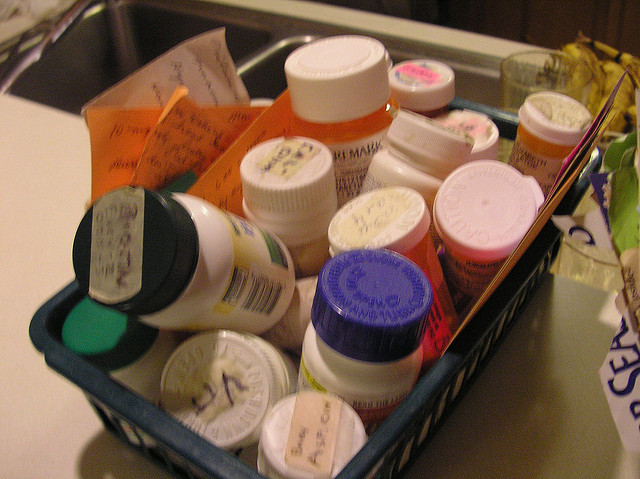
prescription bottles
Photograph courtesy of joguldi via a Creative Commons license.

Do you have expired or unused prescription drugs stacked up in your medicine cabinet? It’s not safe to flush them down the toilet or throw them out with the trash. But you can get rid of them safely, easily and for free at sites across the US tomorrow. Yep, it is National Prescription Drug Take-Back Day on Saturday October 26 from 10 am – 2 pm. Drop them off at a local collection site.

Infections During Pregnancy May Increase Autism Risk

B&W photograph of pregnant woman sitting on couch
Photograph courtesy of Stuart Handy via a Creative Commons license.

Every day our brains help us make sense of the world around us, interpreting the things we see, hear, taste, touch, smell and experience. But if someone’s brain has trouble processing this incoming information, it can be hard to communicate, understand or learn.

Autism spectrum disorders (ASD) are characterized by difficulties in social interaction, verbal and nonverbal communication, and repetitive behaviors. These disorders include autism, Asperger syndrome and Pervasive Developmental Disorder-Not Otherwise Specified.

About 1 in 88 children have been identified with an autism spectrum disorder and over 2 million people are affected in the United States, according to the Centers for Disease Control and Prevention. Government statistics also suggest that the proportion of people with autism spectrum disorders have increased 10 to 17 percent annually in recent years. This is in part due to wider awareness and better screening, but the continued increase is not fully understood.

The cause of ASD is also not fully known, but current research indicates that it is likely due to a complex combination of genetic predisposition and environmental risk factors that influence early brain development. Significant environmental risk factors include the advance age of either parent at the time of conception, maternal illness during pregnancy, extreme prematurity, and very low birth weight.

Over 40 years ago, epidemiological studies determined that the risk of having a child with ASD is increased when the mother has an infection early in the pregnancy. Since a wide range of bacterial and viral infections can increase the risk, studies suggest that activation of the mother’s general immune system is responsible. However, scientists do not completely understand how the activated immune system can disrupt normal brain development to cause ASD.

Research at the University of California Davis Center for Neuroscience provides new insight. Recently published in the Journal of Neuroscience, their studies identify a new biological mechanism that links maternal immune activation to neurodevelopmental disorders.

Kimberley McAllister, a senior author of the study, explained in a press release, “This is the first evidence that neurons in the developing brain of newborn offspring are altered by maternal immune activation. Until now, very little has been known about how maternal immune activation leads to autism spectrum disorder and schizophrenia-like pathophysiology and behaviors in the offspring.”

The researchers studied pregnant mice with immune systems that were activated halfway through gestation compared to pregnant control mice without activated immune systems. They found that the mice exposed to a viral infection had offspring with dramatically elevated levels of immune molecules called major histocompatibility complex 1 (MHC1) on their brain surface.

In the affected newborn mice, these high levels of MCH1 disrupted the development of neural cells in the brain. Specifically, the increase in MCH1 interfered with the neurons’ ability to form the synapses that allow neurons to pass electrical or chemical signals to other cells; consequently these offspring had less than half as many synapses than the control offspring. When MCH1 were returned to normal levels in the neurons of maternal immune-activated offspring, the synapses density returned to normal.

However, MCH1 doesn’t work alone. In a series of additional experiments, the researchers identified the new biological signaling pathway that regulates synapses development caused by maternal immune activation. This signaling pathway requires calcineurin, myocyte enhancer factor-2 and MCH1 to limit synapses density.

A better understanding of the underlying biological mechanisms will hopefully lead to the development of improved prenatal health screening, diagnostic tests and eventually therapies for neurodevelopmental disorders.

Of course, not every child of a bacterially or virally infected mother develops a neurodevelopmental disorder like autism. The effect of maternal immune activation depends on a complex interaction involving the strength of the infection and genetic predisposition.

This is a repost of my KQED Science blog.
The Threat of Terrestrial Carbon

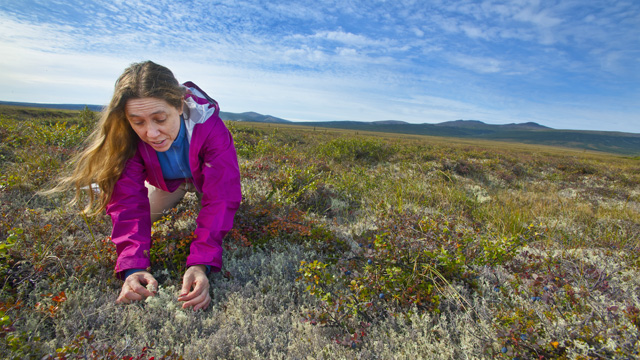
Dr. Margaret Torn at an NGEE field test site near Council, Alaska. Lawrence Berkeley National Laboratory – Roy Kaltschmidt, photographer.
Dr. Margaret Torn at an NGEE field site near Council, Alaska. Photo: Lawrence Berkeley National Laboratory – Roy Kaltschmidt, photographer.

In the northernmost city of the United States – Barrow, Alaska – the treeless flat tundra looks stark and forbidding to many people. The permanently frozen soil (permafrost) is only capable of supporting plants like moss, heather and lichen and the temperatures can drop as low as -60 °F.

However, this tundra is a mecca for climate scientists like Dr. Margaret Torn, co-lead of the Climate and Carbon Sciences Program at Lawrence Berkeley National Laboratory (Berkeley Lab). Torn just returned from performing field experiments near Barrow. She is part of the 10-year Next-Generation Ecosystem Experiment, a large collaboration of scientists and engineers who are trying to better understand the Arctic terrestrial ecosystem so they can improve vital climate predictions. These scientists are finding new ways to study the complex ecosystem of the Arctic landscape, including looking deep into the soil.

“Soil is a big mystery,” explained Torn. “We don’t understand why soil holds so much carbon. And we don’t understand how a warming climate will affect soils. The question being whether a warming climate will result in carbon transferring from soils to the atmosphere as greenhouse gases, creating additional global warming.”

Soils are an important part of the carbon cycle. In the natural carbon cycle, carbon dioxide is taken up by plants and photosynthesized. If the plants aren’t harvested for food or fuel, they decay and their organic matter makes its way to the soil where it is processed by tiny microbes – bacteria and fungi – that release the carbon dioxide back into the atmosphere.

Soils are critical because they store about 2.3 trillion tons of carbon – more than twice as much as the atmosphere or vegetation. In comparison, burning fossil fuels releases about 9 billion tons of carbon dioxide per year.

Soils are also a long-term reservoir of carbon. Carbon cycles very slowly deep in the soil, where it can remain for 50,000 years. So a critical question is how long will soils contain these rich deposits of carbon? Will the carbon stay put? Or will it enter the atmosphere in the near future, greatly amplifying climate change?

The Arctic tundra is an area that is particularly worrisome. Cold temperatures suppress microbial growth, which helps trap the vast stores of carbon in the soil. But global warming is causing the Arctic permafrost to thaw, triggering the microbes to become active and respire carbon dioxide into the atmosphere.

Equipment Ron and her team use to sample greenhouse gases flowing from the land to the atmosphere. They later determine how old the carbon is in these gas samples using carbon-14 dating. Photo: Margaret Torn.
Equipment Torn and her team use to sample greenhouse gases flowing from the land into the atmosphere. They later determine how old the carbon is in these gas samples using carbon-14 dating. Photo: Margaret Torn.

Torn’s group drills wells in the Alaskan ground to directly measure the flow of carbon dioxide and methane from the land to the atmosphere. They measure these gas flows in areas where the permafrost is intact and where it is thawing, trying to understand the environmental variables that are controlling the release of greenhouse gases.

They see very high methane concentrations in areas where the permafrost is thawing. However, this summer they found that in some areas specialized microbes consume this methane before it is released, so carbon dioxide is released into the atmosphere instead. This is good news for the environment, because carbon dioxide is a less potent greenhouse gas than methane.

They also take soil core samples from different regions in Barrow, and then incubate them at different temperatures back home at Berkeley Lab. They find that one handful of soil has thousands of different kinds of microbes and billions of cells, which respond to the environment differently. They also determine how old the carbon is in the samples using carbon-14 dating.

“One thing we’ve seen this summer is that the carbon that is being decomposed just above the permafrost is more than 2500 years old,” described Torn. “So this place that we’re studying has been storing carbon for a long, long time. But that carbon can be decomposed and released as carbon dioxide very quickly when the conditions are right.”

These results have been validated by other recent experiments, but they contradict the old belief that carbon hidden deep in soil will remain there forever due to the soil’s material properties. “The field is evolving rapidly. We’re trying to unravel the mystery of why we see older carbon in the soil, trying to create a more realistic view,” explained Torn. “It is more complex. It’s the interaction between the entire ecosystem and the material properties that’s important.”

Of course the more complicated, realistic view makes climate modeling more challenging. Climate models are computer programs that simulate how the climate has changed in the past and how it will change in the future. They are critical to understanding our planet and how to limit the impact of human activity upon it. But scientists know that their climate models are wrong when it comes to soil carbon. This is why scientists need new data, like they are acquiring in Alaska, to test and improve their models.

“We can do so much better than we’re doing,” exclaimed Torn. “So we feel pretty confident that we can make improvements. It may not be perfect, but our work is going to make predictions more robust and believable.”

This is a repost of my KQED QUEST blog titled, “The Great Escape: How Soil Protects Us from Carbon Emissions.”

New Portable Device Quickly Measures Radiation Exposure

Scientists are developing a portable device that can measure a person's radiation exposure in minutes using radiation-induced changes in the concentrations of certain blood proteins. This image shows a magneto-nanosensor chip reader station, chip cartridge, and chip. (Credit: S. Wang)
Scientists are developing a portable device that can measure a person’s radiation exposure in minutes. This image shows a magneto-nanosensor chip reader station, chip cartridge, and chip. (Credit: S. Wang)

Picture the scene of the Fukushima nuclear accident. The Daiichi nuclear reactors were hit by an earthquake of magnitude 9.0 and flooded by the resulting tsunami, which caused a nuclear meltdown and release of radioactive materials. Over 100,000 people were evacuated from their homes due to the threat of radiation contamination.

In a large-scale radiological incident like this, emergency medical personnel need a rapid way to assess radiation exposure so they can identify the people who need immediate care. This radiation-dosimetry technology needs to be sensitive, accurate, fast and easy to use in a non-clinical setting.

Local scientists have developed a small, portable device that can quickly test the level of radiation exposure victims have suffered in such emergencies. This technology was developed by scientists from Berkeley Lab, Stanford University and several other institutions, as reported in a journal article recently published in Scientific Reports. The lead researchers were Dr. Shan Wang from Stanford University and Dr. Andrew Wyrobek from Berkeley Lab.

This new dosimetry device is a novel type of immunoassay. Immunoassays are chemical tests used to detect or measure the quantity of a specific substance in a body fluid sample using a reaction of the immune system. For example, a common immunoassay test for pregnancy measures the concentration of the human chorionic gonadotropin hormone in a woman’s blood or urine sample.

In order to measure a person’s radiation dose, the new device measures a blood sample for the concentration of particular proteins that change after radiation exposure. Scientists, including those in Wyrobek’s group, have previously identified these target proteins as excellent biological markers for radiation dosimetry. Basically, blood exposed to radiation has a special biochemical signature.

But scientists needed more than just target proteins. They also needed an accurate, sensitive way to quickly measure the proteins’ concentrations in a few drops of blood. So at the heart of the new device is a biochip developed by Wang’s group.

The biochip system relies on a sandwich structure where a target protein is trapped between a capture antibody and a detection antibody. The capture antibodies are immobilized on the surface of the biochip sensor. When a drop of blood is placed on the biochip, those antibodies capture the target proteins and the other proteins are washed away. Detection antibodies labeled with magnetic nanoparticles are then added, forming a sandwich structure that traps the target proteins. When an external oscillating magnetic field is then applied, the magnetic nanoparticles generate an electrical signal that is read out. This signal measures the number of magnetic nanoparticles bound to the surface, and this indicates the number of target proteins that have been trapped.

The researchers tested the biochip system using blood from mice that had been exposed to varying levels of radiation. Their novel immunoassay results were validated by comparing them to conventional ELISA immunoassay measurements. Overall the scientists demonstrated that the new biochip dosimetry system is fast, accurate, sensitive and robust. In addition, the whole system is the size of a shoebox so it is very portable.

“You add a drop of blood, wait a few minutes, and get results,” explained Wyrobek in a press release. “The chip could lead to a much-needed way to quickly triage people after possible radiation exposure.” Although the technology is still under development, hopefully it will be available before the next radiological accident or terrorist attack occurs.

For more information about this biochip system, check out my KQED Science blog.

Perseids – Nature’s Annual Light Show

Photograph courtesy of reway2007 via a Creative Commons license.

Whenever I think of meteor showers, I think years back to a perfect moment. I was crashed out with friends on a sandy beach alongside the Tuolumne River during a 2-day white water rafting trip. We were enjoying a balmy summer night as we lay on top of our sleeping bags, looking up at the amazing display of stars in a sky free of city light pollution. As we chatted and sipped wine, I noticed an incredibly bright “shooting star” flaming across the sky. Then another. And another. I’d never seen so many “shooting stars” (meteors). I stayed up most of the night to watch the nearly continuous celestial display. When I got home, I learned that it was actually an annual event – the prolific Perseid meteor shower.

Meteor showers can appear anywhere in the sky. But if you trace their path, the meteors appear to come from the same region in the sky. In the case of the Perseids, the meteors appear to originate from the constellation Perseus.

Meteor showers are caused by comets. As a comet orbits the Sun, it sheds a debris stream of ice and dust along its orbit. When Earth travels through this cloud of debris, the bits of interplanetary rock strike the Earth’s upper atmosphere where they are heated by friction and ignited.

The Perseid meteor shower comes from the Swift-Tuttle, a huge comet with a nucleus of 26 km and meteoroids hitting our atmosphere at 132,000 mph. According to new research by NASA, the Perseids are the most prolific meteor shower. The number of resulting meteors can top 100 per hour.

Although the meteor shower is active for several days, the peak will happen tonight through the early hours of tomorrow morning. A crescent moon will set shortly after midnight, leaving the skies dark for optimal viewing until pre-dawn. You just need to search out a secluded spot away from the glow of city lights, like a state or city park, then lie back and enjoy the show.

Earworms: Those Intrusive Songs Stuck in Your Head

manic looking man listening to music on headphones
Photograph courtesy of John Hayes Photography via a Creative Commons license.

If you could hear inside my sister’s head, it would often sound like “Deck the halls with boughs of holly, Fa la la la la, la la la la.” For years, she has had this “earworm” – a song that plays in her head without control. Her mind acts like a broken record player that repeatedly plays the same song again and again, especially during quiet times when she is alone.

Having a song stuck in your head is a common experience. Research has shown that 92% of people experience earworms at least once a week. So it isn’t surprising that many myths exist about them. One common belief is that annoying music is more likely to become stuck.  Another is that certain music characteristics, such as simplicity and repetitiveness, cause songs to become intrusive. It is also thought that having earworms is more likely for certain types of people, including musicians and women. Finally, some people believe that interrupting a song creates a sense of incompleteness that leads the song to remain in the consciousness, making it more likely to become an earworm.

Researchers from the psychology department at Western Washington University have investigated these common beliefs about earworms, as reported in a journal article recently published in Applied Cognitive Psychology. They conducted five studies on earworms: an online survey of 299 participants, an experimental diary study of 16 participants, and three lab experiments with 89, 123 or 139 participants.

In the online survey, participants answered questions about their most recent earworm, general music experience and basic demographics. The other research studies used methods to induce earworms. During the lab experiments, participants evaluated three songs, completed a puzzle (maze, Sudoku or anagram), and then reported the extent to which they heard the three songs playing in their heads while completing the puzzle. They completed either an easy or difficult puzzle.

Although annoying songs like advertising jingles can become stuck in someone’s head, this appears to be relatively rare. Researchers found that people generally know and like the songs that become intrusive.

They also found that the intrusive songs are virtually unique to each individual, which suggests that lists of the most potent earworms are misleading. Earworms are mainly formed from recent and repeated exposure to a song, so they’re influenced by listening tastes. This is supported by a previous study that identified music exposure as the primary trigger for earworms, followed by memory triggers.

Researchers found no gender difference in how earworms were experienced. However, musicians did report having earworms more frequently than non-musicians, as did people who listen to music almost constantly.

The researchers also interrupted some of the songs that they played, expecting the interrupted songs to trigger earworms more frequently than the songs played to completion. However, no difference was observed due to song interruption.

Finally, they analyzed how participants responded to completing the different puzzle tasks. Researchers found that the best way to stop an earworm is to perform a verbal task: solve an anagram, have an engaging conversation or read an interesting book. But you don’t want the task to be too easy or too challenging, or your mind will wander and the earworm may return. I guess this means that I should give my sister some engrossing novels and a book of anagrams for her birthday?

For more information about earworms, check out my KQED Science blog.

Spotlight on Red Meat

photo of raw steaks
Photograph courtesy of IwateBuddy via Creative Commons licensing

Overall meat consumption continues to rise in the U.S., and 58% of the meat consumed is red meat. People in the U.S. eat 5 ounces of meat per day on average.

Eating a lot of red meat is known to contribute to heart disease, presumably due to the large amount of saturated fats and cholesterol in the meat. Or that is what we used to think. New research published in Nature Medicine indicates that the real culprit is a chemical in the red meat called L-carnitine. In a series of experiments on humans and mice, researchers found that L-carnitine is broken down by gut bacteria to produce trimethylamine-N-oxide (TMAO), which previous research has linked to heart and artery damage. TMAO alters how cholesterol is metabolized so less is eliminated from the body, allowing more cholesterol to deposit and harden into the artery walls.

But the researchers also found that frequent meat eaters produced significantly more TMAO than vegetarians after consuming the same amount of L-carnitine. For instance, L-carnitine supplements (250 mg) were given to 74 healthy volunteers, including 23 who were long-term vegetarians or vegans. The lab tests showed that consuming L-carnitine increased the level of TMAO in the blood, but meat eaters made far more TMAO than vegetarians or vegans.

Fecal studies also showed that meat eaters and vegetarians had different types of bacteria in their guts, and the meat eaters had more of the bacteria involved in breaking down L-carnitine into TMAO.

“The bacteria living in our digestive tracts are dictated by our long-term dietary patterns,” explained the lead researcher Dr. Stanley Hazen in a press release. “A diet high in carnitine actually shifts our gut microbe composition to those that like carnitine, making meat eaters even more susceptible to forming TMAO and its artery-clogging effects.”

The main food sources for carnitine are red meat and full-fat dairy products. It is also found in fish, poultry, tempeh, wheat, asparagus, avocados and peanut butter. L-carnitine is also commonly available as a dietary supplement, which is advertised as a weight loss and body building tool despite a lack of supporting scientific evidence. Plus L-carnitine is added to many energy drinks.

So eating all this L-carnitine is bad, right? Unfortunately it isn’t that simple.

Carnitine plays a vital and complex role in cardiac metabolism. Some people have diseases that cause a carnitine deficiency, so they need to take carnitine supplements. Studies have also shown that carnitine may help treat some heart conditions, such as angina, arrhythmias, heart attacks and heart failure. For instance, a meta-analysis review study in the Mayo Clinic Proceedings recently showed that taking L-carnitine supplements reduces your risk of ventricular arrhythmias by 65% and risk of angina by 40%, although no reduction in risk was seen for heart attacks and heart failure.

In general, scientific studies have shown both positive and negative effects on cardiac health from taking carnitine supplements. These discrepant findings may be due to differences in how the carnitine is administered and the dose. For instance, carnitine given by an intravenous or intramuscular injection would bypass the gut bacteria, so it may not form TMAO. Larger carnitine studies are needed, which also take into account the volunteers’ long-term diet and the bacteria ecosystem in their guts.

For more information about L-carnitine studies, check out my KQED Science blog.

QUEST Goes National

KQED QUEST interview photograph
Aquarium of the Bay Curator Chris Spaulding sits down with radio reporter Amy Standen and cameraman Josia Hooper for QUEST. Photograph courtesy of KQED QUEST via creative commons licensing.

Affiliated with PBS and NPR, KQED public media has served Northern California for over 50 years. In February 2007, KQED started its large multimedia series, QUEST. QUEST explores the latest science and environmental news, trends and issues. It has reached more than 60 million viewers and listeners through television, radio and the Web. QUEST mainly covers stories that have a San Francisco Bay Area focus.

Now QUEST is expanding to a national audience, joining with QUEST partner organizations from North Carolina, Nebraska, Ohio, Wisconsin and the Northwest (Seattle). Together they have just received a $2.5 million grant from the National Science Foundation for a two-year collaborative multimedia science reporting initiative called QUEST Beyond Local.

The new series will focus on the “Science of Sustainability” in six key areas: climate, food, energy, water, health and biodiversity. Content will be developed for television, radio, the Web, educational assets and community outreach.

QUEST Beyond Local is scheduled to start broadcasting new content this summer. Stay tuned for my upcoming articles as a contributing author. Meanwhile, my health beat coverage has just moved  to KQED Science.