Larry Leinweber has been intrigued by science ever since he was a young child growing up on a farm in rural Michigan. After success as a software entrepreneur, he founded the Leinweber Foundation to support impactful research and expand STEM education access to students from underserved areas.
The Leinweber Foundation just made a transformative gift of over $100 million for theoretical physics research across seven top institutions: University of California, Berkeley, University of Michigan, University of Chicago, Massachusetts Institute of Technology, California Institute of Technology, Stanford University, and Princeton’s Institute for Advanced Study.
“I’ve had a lifelong fascination with theoretical physics. It fuels our understanding of how the world works and opens doors to groundbreaking discoveries,” says Larry Leinweber. “We wanted to provide a gift with heft to help keep the U.S. at the forefront of physics research.”
These funds will foster independent research at each institution, while also creating a network for cross-institutional collaboration among faculty, postdoctoral fellows, and students.
The Berkeley Center for Theoretical Physics will be renamed the Leinweber Institute for Theoretical Physics at Berkeley and will include four new postdoctoral Leinweber Physics Fellows.
“As the future of research and innovation, postdocs provide a lot of enthusiasm and new ideas. Our endowed fellowships will allow Berkeley to attract top young talent and give them the ‘free-range’ autonomy to pursue bold, long-term research,” says Larry Leinweber.
In addition, the gift supports a new kind of collaboration between the theoretical physicists at the seven institutions in the Leinweber network, who will meet periodically to tackle fundamental questions and identify emerging research ideas.
“Each individual research program may be solving one piece of a problem, but increased collaboration will allow them to see the bigger picture and accelerate discovery,” says Ashley Leinweber, Vice President of the Leinweber Foundation.
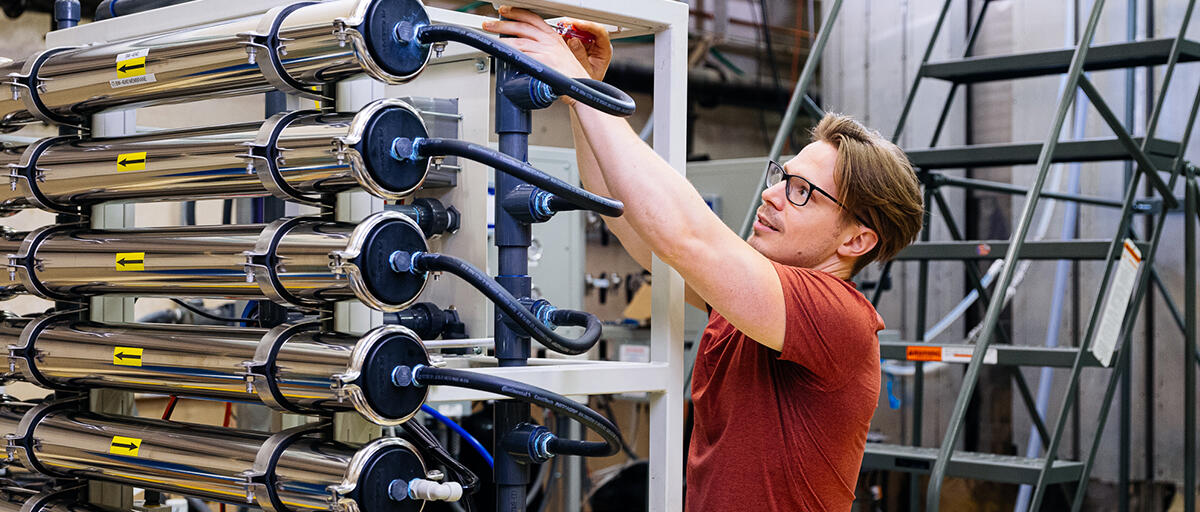
The bright yellow forklift crept forward, gracefully maneuvering the 20-ton steel tank through the entrance of Etcheverry Hall’s basement with only two millimeters to spare. Relying on the expertise of Berkeley Lab riggers, this tight squeeze was by design to maximize the size of the outer vessel of the Eos experiment.
“Named for the Titan goddess of dawn, Eos represents the dawn of a new era of neutrino detection technology,” says Gabriel Orebi Gann, a Berkeley Physics associate professor, Berkeley Lab faculty scientist, and the leader of Eos, an international collaboration of 24 institutions jointly led by UC Berkeley Physics and Berkeley Lab Nuclear Science.
Neutrinos are abundant, neutral, almost massless subatomic “ghost particles” created whenever atomic nuclei come together or break apart, including during fusion reactions at the core of the Sun and fission reactions inside nuclear reactors on Earth. Neutrinos are difficult to detect because they rarely interact with matter—about 100 trillion neutrinos harmlessly pass through the Earth and our bodies every second as if we don’t exist.
Berkeley researchers are using Eos as a testbed to explore advanced, hybrid technologies for detecting these mysterious particles.
“While at Berkeley, we’re characterizing the response of the detector using deployable optical and radioactive sources to understand how well our technologies are performing. And we’re developing detailed simulations of our detector performance to make sure they agree with the data,” says Berkeley Physics Postdoctoral Fellow Tanner Kaptanoglu. “Once we complete this validation, we hope to move Eos to a neutrino source for further testing.”
Ultimately, the team hopes to use their experimental results and simulations to design a much larger version of Eos—named after the Titan goddess Theia, mother of Eos—to realize an astonishing breadth of nuclear physics, high energy physics, and astrophysics research.
The Eos collaboration is also investigating whether these technologies could someday detect nuclear security threats, in partnership with the funding sponsor, National Nuclear Security Administration.
“One nonproliferation application is using the absence of a neutrino signature to demonstrate that stockpile verification experiments are not nuclear,” says Orebi Gann. “A second application is verifying that nuclear-powered marine vessels are operating correctly.”
Unique, hybrid neutrino detector
Like a nesting doll, Eos comprises several detector layers. The inner layer is a 4-ton acrylic tank, filled in stages during testing with air, then deionized water, and finally a water-based liquid scintillator (WbLS).
The barrel of this inner vessel is surrounded by 168 fast, high-performance, 8-inch photomultiplier tubes (PMTs) with electromagnetic shielding. Attached above the vessel are two dozen 12-inch PMTs. And attached below it are three dozen 8-inch “front-row” PMTs, with another dozen 10-inch PMTs below them.
In January, this detector assembly was gently lowered inside the 20-ton steel outer vessel, with Berkeley Physics Assistant Project Scientist Leon Pickard operating the crane as other team members anxiously watched.
“The big lift this was nerve-wracking. More than a year’s worth of work, dedication, and time from lots of people and then I was lifting it all together into the outer tank,” describes Pickard. “I knew the Berkeley Lab riggers taught me well so I was confident, excited, and definitely nervous.”
The buffer region between the acrylic and steel vessels is filled with water, submerging the PMTs. The outermost Eos layer is a muon tracker system consisting of solid scintillator paddles with PMTs.
By combining several novel detector technologies, Eos measures both Cherenkov radiation and scintillation light simultaneously. Its main challenge is to separate the faint Cherenkov signal from the overwhelming scintillation signal.
When neutrinos pass through Eos, one very occasionally interacts with the detector’s water or scintillator, transferring its energy to a charged particle. This charged particle then travels through the medium, emitting light that is detected by the PMTs.
When the charged particle travels faster than the speed of light in the medium, it creates a photonic boom—similar to the sonic boom created by a plane traveling faster than the speed of sound. This cone of Cherenkov light travels in the direction of the charged particle, making a ring-like image that is detected by the PMTs. In contrast, the scintillation light emits equally in all directions. Reconstructing the pattern of PMT hits helps distinguish between the two signals.
In addition to topological differences, Cherenkov radiation is emitted almost instantaneously in a picosecond burst, whereas scintillation light lasts for nanoseconds. The PMTs detect this time difference.
Finally, the observable Cherenkov radiation has a longer, redder wavelength spectra than the bluer scintillation light, which inspired the creation of dichroic photosensors that sort photons by wavelength. These dichroicons consist of an 8-inch PMT with a long-pass optical filter above the bulb and a crown of short-pass filters surrounding it. A dozen of the 8-inch, front-row PMTs attached to the bottom of the inner vessel are dichroicons. The concept for these novel photosensors was developed under the leadership of Eos collaborator Professor Joshua Klein, with Kaptanoglu playing a central role as part of his PhD thesis at the University of Pennsylvania.
If the light’s wavelength is above a certain threshold, a dichroicon guides Cherenkov light onto the central PMT. If the light is below that threshold, it passes through and is detected by the 10-inch, back-row PMTs.
“You effectively guide the Cherenkov light to specific PMTs and the scintillation light to other PMTs without losing light,” says Orebi Gann. “This gives us an additional way to separate Cherenkov and scintillation light.”
Another unique thing about Eos is its location.
“Although Eos is a Berkeley Physics project, the Nuclear Engineering department let us work in their space in the Etcheverry basement,” says Orebi Gann. “It’s unusual to work across departmental boundaries in this way. It’s a sign of how great and supportive Nuclear Engineering has been.”
Team work
Delivering the outer vessel into the building wasn’t the only tight squeeze—the Eos installation was temporally and physically tight.
Neutrino experiments often struggle to get their steel tanks manufactured, so everyone was excited last June when the tank headed towards Berkeley. Unfortunately, Orebi Gann received an email the next morning saying the tank was destroyed in a non-injury accident when the truck collided with an overpass in Saint Louis. After immediately calling her sponsor with the bad news, she mobilized.
“I started sweating. They would have killed our three-year project if we had to wait for the insurance claim,” says Orebi Gann. “Luckily, Berkeley Lab Nuclear Science Division Director Reiner Kruecken and others were really supportive, and we had enough contingency in the budget to buy another one. Within two weeks, we were under contract for a replacement. And the steel tank arrived three months later.”
Despite this delay, the collaboration assembled the detector, acquired and analyzed the data, and finished developing the detector simulations during the last year of funding.
“That’s the biggest setback you can have—your tank is crumpled. But with prudent planning, preparation, and scheduling agility, we were able to get right back on track,” says Pickard, also the installation manager.
In addition to Orebi Gann, Pickard, and Kaptanoglu, the Berkeley Physics installation team included former Project Scientists Zara Bagdasarian, Morgan Askins, and Guang Yang, Junior Specialist Sawyer Kaplan, graduate students Max Smiley, Ed Callaghan, and Martina Hebert, and undergraduate students Joseph Koplowitz, Ashley Rincon, and Hong Joo Ryoo. They were assisted by Berkeley Lab Staff Scientist Richard Bonventre, Senior Scientific Engineer Associate Joe Wallig, mechanical engineer Joseph Saba, and machinist James Daniel Boldi.
Given the tight timeline and limited space, another installation challenge was where to put all the detector components. Eos collaborators across the country coordinated to bring everything in at just the right time, fully tested and ready to go for the build.
“Some of the deliveries stayed temporarily at Berkeley Lab. Gabriel let us use her office to store hundreds of PMTs for a while. And the Nuclear Science folks were phenomenally accommodating, allowing us to store muon paddles, PMTs, and other parts on the Etcheverry mezzanine,” Pickard says. “We played a huge game of Tetris to get the detector put together.”
Data acquisition and reconstruction
Once assembled, Eos acquired and analyzed data in three phases.
This March, it measured “first light” by flashing a blue LED into an optical fiber that points into the detector and then detecting this light with the PMTs. During initial tests, the inner vessel contained air while ensuring all the detector channels were working and the PMTs were measuring single photons.
Next, they filled the inner tank with optically-pure deionized water and took data using various radioactive sources, optical sources, a laser injection system, and cosmic muons to fully evaluate detector performance. During this phase, Eos operated as a water Cherenkov detector.
“In a water Cherenkov detector, you have only Cherenkov light so you can do a precise directional reconstruction of the event. This helps with particle identification at high energies and background discrimination at low energies,” says Kaptanoglu, also the commissioning manager who helps identify the data needed. Among his other roles, he co-leads the simulations and analysis team with Marc Bergevin, a staff scientist at Lawrence Livermore National Lab.
Lastly, the researchers turned Eos into a hybrid detector by injecting into the water a water-based liquid scintillator, which was supplied by Eos collaborator Minfang Yeh at Brookhaven National Laboratory. This allowed the team to explore the stability and neutrino detection capabilities of the novel scintillator. Adding WbLS improves energy and position reconstruction, but it makes event direction reconstruction difficult. A key goal was to show that Eos could still reconstruct the event direction with the WbLS—proving WbLS as a viable, effective, and impressive neutrino detection medium.
“Our hybrid detector gives us the best of both worlds. We measure event directionality with the Cherenkov light, and we achieve excellent energy and position resolution and low detector thresholds using the scintillation light,” says Kaptanoglu, “But by combining Cherenkov and scintillation, we get additional benefits. For example, we can better tell what type of particle is interacting in our detector— whether it’s an electron, neutron, or gamma.”
Eos data analysis combines traditional likelihood and machine learning algorithms to reconstruct events. These novel reconstruction algorithms simultaneously use the Cherenkov and scintillation light, finding a ring of PMTs hit by the Cherenkov light on top of the much larger isotropic scintillation light background. The team also compared the two methods to see if machine learning gave them any advantages.
“Our goal was to show that we can do this hybrid reconstruction and that we can simulate it well to match with the experimental data,” says Kaptanoglu.
Their simulations entail microphysical modeling of every aspect of the Eos detector, characterizing in detail how the light is created, propagated, and detected. In addition to producing cool 3D renderings of the detector, Eos simulations will be used to help design future neutrino experiments.
“Our Monte Carlo simulations make predictions, and we compare those to our experimental data. That allows us to validate and improve the Monte Carlo simulations,” say Orebi Gann. “We can use that improved Monte Carlo to predict performance in other scenarios. It’s the step that allows us to go from the measurements we make at Berkeley to predicting how this technology would perform in different application scenarios.”
Next steps
Although their three-year project recently completed, Orebi Gann has applied for another three years of funding to extend Eos testing at Berkeley.
If funded, the team plans to explore different WbLS cocktails and various photosensor parameters. They are also considering upgrading to custom electronics.
During the additional three years, the team would also devise a plan for moving Eos to a neutrino source if they get follow-on funding. A likely location is the Spallation Neutron Source at Oak Ridge National Laboratory. This facility basically smashes neutrons into a target to produce a huge number of neutrinos.
“Moving Eos to the Spallation Neutron Source would allow us to demonstrate that we can see neutrinos with this technology, in a regime where it’s not as subject to the low energy backgrounds that make reactor neutrino or fission neutrino detection challenging. It’s a step on the road,” says Orebi Gann.
According to Orebi Gann, the next step after that would be to move Eos to a nuclear reactor to prove it can detect neutrino signals in an operational environment with all relevant backgrounds.
Theia fundamental physics
However, the ultimate plan is to use Eos experimental results and simulation models to guide how to design Theia-25 (or Theia-100), a massive hybrid neutrino detector with a 25-kiloton (or 100-kiloton) WbLS tank and tens of thousands of ultrafast photosensors.
Orebi Gann is a lead proponent of Theia, a Berkeley-led “experiment in the making.” If funded, Theia will likely reside at the Deep Underground Neutrino Experiment (DUNE) located in an abandoned gold mine in South Dakota.
Theia has two potential areas of fundamental physics research. The first is understanding the neutrinos themselves.
“In particle physics, we don’t know of any fundamental property that differentiates neutrinos from antineutrinos, so they could in fact be incarnations of the same particle,” she explains. “Understanding their fundamental properties and how they differ could, for example, help explain how the Universe evolved, including offering insights into why it is dominated by matter.”
The second area of fundamental physics research uses the very weakly interacting neutrinos to probe the world around us.
“A large WbLS detector would enable us to look at solar neutrinos, supernova neutrinos, geo-neutrinos naturally produced in the Earth, and a vast array of other measurements,” says Orebi Gann. “For example, solar neutrinos would give us a real-time monitor of the Sun.”
“What’s interesting about Theia is the breadth of its program. I can go on for an hour about the physics of Theia,” Orebi Gann adds. “I think Eos, and the other R&D technology demonstrators around the world, will allow us to realize something like Theia, which would have a rich program of world leading physics across nuclear physics, high energy physics, and astrophysics.”
Pamela Caton (BA ’92) has always been a “maker.” As a young person, she took jewelry, machining, and programming classes. When her radio broke, her dad suggested, “Try to fix it. It’s already broken, so what’s the worst that can happen?” Working on hardware brings her joy, and she is especially drawn to multi-disciplinary projects.
Caton has primarily worked on micro-electromechanical systems (MEMS). MEMS engineers use the same tools that an electrical engineer would use to build silicon chips, but they build electronically-controlled mechanical structures with moving parts.
As an optical MEMS engineer at AEye, Caton is helping to develop a light detection and ranging (lidar) sensor for automotive and smart infrastructure applications. For example, self-driving car companies could use AEye’s sensors to detect and identify the features of an object on the freeway, allowing the car to understand if it needs to avoid the object—is it a brick or a plastic bag?
A lidar sensor measures the distance to a target by sending out a short laser pulse, reflecting it off an object, and recording the time between the outgoing and reflected light pulses. By doing an array of laser measurements, engineers create a big map of distance information. Caton works on developing and testing the MEMS mirrors used for laser scanning.
Caton credits some of her success in industry to her Berkeley Physics training. “I have a really solid understanding of the fundamentals. Physics is a fantastic basis for all types of engineering,” she says. Her favorite classes were the advanced physics labs. “Professor Sumner Davis was fantastic. And I loved Physics 111 because it was so hands-on. You couldn’t get through the lab without understanding the theory, but you got your hands dirty too.”
Despite gravity being the dominant force on large scales, the quantum nature of gravity remains elusive. Now, Berkeley Physics Professor Holger Müller’s group has built the most accurate instrument for measuring gravitational attraction between atoms and a small mass—enabling the search for deviations from Newtonian gravity due to quantum effects or hypothetical “fifth-force” dark energy.
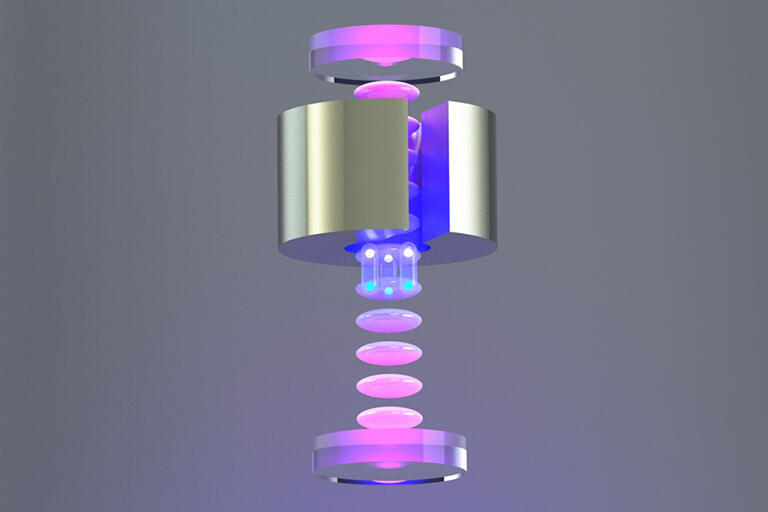
This novel lattice atom interferometer exploits both the particle-like and wave-like properties of matter. Clouds of laser-cooled cesium atoms in a vacuum chamber are immobilized for up to 70 seconds using a vertical optical lattice, which passes through the center of a hollow tungsten cylinder. Each atom is then excited into a quantum superposition, where the atom exists as partial wave packets in two locations simultaneously. The wave packet closer to the tungsten experiences more gravitational pull, changing its phase. When the lattice is turned off, measuring the phase difference between the wave packets reveals their difference in gravitational attraction. The researchers made these precise measurements for atoms above and below the tungsten to reject systematic errors.
“Gravity pushes down the atoms with a force a billion times stronger than their attraction to the tungsten mass, but the restoring force from the optical lattice holds them, like a shelf,” says Cristian Panda, a former postdoctoral fellow in Müller’s lab. “We then split each atom into two wave packets, so now it’s in a superposition of two heights. And then we take each of those two wave packets and load them in a separate lattice site, a separate shelf, so it looks like a cupboard. When we turn off the lattice, the wave packets recombine, and the quantum information acquired during the hold is read out.”
Using improved laser systems and cooling with their optical lattice, the team achieved four times better accuracy than previous interferometry measurements that used “free-fall” atoms. Their results were consistent with Newtonian gravity and placed limits on dark energy candidate particles.
Image Caption: Physicists at UC Berkeley split atoms into two wave packets (blue-white split spheres below cylinder) separated by microns that were then immobilized for many seconds in a vertical optical lattice (pink blobs). By recording the phase difference between wave packets that are closer and further to a tungsten mass (shiny cylinder), they were able to measure the weak gravitational attraction of the cylinder. (Cristian Panda/UC Berkeley)
Stephen Hawking showed a black hole constantly emits radiation that contains almost no information about its interior, causing the black hole to slowly evaporate. This suggests some information is irretrievably lost when the black hole dies. Theorists ever since have struggled to resolve the Hawking Information Paradox, which states information can neither be emitted from a black hole nor preserved inside it forever.
Based on Hawking’s calculations, the radiation and black hole are quantum mechanically linked, and this entanglement keeps rising until the black hole evaporates with quantum information. But theorists later determined the entanglement peaks when the black hole is massive and then drops to zero—so information can escape.
As part of this work, Berkeley Physics Assistant Professor Geoff Penington co-discovered “entanglement islands” sticking out of black holes, created when particles deep inside a black hole are reassigned to the radiation. Why this rearrangement occurs is a mystery, but entanglement islands may be the key to identifying how information escapes.
“Complementarity” theory hypothesizes information is stored in the black hole’s surface while also passing inside, creating two copies of information representing different viewpoints that can’t be simultaneously observed. “Firewall” theory hypothesizes everything falling into a black hole is incinerated by a physical firewall of energy surrounding an empty black hole, contradicting general relativity.
New research by Berkeley Physics Professor Raphael Bousso and Penington suggests entanglement islands protrude further than initially thought—as much as an atom beyond a black hole’s surface.
“Getting a scientific instrument within an atom’s width of a black hole horizon requires far more advanced technology than our current spaceships,” says Bousso. “But in principle we can tell which theory is correct by experimentally probing a black hole from the outside. This was a huge surprise.”
Scientists across the nation are both fascinated by the work done at the Department of Energy’s national laboratories and could make important contributions to that work. Still, many of them – especially those at institutions historically underrepresented in the research community – don’t have the financial support or pathways they’d need to take part.
Such was the case for Southern University and A&M College’s Fred Lacy and Skyline College’s Kolo Wamba – but this summer both got a chance to learn from and contribute to research at DOE’s SLAC National Accelerator Laboratory through DOE’s Visiting Faculty Program (VFP).
The program aims to enhance the faculty’s research competitiveness and STEM instruction, while helping to expand and diversify the workforce vital to DOE’s mission areas. VFP is designed for full-time faculty from schools that are not major research universities, known as R1 universities, or from historically black colleges or universities, said Hillary Freeman, SLAC’s STEM Education Program Manager. “Selected faculty members participate in research that they are interested in alongside SLAC scientists with similar interests,” Freeman said. “The goals include providing these faculty with access to world class research, learning new skills that can be brought back to the classroom to help develop the next generation of scientists, and perhaps moving their home institution towards an R1 status.”
Freeman noted that faculty can also bring students with them, which helps further the program’s goals.
“We need to create more awareness about the Visiting Faculty Program, which among other things gives our researchers the opportunity to leverage relationships with minority-serving institutions and the faculty who work there,” said Natalie Holder, chief diversity officer at SLAC. “It’s incredibly important that our researchers meet these visiting faculty, work alongside them, and exchange information.”
Enhancing microelectronic devices
Lacy, a professor and the chair of the electrical engineering department at Southern University and A&M College in Baton Rouge, Louisiana, participated in the program to grow as a research engineer and person, as well as share the experience with Southern University’s students in the classroom.
Having no previous affiliation with DOE laboratories, Lacy established the partnership with SLAC through the VFP application process and ended up connecting with SLAC scientist Sander Breur in the Instrumentation Division of SLAC’s Technology Innovation Directorate (TID). “The Instrumentation Division consists of about 60 engineers, technicians, and scientists who fully focus on creating the technical capabilities that many of SLAC’s experiments require,” Breur said. “To conduct the required research, and help train the next generation of instrumentation experts, TID actively works on creating connections such as with the Visiting Faculty Program.”
This summer, Lacy tackled two projects to help develop microelectronic devices that may be included in future detector designs. The first, Tiny Machine Learning (TinyML), is led by SLAC engineers Dionisio Doering and Abhilasha Dave. The effort incorporates machine learning algorithms in microelectronic circuits to provide “edge computing,” enabling data to be analyzed closer to sensors and in real time instead of processing data remotely after collection. The main challenge of edge computing is having enough memory and hardware to perform and store the calculations.
“Researchers typically perform calculations by running really large, complex computer programs on large computers. If you reduce the number of lines of code and the digits representing each number in the calculations, then you can reduce the amount of necessary hardware,” said Lacy. “But how does that affect accuracy? What trade-offs are acceptable for particular applications? That’s what we’re exploring.”
In addition to the potential application of providing local, real-time data analysis for physics experiments, TinyML could be used in implanted or wearable devices for healthcare monitoring or in automotive systems for detecting drowsy drivers.
Lacy also worked towards developing application-specific integrated circuits that perform better in harsh environments for cryogenic and radiation experiments. This hardware-based Power Management through Integrated Capacitors (PMIC) project is led by SLAC engineers Hugo Hernandez, Aldo Perez, and Lorenzo Rota.
Currently these integrated circuits (or computer chips) need external capacitors to provide and store electric charge, but these capacitors are bulky and tend to be too contaminated by trace radiative impurities for some experiments. To address that issue, the PMIC project is exploring microfabrication techniques to integrate capacitors into the computer chips themselves. This summer, Lacy did preliminary materials testing of small capacitors in super cold environments.
“Working with both SLAC groups was a fabulous experience,” said Lacy. “I plan to continue the TinyML project at my home institution and will start involving students. I also plan to teach them the basics of the PMIC project, so they can immediately make an impact when I bring them to SLAC, hopefully next summer. But I’ll also mention my VFP experience to students in all of my classes to open their minds to different career options, because the national labs aren’t on their radar the way Fortune 500 companies are.”
Improving xenon purity monitoring
Wamba, a physics and astronomy professor at Skyline College in San Bruno, California, has a longstanding relationship with SLAC – including earning a PhD in applied physics at Stanford University based on performing research for the EXO-200 experiment, the predecessor of nEXO, with Martin Breidenbach, a professor emeritus at SLAC.
The nEXO project is a proposed international nuclear physics experiment that will use an enormous tank of liquid xenon to search for neutrinoless double beta decay. If this rare and hypothetical process is discovered, it would prove that neutrinos are their own antiparticles and help physicists understand various mysteries of the universe, including why there is more matter than antimatter in the universe.
Wamba formally joined the nEXO collaboration as a faculty member in 2021, and has previously brought students to SLAC through the DOE’s Research Traineeships to Broaden and Diversify pilot program. Rather than continuing this work through Skyline College’s new RENEW program, Wamba applied to VFP.
“The VFP is a good fit for supporting my nEXO research because the funding program is limited to summer, so it doesn’t conflict with my teaching responsibilities,” Wamba said.
This summer, Wamba worked with SLAC physicist Peter Rowson on nEXO’s xenon purity monitor (XPM) system, a custom-built apparatus used to determine the chemical purity of a liquid xenon sample after it has been exposed to materials that could generate impurities. Originally, Wamba planned to run the XPM a “bunch of times,” acquiring and analyzing various data sets under different conditions.
Although troubles with a faulty power supply got in the way of those plans, there was a silver lining. “We didn’t get to run the xenon purity monitor as many times as I was hoping this summer,” Wamba explained. “But on the flip side, this gave me an unexpected opportunity to construct hardware that simulates the XPM so we can characterize its systematic errors. I wasn’t even thinking of doing that at the beginning.”
Wamba programed a waveform generator to create a “ground truth” signal that would mimic the output of the XPM. This hardware simulator was then used in place of the XPM, running the signal through the entire system and analysis chain. By comparing the resulting signal with the ground truth one, the systematic errors were characterized, using fewer assumptions than a previously planned software simulator.
Wamba plans to reapply to the Visiting Faculty Program and bring at least one student next summer to do other nEXO research projects. “I plan to use project-based learning where I guide students and teach them whatever they need as it comes up.”
Holder was happy to hear that Lacy and Wamba both intend to bring students to SLAC. “The goal for the future is to have the visiting faculty bring some of their students along with them, and to ignite that interest in their students to come back eventually to study, maybe at Stanford while pursuing their PhDs, and then eventually to become our colleagues as staff, researchers, faculty, and maybe even one day as a lab director,” Holder said.
Lacy and Wamba were supported by the DOE’s Visiting Faculty Program, a component of DOE’s Workforce Development for Teachers and Scientists program. SLAC researchers were supported in part by the DOE Office of Science.
AS AN UNDERGRADUATE at UC San Diego, I knew I wanted to work in science or engineering but I wasn’t sure what I specifically wanted to do “when I grew up.” That’s why I majored in physics–it’s versatile.
After earning a PhD in physics at UC Santa Barbara, I worked for years as an academic researcher at Lawrence Berkeley National Lab (LBNL). I later veered off this career path, merging my passions for science and writing. On the surface, my physics degrees may seem unnecessary for a science journalist, given that I mostly write about medical research. But my physics training is integral to how I research, interview, and write. So, I was intrigued to speak with several Berkeley Physics alumni doing non-academic jobs to see how they apply their physics degrees.
“Physics education and training will serve you well in whatever profession you want to pursue.”
Marc Peters is an intellectual property attorney at Turner Boyd LLP. He helps clients resolve disputes related to technology, including those involving patents, trade secrets, and copyrights.
According to Peters, “thinking like a physicist” means approaching issues with the right level of abstraction, which helps determine what matters, what does not, and what is “good enough.” It also requires the curiosity to always ask “why.” These are key skills for a successful litigator.
“I was fortunate to have Professor Marjorie Shapiro as my advisor and to work with the CDF group at LBNL. They taught me how to break down any problem into solvable chunks and how to work with a group of really smart people, which I am fortunate to still do,” says Peters. “And my electronics, semiconductor, programming, and teaching experience helps me understand my clients’ technology and helps me communicate it to non-technical judges and juries.”
Peters offers some advice to current students: “Physics education and training will serve you well in whatever profession you want to pursue. You’ll learn how to learn—and that is a huge advantage in any career, inside or outside of science.”
Erika Isomura is currently a fifth-grade elementary school teacher at the Hayward Unified School District. Although she initially thought she would teach high school physics, she’s spent the last 25 years teaching all grades between second and sixth grade.
When discussing her work, she sounds like an experimental researcher. “In teaching, you don’t know in advance how things are going to turn out. So, you think about the variables, potential outcomes, and desired outcomes. And then you try things out with the kids, reflect upon what you learned, refine, and use those modifications the next day,” says Isomura. “I tease my kids that I’m a scientist experimenting on them.” She also applies this experimental approach to teaching yoga to kids.
Isomura credits her methodical planning skills to her Berkeley Physics training. Teachers need to be able to identify an end goal, as well as break that goal into manageable chunks that help students feel successful, she says.
“My work has also benefited from the classes I took at Cal. I often tell my kids about Professor Clarke, my quantum mechanics professor. His tests were open. He said it was more important that you knew how to apply the concepts than memorize or just blindly derive things. And I’ve taken that to heart,” Isomura says. “I mostly use application-level exams, rather than asking students to memorize and regurgitate something; I think that’s benefited my students.”
David Brahm recently retired as a financial portfolio manager at Geode Capital Management. As a quantitative analyst, he typically spent his days programming mathematical financial models—using databases of financial statements from several thousand companies—that aimed to maximize stock returns and minimize risk. As he describes this big data optimization problem, he is clearly still thinking like a physicist.
“To a physicist, a stock portfolio is a vector of expected returns. And every stock has some volatility, but there are also strong correlations; for example, within the airline industry. So, risk is basically a covariance matrix. And we can put these together to solve a straightforward quadratic optimization problem, where we maximize the return and minimize the risk,” explains Brahm. “Like a physicist, we make simple, useful models. However, these models can fail during an extreme event like the pandemic.”
Jeffrey Hunt is a Senior Technical Fellow at the Boeing Company. He is essentially a professor in an international company. He publishes, gets patents, gives talks, and interfaces between the technical and managerial sides of the company—always pushing the forefronts of their technology.
According to Hunt, Berkeley Physics training contributed to his success in industry. “I learned how to see the big picture, be creative, and solve problems,” he says. “My training was also very broad—optics, electronics, computer algorithms, and more—which has enabled me to reinvent myself, move around, and advance at Boeing. A physics degree is the liberal arts degree for the new millennium.”
Hunt also appreciates that his Berkeley Physics group included students and postdocs from around the world, preparing him for global collaborations.
Nasreen Gazala Chopra is the Vice President of Systems Engineering and Sustainability at Applied Materials. She spends most of her time in meetings, where she relies on the fundamentals that she learned at Berkeley Physics to successfully understand and engage in technical discussions.
“Physics also helped me think more clearly and become a stronger problem solver,” she says. “Its generality helped me get an entry ticket to jobs. And I get a lot of respect as a capable person because physics is challenging.”
Since getting her PhD in physics at Berkeley, Chopra has worked in various roles, industries, and companies, including a Silicon Valley startup, Apple, the solar industry, and the semiconductor industry. She is now excited to share this industry experience as a new member of Berkeley’s College of Letters and Science Advisory Board.
“I’m looking forward to brainstorming with my fellow board members on how we can enrich the students’ curricula and experiences,” she says. “Berkeley has a reputation for being a leader in change. I’m interested in having a frontline seat to see how that’s being implemented.”
BERKELEY PHYSICS FACULTY ARE DRIVEN to understand the fundamental physics of materials. Theorists hypothesize the existence of new forms of matter and behaviors, and their experimentalist colleagues develop novel materials and tools to observe these exotic properties.
“We can now control parameters to systematically study how a material goes from one quantum phase to another quantum phase,” says Berkeley Physics Professor Feng Wang, the Williams H. McAdams Chair in Physics. “Instead of solving equations in a computer, we can design model systems in our lab to test and understand the underlying mechanisms of phase formation and the properties of different phases.”
The community of condensed matter physicists researching exotic materials includes experimentalists Mike Crommie, Alessandra Lanzara, and Wang, who are physics professors at Berkeley and senior faculty scientists at Lawrence Berkeley National Lab.
Although understanding the fundamental physics is what most excites Berkeley physicists, they also expect exotic materials to lead to important applications.
“People talk about using these new materials for future quantum technology—either in quantum sensing or quantum computation—where switching is done by alternating between quantum states,” says Wang. “People are also exploring whether they can replace silicon, allowing transistors and electronics to become even more miniaturized.”
BUILDING EXOTIC 2D MATERIALS
How to create exotic 2D materials is not obvious, but Crommie offers some guidance. “In most conventional materials, the periodicity—the distance between the atoms and how they’re arranged in the lattice—determines the behavior. Electron-electron interactions and topology don’t play a big role,” says Crommie. “We make so-called exotic 2D materials by modifying these properties using techniques developed in recent years, using three general approaches.”
In the first approach, the researchers stack and rotate atomically-thin layers of different materials to create what is called a 2D moiré superlattice. Strong covalent bonds provide in-plane stability, whereas relatively weak van der Waals forces hold the layers together. And a small mismatch in the spacing of the atoms between the layers produces an interference pattern—like when you put two screens together and rotate one—thus creating a new superlattice periodicity.
“Moiré superlattices allow us to engineer new lattices for electrons and to control their correlation behavior,” says Wang. “We’re building quantum materials by design with an unprecedented control that doesn’t exist in nature.”
In the second approach, the scientists induce exotic behavior from conventional 2D materials by very carefully controlling the electron density and screening environment.
“For example, if we take a single layer of a transition metal dichalcogenide (TMD) and put electrons in it at a very low density, then the electrons crystallize into a pattern called a Wigner crystal,” says Crommie. “That’s a very exotic behavior where the electrons freeze like ice into a new crystalline phase, because the potential energy dominates over the kinetic energy. Wigner crystals were predicted almost 90 years ago, but we can image them now in new 2D materials.”
In the third approach, they create novel excitonic states in topological insulators, materials that behave like an insulator in their interior but conduct electricity along their surfaces.
“On the surface of a topological insulator, it’s like there are two freeways for electrons. Electrons with one spin move in one direction, and electrons with the other spin move in the opposite direction,” says Lanzara, the Charles Kittel Chair in Physics. “Our goal is to use optical pulses and leverage the topology and bulk/surface properties of these materials to engineer new quasiparticles.
“Having access to higher resolution tools and new ways of probing materials is how we make new discoveries. It’s a must if you want to lead the way to new science.”
DEVELOPING NOVEL TOOLS
To build and investigate a diverse range of exotic 2D materials, Berkeley physicists are pioneering new techniques. “Having access to higher resolution tools and new ways of probing materials is how we make new discoveries. It’s a must if you want to lead the way to new science,” Lanzara says.
These experimentalists have favorite tools; for example, Wang specializes in studying how light interacts with materials.
“We use optical photons from near microwave to UV,” says Wang. “The combination of optical modalities depends on the material and the specific questions we’re trying to answer.”
Optical spectroscopy is Wang’s primary technique. But his group also uses scanning tunneling microscopy (STM), including a novel non-invasive spectroscopy technique he developed with Berkeley Physics Professors Alex Zettl and Michael Crommie.
Together they built a moiré superlattice from single layers of tungsten diselenide and tungsten disulfide and then added a spacer layer of boron nitride capped by a top layer of graphene. The graphene layer enabled them to sense a delicate crystal of electrons within the TMD moiré structure without destroying it with the STM tip. The spacer layer prevented electrical shorting and permitted independent doping for the TMD and graphene layers.
“We made the first real-space images of 2D Wigner crystals in our moiré superlattice by actually imaging a lattice formed by electrons. We were able to see the correlated ground state and interesting excited state properties,” Wang says.
This approach could also be used to image electron lattices in other materials, rather than relying on a “magic angle” between the layers to control the correlations. “Our TMD moiré superlattices exist even at zero twist angle due to the lattice mismatch, and the correlation effects remain strong,” says Wang.
Berkeley physicists are also directly measuring electrons and spin in momentum space using novel spin-, time-, and angle-resolved photoemission spectroscopy pioneered by Lanzara and her coworkers. In this technique, a material is irradiated with a beam of ultrafast photons and the spin, speed, and direction of the ejected photoelectrons are measured with incredible sensitivity to figure out what’s happening inside the material. Lanzara’s latest instrument, named the momentum nanoscope, can also look at real space.
Lanzara recently used her state-of-the-art system on the topological insulator bismuth telluride to search for novel types of excitons, which are charge-neutral quasiparticles created when light is absorbed in a semiconductor. Her team discovered and characterized the first spatially indirect topological exciton state. “The electron trapped on the surface is coupled to a hole confined in the bulk, generating a long-lasting spatially-separated exciton that retains the special spin properties inherent to topological states,” she says.
One potential application of exotic materials is sustainable electronics that stays cool. “Your cell phone and computer heat up because charges bounce into each other as they move,” explains Lanzara. “Some of these new 2D and topological materials allow information to be transported instead through spin, minimizing interactions and eliminating heating issues. Moreover, they can be combined as Lego-like blocks, enabling easy assembly of materials on demand that are reusable and recyclable.”
Just think, you might have an exotic 2D material in your pocket someday.
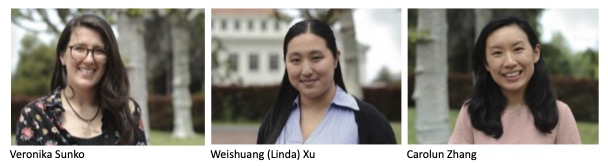
Berkeley Physics was delighted to host the 2023 Rising Stars in Physics Workshop this spring, sponsored by the Heising-Simons Foundation. This event brought together 24 outstanding women physicists and astronomers for two days of scientific talks and informal discussions aimed at helping them navigate the early stage of their academic careers.
The workshop was led by Pablo Jarillo-Herrero, associate professor of physics at MIT and founder of the workshop series, and Alessandra Lanzara, professor and Charles Kittel Chair in Physics at UC Berkeley. Lanzara’s personal experiences motivated her to help organize it. “My first years at Berkeley were difficult with too few role models in my department. I often felt lonely and like I didn’t belong,” says Lanzara. “These types of workshops help create a network for young women to share experiences, challenges, and ideas with their peers and senior colleagues to help them succeed.”
The highlight of the workshop for many of the participants was getting to know each other—through workshop sessions and casual interactions over meals or in an airport shuttle. “Meeting my physics peers from different fields was amazing,” says Veronika Sunko, Miller Postdoctoral Fellow. “The atmosphere was different with 80% of the people in the room being women. It was fun.” Sunko is a condensed matter experimentalist studying quantum materials with Berkeley Physics Professors Joe Orenstein and James Analytis. “We use lasers to learn about the magnetism of materials that exhibit an interesting interplay of magnetic and electronic degrees of freedom, yielding new phenomena that we’re working to understand,” she says.
Weishuang (Linda) Xu, postdoctoral researcher at the Berkeley Center for Theoretical Physics, enjoyed the keynote speeches by senior investigators. “Very accomplished people talked in-depth about their career trajectory and the massive-scale projects they’re overseeing,” says Xu. “I also appreciated the participants’ talks. I rarely hear about research outside my narrow niche of theoretical particle physics.” Xu works on various projects with different collaborators, using astrophysics and cosmology tools to study the particle nature of dark matter. “For example, I collaborate with Berkeley Physics Assistant Professor Ben Safdi. We’re analyzing data of gamma rays that come from the middle of our galaxy to search for Higgsino dark matter,” explains Xu.
As a new postdoc at the Harvard Society of Fellows, Carolyn Zhang soaked in career tips from workshop panelists on how to apply for faculty positions, build a research group, and balance commitments. “It was helpful to hear about different people’s unique journeys to where they are today. And it was cool to see so many women physics professors in one room,” she says. As a condensed matter theorist, Zhang studies the quantum phases of matter and the transitions between them. But her interests are broad and her fellowship is not tied to a single department.
Zhang also appreciates the volunteers who devoted time to organize the workshop. “They seemed genuinely passionate about supporting women entering the physics field, which was very encouraging.”
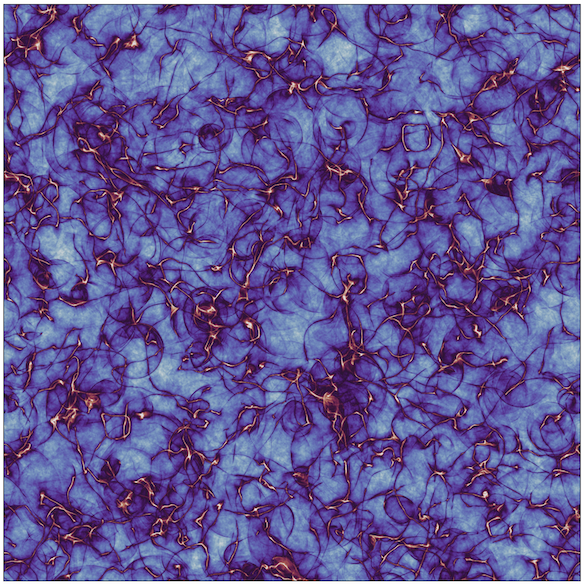
A zoom-in of axion strings in a simulation of axion dark matter in the early universe. The strings throw off axions that go on to become that dark matter. These simulations are used to predict the properties of the axion, which informs laboratory detection efforts. (Ben Sadfi, UC Berkeley)
SCIENTISTS HAVE BEEN STUDYING THE COSMOS for centuries, but we still don’t know what makes up 85% of all matter in the universe. Unlike ordinary matter that we can see and feel, dark matter hasn’t been observed directly by even our most advanced scientific instruments. These invisible particles may be zipping through us all the time without interacting.
But scientists believe our world wouldn’t exist without dark matter. Its gravitational pull holds galaxies together, gathers them into clusters, bends light around them, and affects how they rotate. Dark matter also played a crucial role as galaxies initially formed.
“Lots of observational data show us that dark matter is a real particle, but we don’t know what kind. Its possible mass has a huge range, and there might be multiple types of dark matter particles,” says Berkeley Physics Professor Dan McKinsey, the Georgia Lee Chair in Physics. “We’re working hard to detect dark matter in the lab to open a window into new physics. It’s the only particle we know to exist outside the standard model.”
Berkeley Physics is one of the top places in the world to study dark matter. Experimental and theoretical physicists at Berkeley are leading far-reaching searches—hunting for dark matter candidates ranging from 1 TeV weakly interactive massive particles (WIMPs) to 1 MeV light dark matter particles down to 10 μeV axions.
Berkeley faculty are conducting, building, and designing next-generation dark matter experiments, including the LZ, SuperCDMS, TESSERACT, and ALPHA plasma haloscope. These innovative experiments are guided by models developed by Berkeley Physics theorists, including professors Hitoshi Murayama, Lawrence Hall, and Ben Safdi. We highlight only a few of these comprehensive efforts here.
HUNTING FOR WIMPS WITH LZ
One promising candidate is WIMPs, weakly interacting but heavy dark matter particles with a predicted mass of about 10 GeV to 100 TeV. A GeV is roughly the mass of a proton.
Hunting for WIMPs over 9 GeV is the aim of LZ, the larger and more sensitive successor of the LUX experiment. After 60 days of running, LZ recently became the most sensitive dark matter detector in the world. Berkeley Physics Professor and Berkeley Lab Director Mike Witherell, Emeritus Professor Bob Jacobsen, and McKinsey contributed to this success.
Because dark matter particles rarely interact with ordinary matter, their signal is easily drowned out by background noise. To shield from cosmic rays, LZ is located nearly a mile underground at the Sanford Underground Research Facility (SURF) in South Dakota. To reduce radioactive contamination, it uses ultra-clean detector materials. And to lower environmental backgrounds, it is built in several layers like an onion.
At the center of LZ is a time projection chamber (TPC)—a tank filled with seven tons of highly-purified liquid xenon. If a dark matter particle strikes a xenon nucleus, a flash of light and an electric charge are produced as the nucleus recoils. A strong electric field drifts the charge to the top surface of the TPC, where the electrons create a much larger flash of light that is measured by photomultiplier tubes on top and bottom.
The pattern and timing of the two flashes pinpoint the position and energy of the event. And the ratio of the two scintillation signals determines if the event was caused by a nuclear or electron recoil.
Outside the TPC are two veto detectors—a “skin” hold- ing three tons of liquid xenon and then an “outer detector” of gadolinium-loaded liquid scintillator—which are used to reject signals from gamma rays and neutrons, respectively. The whole thing lives inside a massive tank of water.
LZ is 25 times larger than the previous generation LUX experiment, which helps suppress backgrounds. But this increase also created a major challenge for McKinsey: designing and building a much higher high-voltage system to get the correct drift electric field, without the xenon lighting up like a neon lamp.
McKinsey also led the data analysis effort to reduce “accidental backgrounds” with support on backgrounds from Berkeley Physics postdoc Ibles Olcina and graduate students Jose Soria, Yue Wang, Ryan Gibbons, Ryan Smith, and James “Reed” Watson. “Occasionally, isolated first and second scintillation pulses randomly pair up to look like a dark matter event,” explains McKinsey. “My group combed through data, produced a statistical model, and developed cuts to reduce these accidentals without cutting into our dark matter acceptance.”
So far, LZ has found no evidence of WIMPs, but it set the most stringent limits on WIMP cross-sections and masses to date. And the second 1000-day run is underway.
“LZ is performing to specification, which is a big deal since we’ve been working on it for a decade,” says McKinsey. “We’re now poised to push through more dark matter parameter space over the next few years.”
McKinsey is also helping to design the next-generation of LZ, a scaled-up 80-ton xenon experiment called XLZD.
SEARCHING FOR LOW-MASS WIMPS WITH SUPERCDMS
SuperCDMS, the next-generation of the CDMS experiment, is located deep underground at SNOLAB near Sudbury, Canada. It plans to detect dark matter particles with a mass between 10 GeV and 0.5 GeV. Berkeley Physics Professor Emeritus Bernard Sadoulet led the NSF-funded part of its construction.
Searching for dark matter with lower mass requires more sensitive detectors. SuperCDMS uses germanium or silicon crystals attached to sensors on both faces. When a dark matter particle interacts with either semi-conductor, its nucleus recoils and creates minute crystal vibrations (phonons) and ionization (charge). An electric field causes the charge to drift and shed lots of phonons.
“Measuring both phonons and ionization gives us discrimination capability against backgrounds. And drifting the charges in the high-voltage detector increases our energy sensitivity by a factor of 100, allowing us to search for lower masses,” says Sadoulet.
However, measuring these phonon signals is challenging. Berkeley Physics Assistant Professor Matt Pyle played a major role in developing this unique sensor technology with the help of Berkeley’s associate research physicist Bruno Serfass and former postdoctoral fellow William Page.
At its core are transition-edge sensors (TES)—materials stabilized in the middle of their superconducting transition—attached to aluminum fin antennas. The fin absorbs the energy of the vibrations, concentrates it, and pushes it into the TES. The resulting increase in TES temperature changes its resistance, which is measured by cryogenic electronics.
“These phonon sensors need to be small to reduce their heat capacity. But if they’re attached directly to a giant crystal, an athermal phonon bounces around for a long time before it interacts with the TES. By using fins, we increase the interaction probability and area coverage,” says Pyle, the Michael M. Garland Chair in Physics.
He adds, “Only about 30% of the energy is transferred to the TES using the fins, but that’s more than made up for by collecting the phonons quickly before they thermalize.”
The collaboration is currently installing the experiment at SNOLAB. Meanwhile, they have been commissioning the SuperCDMS detectors, software, and operations at CUTE, a nearby cryogenic underground test facility at SNOLAB.
Sadoulet notes that Berkeley Physics collaborations encourage technology and data analysis transfer between various groups. The core athermal phonon sensor technology and discrimination methods are being used in multiple experiments, including SuperCDMS and TESSERACT.
“We’re giving a single solution that will hopefully be employed many times by many different experiments, all searching for slightly different things,” says Pyle.
SEEKING LIGHT DARK MATTER WITH TESSERACT
TESSERACT intends to take the dark matter search a step further. This umbrella of two experiments is being designed to detect light dark matter particles from both nuclear and electron recoils, in the mass range of the proton to the electron—1 GeV down to 1 keV.
The entire project will use identical Berkeley Physics next-generation sensors, readout technology, and operations—and no electric field for signal amplification.
“What makes TESSERACT unique is that every detector is designed to have multiple signal channels that have to be in coincidence for dark matter events. That’s the secret idea sauce of TESSERACT,” says Pyle. “We’re also eliminating a whole class of backgrounds by going to zero field, which means we need very highly sensitive detectors.”
McKinsey’s group is helping develop TESSERACT’s HeRALD experiment with assistance from Assistant Project Scientist Junsong Lin and graduate students Roger Romani, Will Matava, and Wang. HeRALD uses purified liquid helium as the target for nuclear recoil dark matter. Its silicon athermal phonon detectors are submerged in the vat of liquid helium and suspended in a vacuum above it.
“Using helium provides excellent background discrimination. If a dark matter event occurs in the helium, it lights up multiple pixels in coincidence, whereas a background event or microfracture in the silicon only lights up one pixel.” Helium is also cheap, easy to purify, easy to scale up, and naturally immune to some backgrounds. HeRALD will initially be sensitive to dark matter particles from 1 GeV to 100 MeV, but the scientists hope to reach the keV scale in the future.
Pyle’s group is helping develop TESSERACT’s SPICE experiment. It uses polar crystals—either gallium arsenide (GaAs) or sapphire (Al2O3)—as the target for both nuclear and electron recoil dark matter. A polar crystal has two types of ions with opposite charges. Some dark matter candidates may transform themselves, with low probability, into photons, which then nudge the different ions in opposite directions. This produces phonons that can be detected by the TES.
For the GaAs part of SPICE, the photons and phonons are collected in separate detectors, enabling photon-phonon coincidence to tag the unique dark matter signature, says Pyle. This scheme is designed to detect dark matter between 1 GeV to 1 MeV, caused primarily by electron scattering.
To detect dark matter with even lower mass, the second part of SPICE measures only the athermal phonon signal using sapphire detectors with even better energy sensitivity.
Pyle’s group is unraveling how to read out and calibrate these sapphire crystalline targets using his latest TES. Currently, the detectors are sensitive to dark matter in the GeV to MeV range, but the team hopes to get down to a keV.
McKinsey and Pyle are both enjoying their tabletop experiments. “If the detector is sensitive enough, then you can in principle detect light dark matter in your lab at the surface. It could happen,” McKinsey says. But TESSERACT will be installed underground in the next few years—at SURF or the Modane Underground Laboratory.
PROBING FOR AXIONS
Berkeley Physics Assistant Professor Ben Safdi studies other dark matter candidates, but he finds the ultra-light axions to be the most compelling because they explain more than dark matter. Axions were first theorized to explain the mystery of how neutrons behave in electric fields. And they have deep connections to the consistency of gravity at a quantum level.
“Axions are theoretically very well motivated, and they’re almost completely unexplored experimentally,” says Safdi, who holds the Henry Shenker Professor in Physics. “In the next decade or so, we’ll be able to say definitively whether or not these particles exist in nature.”
Although Safdi is a theoretical physicist, he looks for indirect signatures of dark matter in experimental data with his team, including graduate students Yujin Park and Joshua Benabou. “My work starts theoretically, with pencil and paper and then simulations. For a particular astrophysical system or precision laboratory experiment, we ask how axions would affect it and what data we need to test these predictions. Then, we get and analyze those data sets, determining if we find evidence for axions or not,” explains Safdi.
Additionally, Safdi spends much of his time simulating how axions were produced shortly after the Big Bang to determine what mass gives the correct abundance of dark matter. For this work, he uses advanced supercomputers at the National Energy Research Scientific Computing Center (NERSC) at Berkeley Lab, which just commissioned its faster and bigger Perlmutter supercomputer. “We have lots of jobs up the hill churning away. It’s a game changer for our mass prediction computations,” says Safdi.
One feature he needs to simulate in the early universe is axion strings, which are very violent but narrow regions of space—like tiny tornadoes—that whip around and emit lots of axions.
“During the simulations, a small part of the expanding universe is represented by a 3D grid over which the equations are solved,” explains Safdi. “But the axion strings are moving, so we have to dynamically update the grid. Despite running on supercomputers, computer memory is our limiting factor.”
Luckily, Safdi teamed up with the AMReX collaboration at Berkeley Lab, adapting their code framework designed to solve multi-scale problems. The key was using an adaptive mesh grid with a fine spatial resolution around the axion strings and sparse resolution elsewhere.
Using the biggest simulation of cosmology to date, they more precisely predicted the axion mass to be between 180 to 40 μeV, higher than expected. This claim implies axions from the early universe can’t be detected by the current experiments, which use a microwave resonance chamber to enhance the photon frequency coming from axions. The required chamber would be too small to get a measurable signal.
However, Safdi’s prediction excited Berkeley Nuclear Engineering Professor Karl van Bibber. He is building the ALPHA plasmonic haloscope, which creates resonant enhancement using parallel wires in a strong magnetic field. And van Bibber is waiting to tune his experiment using the more precise predictions Safdi is now calculating with the Perlmutter.
Overall, Berkeley Physics’ search for dark matter is casting an impressively wide net. “Berkeley might be the best place in the world for dark matter research. I can’t think of any place that’s stronger overall and better,” says McKinsey.
This is a reposting of my Berkeley Physics magazine feature, courtesy of UC Berkeley’s Physics Department.




 Scientists Talk Funny