Science news, education and opinions in plain English
Author: Jennifer Huber
As a Ph.D. physicist and research scientist at the Lawrence Berkeley National Laboratory, I gained extensive experience in medical imaging and technical writing. Now, I am a full-time freelance science writer, editor and science-writing instructor. I've lived in the San Francisco Bay Area most of my life and I frequently enjoy the eclectic cultural, culinary and outdoor activities available in the area.
Artist’s animation depicting the moment that NASA’s Curiosity rover touches down onto Mars. (NASA/JPL-Caltech image)
When I tried to make lunch plans with a friend for next week, he didn’t know yet whether he could meet me. That’s because his plans depend on how smoothly the Curiosity rover lands on Mars tonight. His research team put together the Radiation Assessment Detector that is mounted on the top deck of the Curiosity rover.
NASA’s Mars Science Laboratory spacecraft with the Curiosity rover are approaching Mars at this moment. It’s expected to land tonight at 10:31 p.m. PDT (Pacific Daylight Time). The technical challenges involved in the Curiosity’s landing are daunting. The final minutes to landing are described beautifully in the NASA Jet Propulsion Laboratory’s popular video dubbed “The Seven Minutes of Terror.”
We still aren’t sure if life ever existed on Mars. From past missions, researchers know that there used to be water there. Now they want to determine if Mars once had the kind of environment that could be habitable or conducive for the formation of microbial life.
The Curiosity rover is a car-like rover that will search Mars for past or present conditions favorable for life on the planet. It is basically a science lab on wheels, including 10 complex scientific instruments. These instruments are designed to study the chemistry of rocks, soil and atmosphere — searching for signs of past life on Mars.
One of those scientific instruments is the Radiation Assessment Detector, which is designed to characterize the energetic particle spectrum at the surface of Mars. This will allow researchers to determine the radiation dose for humans at the planet surface, as well as provide input on the effects of particles on the surface and atmosphere. The surface is thought to have much higher radiation than Earth, since Mars has a thinner atmosphere and no global magnetic shield to divert charged particles.
Although all research requires patience, hurling your research instrument at a far away planet requires both patience and guts. The landing may cause 7 minutes of terror, but the days of waiting must include its own nail-biting nervousness. When I get together with my friend for lunch, I’ll check his nails. Hopefully the landing will be a success, so he’ll be at the Jet Propulsion Laboratory for the next couple weeks though. I can wait.
Photograph courtesy of Ianier67 via Creative Commons.
A friend once told me that it was 100 times harder for him to quit smoking cigarettes than to quit drinking alcohol. He was successful and hasn’t smoked a cigarette for over 10 years, but he’s a lucky minority. I have several other friends who still struggle with smoking cigarettes – willpower, counseling, exercising, nicotine replacement patches and antidepressants like Zyban haven’t been enough.
Clearly nicotine is highly addictive. About 45 million people in the U.S. smoke cigarettes, even though cigarette smoking leads to 1 of every 5 deaths each year. In a National Health Interview Survey, over half of the smokers reported trying to quit in the past year without success.
In the future, these smokers may get a vaccine to help protect them from nicotine addiction.
Researchers from Weill Cornell Medical College and Scripps Research Institute have developed a new vaccine that may treat nicotine addiction, by blocking the pleasurable sensations that nicotine creates in the brain. Dr. Ronald Crystal and his colleagues have demonstrated that they can prevent nicotine from reaching the brain in mice using a single injection of vaccine. If these findings are confirmed in people, this vaccine could be an effective therapy to help prevent nicotine addiction.
For more information about this research, check out my KQED Quest blog.
Photograph courtesy of Hacklock via Creative Commons.
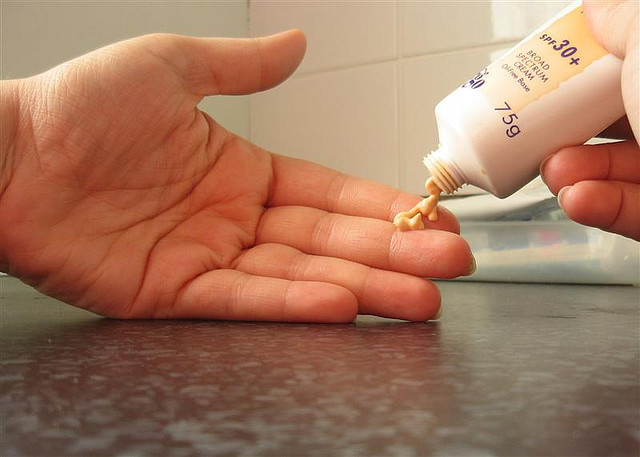
I’m one of those grocery shoppers who turns the package around to check the ingredients, before I buy it for the first time. Checking food packages is relatively easy, because I expect only recognizable simple ingredients. As they say, would my Great Grandmother recognize this as food? What about sunscreen? How can you tell if it’s safe?
The Environmental Working Group (EWG) has done extensive research to evaluate the effectiveness and safety of over 1800 sunscreens on the market, so you don’t have to. Their sixth annual 2012 Sunscreen Guide lists the best and worst sunscreens. It’s worth a look to make sure your sunscreen isn’t on their “Hall of Shame.” The EWG also provides detailed information about potentially harmful sunscreen ingredients.
For more information about sunscreen safety, check out my KQED Quest blog.
Photograph courtesy of the Exploratorium via Creative Commons.
When viewed from the Earth, a solar eclipse happens when the Moon passes between the Sun and Earth so the Moon blocks the Sun. If the Moon only blocks part of the Sun, then it is a partial solar eclipse. If the Sun is fully obscured by the Moon, then it is a total solar eclipse. Total eclipses are rare at any one location, because the Moon fully blocks the Sun along only a narrow path on the Earth’s surface traced by the Moon’s shadow.
According to the National Aeronautics and Space Administration (NASA), a partial solar eclipse will occur on May 20, 2012. This is the first solar eclipse to happen in the United States since 1994. In San Francisco, this eclipse will begin at 5:15 pm and end at 7:40 pm. The maximum eclipse will occur at 6:32 pm when 85% of the sun will be obscured. This partial eclipse will look the like the Moon has a ring of fire surrounding it.
Although it is tempting, you shouldn’t view a solar eclipse with the naked eye. Your eye-lens will concentrate the sun’s light onto your retina, and this can cause permanent eye damage. You can safely view a solar eclipse wearing inexpensive solar glasses (with a “CE” label), which have filters that block out 99.99% of the sun’s light and 100% of the harmful ultraviolet rays. Don’t have solar glasses? You can also safely view a solar eclipse by indirect projection – projecting the image of the sun onto a white piece of paper using a pinhole camera. The San Francisco Exploratorium has directions on how to make a pinhole camera.
The Field Trip Podcast icon, courtesy of Kara Platoni.
Looking back, the only school field trip that I remember was our trip to the San Francisco Exploratorium. I enjoyed the fun interactive science exhibits, but what I remember best is the tactile dome. I entered into total darkness and spent the next hour feeling, crawling and sliding my way through a 3-D maze. The purpose of the tactile room is to explore a disorienting world in which you can only rely on touch. For a kid, the challenge is to do that as quickly as possible.
However, that field trip is tame compared to what Kara Platoni, Eric Simons, and Casey Miner have in mind. They’ve launched a new podcast, The Field Trip, that broadcasts their real world science adventures. To add a little more intellectual rigor, they also interview an expert guest in their radio studio for each episode. Beginning on May 14, a new episode will air weekly each Monday through June 4.
For more information on the podcast series, check out my KQED Quest blog.
Photograph courtesy of Euromagic via Creative Commons.
My nephew is one of the 6 million children in the United States with food allergies. He has a severe nut allergy, requiring an EpiPen (adrenaline) injection and immediate trip to the emergency room after contact with someone whose touched or eaten nuts. His rapid onset of life-threatening symptoms includes swelling of the throat, difficulty breathing, and hives. He isn’t alone. The number of children with peanut allergies has tripled in the last decade. Every three minutes a food allergy reaction sends someone to the emergency room and every 6 minutes the reaction is one of life-threatening anaphylaxis.
However, the 15 million people with food allergies now have hope. New clinical trials show promise for three experimental treatments: oral immunotherapy, sublingual immunotherapy and food allergy herbal formula-2. Scientists are also trying to understand how food allergies develop to help prevent them.
For more information on food allergies, check out my KQED Quest blog.
University College Hospital in London. Courtesy of Steve Parkinson via Creative Commons.
Standard prostate cancer treatments, such as prostatectomy surgery or radiotherapy, often lead to substantial side effects. These include erectile dysfunction (affecting 30-70%) and urinary incontinence (affecting 5-20%). However, these unwanted side effects could be reduced, if prostate cancer treatments could target just the cancer tumors while harming less of their surrounding healthy tissue.
A promising “proof of concept” research study has just demonstrated that a new technique to treat localized prostate cancer may significantly reduce side effects compared to standard treatments. This study was carried out by researchers from University College London and the results were just published in the peer-reviewed medical journal The Lancet Oncology.
This new treatment uses high-intensity focused ultrasound (HIFU) to target and destroy prostate tumors, while causing minimal damage to their surrounding nerves and muscles. A small ultrasound probe is placed close to the prostate through the patient’s rectum. This probe emits a narrow beam of intense sound waves that heat the targeted cells to 80 C for one second, killing a targeted area about the size of a grain of rice. The probe is then moved to focus and destroy additional cancerous areas. The procedure is performed in the hospital under general anesthesia and most patients are back home within 24 hours.
Surgeon Hashim Ahmed from University College Hospital in London demonstrates in a BBC News short video how this probe heats only a small target area.
The “proof of concept” HIFU study was primarily focused on assessing the frequency and extent of side effects, rather than the success of the prostate cancer treatment. Forty-one men participated in the study, ranging in age from 45 to 80 years old. All participants had localized prostate cancer ranging from low to high risk, where 30 men (73%) had intermediate to high-risk disease. They also had a prostate volume of 40 mL or less in order to avoid an excessively long procedure. They had received no previous prostate treatment.
The prostate cancer tumor locations were identified using multiparametric MRI (magnetic resonance imaging) and a template-prostate-mapping biopsy. The identified tumors were then targeted by the HIFU treatment. The men were followed up at one, three, six, nine and twelve months after the HIFU procedure. Each follow-up included: (1) a PSA blood test to measure the levels of prostate specific antigen protein being produced by the prostate, since PSA is generally elevated for men with prostate cancer; and (2) questionnaires that evaluated side effects. In addition, the MRI and biopsy tests were repeated as part of the 6 months follow-up and an additional MRI was performed after a year.
Researchers found that a year after the HIFU treatment, 89% of the men still had erectile function and all were still continent. In addition, there was a significant decrease in PSA levels compared to baseline and 95% of the men showed no evidence of disease on the final MRI scan.
Clearly this HIFU pilot study has demonstrated a promising reduction in treatment side effects. However, it was a small observational study of 41 men and followed them for only a year. The results need to be confirmed by much larger clinical trials that assess both the effectiveness and safety of HIFU compared with standard therapies. As a result, the researchers at University College London have started recruiting patients for a larger phase 2 trial that will follow patients for 3 years.
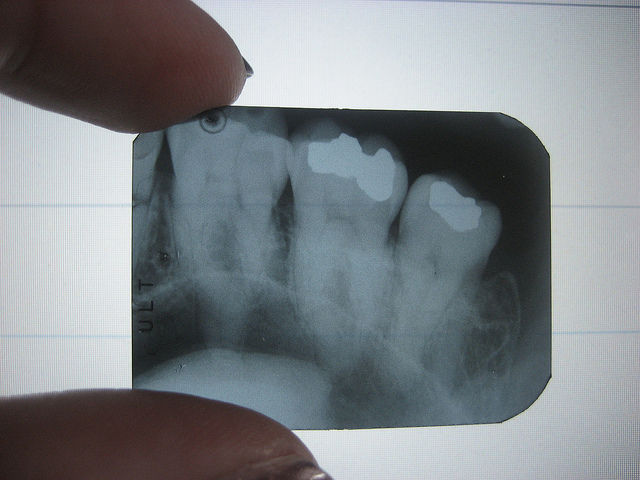
In the United States, it is common to have dental X-rays as part of your regular checkup or when you have tooth pain. These X-rays use a small amount of ionizing radiation to take a picture of your teeth, bones and gums in order to show tooth decay, impacted teeth, bone loss, and other mouth problems. Since ionizing radiation exposure is known to increase the risk of certain kinds of cancer, scientists have recently studied whether dental X-rays increase your risk of brain tumors.
An article was just published in the peer-reviewed medical journal, Cancer. It reported the results of a large study that examined the association between dental X-rays and the risk of the most common type of brain tumor (meningioma). The study was headed by researcher Elizabeth Claus, M.D., Ph.D. at the Yale University School of Medicine, in collaboration with the University of California at San Francisco School of Medicine, Brigham and Women’s Hospital, University of Texas M.D. Anderson Cancer Center, and Duke University of Medicine.
Recent news coverage sensationalized the results of this study, possibly alarming people and dissuading them from having dental X-rays. So here are the basics of the report. This research was a case-control study that compared the histories of 1433 people who had a confirmed meningioma brain tumor (the “cases”) with 1350 people without a brain tumor (the “controls”) who were matched to have the same age, sex and state of residence as the brain tumor cases. All participants were 20 to 79 years old, lived in the United States, and were enrolled in the study between May 2006 and April 2011. Both groups were contacted by telephone and interviewed for about an hour. This phone interview included questions about the onset, frequency and type of dental care they had received over their lifetime.
The researchers were interested in three types of dental X-rays:
Bitewings – a small X-ray view that shows the upper and lower back teeth simultaneously, where the patient bites down on a small holder filled with the X-ray film. Bitewings are frequently used during regular checkups to look for cavities.
Full-mouth – a series of about 14-21 X-ray films that are used to view the entire mouth for dental problems, usually performed during a person’s first visit to the dentist.
Panoramic – a single X-ray that shows a broad view of the entire mouth to provide information about the teeth, jawbones, sinuses, and other tissues of the head and neck. Panoramic X-rays are taken occasionally, often to evaluate wisdom teeth, using a machine that moves around the patient’s head.
This large case-control study showed that people with a brain tumor reported having dental X-rays significantly more frequently over their lifetime than the controls without a brain tumor. However, the differences were only significant for bitewing and panoramic type dental X-rays, and not for full-mouth X-rays which actually expose the mouth to a greater dose of radiation. This inconsistency demonstrates that further research is needed to prove any link between dental X-rays and brain tumors.
The biggest issue with this study is that participants were asked to recall their own history of dental X-rays throughout their lifetime, which makes the results less reliable. In particular, there is a fear of “recall bias” – the people with brain tumors may have been focusing on the potential causes of their cancer and therefore may have been more likely to recall dental X-rays than the control group, potentially biasing the results. Although more work, the researchers should have acquired the participants’ dental histories directly from medical records.
While this study does suggest that regular dental X-rays may be linked to an increased risk of developing a brain tumor, it does not prove an actual link. There could be other factors that contributed to this association. In order to establish a causal link, the researchers should consider performing a different kind of study that follows a group of people over time to see who develops a brain tumor.
More importantly, the recent sensationalized news headlines ignored the important fact that brain tumors are rare. Men and women in the United States have a 0.61% lifetime risk of being diagnosed with any type of primary malignant brain or central nervous system tumor, implying a 0.21% lifetime risk of developing meningioma. For instance, this is much smaller than the 12.2% lifetime risk of a woman developing breast cancer.
So this research study should not scare people away from having dental X-rays when recommended by their dentist. The American Dental Association recommends that dentists now evaluate the benefit of X-ray exposure for each patient, reducing the frequency of routine X-rays for healthy patients. In addition, dental X-rays now expose patients to less radiation than in the past.
See my KQED Quest blog on Dr. Mina Bissell’s pivotal breast cancer research at Lawrence Berkeley National Lab. She will be part of a free public lecture, Science at the Theater: Health Detectives. It will be held on April 23 at 7 pm at the Berkeley Repertory Theater.
Courtesy of Sebastian Niedlich via Creative Commons.
The stereotypical image of a scientist looks something like Albert Einstein, an older white man with either wild hair or almost none. The media often reinforces this image of a “mad scientist” in a white lab coat. But in reality, scientists are just a diverse group of people that mostly look and act like everyone else.
This scientist stereotype has been informally studied by at least two major scientific laboratories, Fermilab and the Pacific Northwest National Laboratory. About 12 years ago, a group of seventh graders came for a regular field trip to Fermilab. Few young people have ever knowingly met a scientist. So Fermilab had these students draw and describe what they thought a scientist looked like, both before and after going on the tour. While at Fermilab, the students met a diverse selection of real life scientists, including speaking in small groups with a typical white male, a young female and an African American male physicist. Before their field trip, the students mostly drew the stereotypical white man wearing a lab coat. However, their drawings after the tour were much more diverse and casually dressed.
Such studies have inspired a small group of people to demonstrate what a scientist is really like. Also inspired by Science Online 2012, they recently created a website where scientists can post a photograph and short description of themselves. Their hope is to challenge the stereotypical perception of a scientist. If you are a scientist and interested in joining their efforts, you can easily submit your photograph to be uploaded on their “This Is What A Scientist Looks Like” home page. However, I hope everyone enjoys the ever-expanding collection of photographs.








 Scientists Talk Funny