Bacteria Can Survive for Days inside Airplanes

Girl in seat on commercial airplane (foilman).

If you’re traveling by air on your summer vacation, you may want to think twice about what surfaces you touch inside the airplane cabin. Or better yet, you may want to drive.

Disease-causing bacteria can linger for days on surfaces in airplane cabins, according to new research results from Auburn University, Alabama. The researchers obtained common materials from the airplane cabins of a major airline – armrest, plastic tray table, metal toilet button, window shade, seat pocket cloth, and seat leather. They tested how long bacteria could survive on these surfaces under the standard airplane cabin conditions of low humidity and room temperature, when no cleaning procedures were used.

Specifically, they studied the survivability of two common pathogens: methicillin-resistant Staphylococcus aureus (MRSA) and E. coli O157:H7. They found that MRSA lasted the longest on material from the seat-back pocket, surviving for 7 days. In contrast, E. coli O157:H7 lasted the longest on the armrest material, surviving for 4 days.

Staph skin infections, including MRSA, generally start as small red bumps that often resemble spider bites but these can quickly turn into deep, painful abscesses. Different types of staph bacteria are commonly found on the skin or in the nose of about 30% of the U.S. population, while only 2% of the population are asymptomatic carriers of MRSA. You can get MRSA through direct skin-to-skin contact with an infected wound or by sharing equipment that has touched infected skin. However, these staph bacteria are generally harmless unless they enter the body through a cut or wound, so doctors recommend that you keep wounds covered with dry, clean bandages until healed.

E. coli O157:H7 is a major health problem that affects over 70,000 Americans per year. It causes nausea, vomiting, stomach cramps, fever and bloody diarrhea. The infection can be spread from person to person by fecal contamination, but it usually comes from eating food contaminated with animal or human waste. Doctors recommend eating only well cooked foods, particularly hamburger, and drinking treated pasteurized fluids.

However, MRSA and E. coli O157:H7 are not the most commonly found pathogens on airplanes based on past research studies. For instance, other researchers analyzed samples of 61 commercial airplane air filters to identify all the bacteria present.

“ There have been sequencing studies examining the HEPA filters. And MRSA and E. coli are not the dominant organisms there,” explained graduate student Kiril Vaglenov at a press conference. “But we have to remember that MRSA are often found in humans. So there is a possibility that these pathogens would actually be present in an airplane.”

In addition to testing whether MRSA and E. coli O157:H7 could survive the environmental conditions of the airplane, the University of Auborn researchers also investigated how easily the pathogens could be transferred from each surface onto skin.

“You can divide these surfaces into porous and non-porous surfaces. And the porous surfaces will protect the bacteria more,” said James Barbaree, primary investigator of the study, at the press conference. They found that the bacteria live longer on the porous surfaces like seat-back pocket fabric, but these porous surfaces are less likely to transfer to humans via surface contact. Bacteria are more likely to transfer onto skin from non-porous surfaces, like airplane armrests and tray tables. This is good news for air travelers, since non-porous surfaces are easier to disinfect.

The study was not meant to scare people about the risk. Instead, the investigators wanted to identify potential pathogens and establish a baseline. Their next research challenge is to look at how to eliminate potential pathogens or at least reduce the risk of pathogen transfer from all airplane surfaces.

“We want to look at disinfectant procedures,” said Barbaree at the press conference. “We also want to see if we can put antibacterial compounds into some of the surfaces to try to minimize the existence of the organisms on airplanes.”

Meanwhile, good hygiene is the best way to protect yourself against germs while traveling: cleaning all surfaces with antibacterial wipes, using hand sanitizer after touching surfaces, and washing your hands frequently.

This is a repost of my KQED Science blog.

Prolonged and Heavy Bleeding is Common During Menopause Transition

Woman suffering through a bad menstrual period (bandita/Flickr).

I could hear the fear and panic in my friend’s voice over the phone. She was bleeding so heavily that she was debating whether to go to the emergency room, but she wanted my opinion. Was she over-reacting? Was this just a normal part of approaching menopause?

Since menopause is associated with women no longer getting their menstrual period, women transitioning into menopause are often frightened by unpredictable, prolonged or heavy bleeding. The results of a new research study may help alleviate their fears.

Menopause is when a woman stops producing reproductive hormones like estrogen, causing her ovaries to stop producing an egg each month. This occurs on average when a woman is 51 years old, but some women experience menopause in their 30s or 40s.

Perimenopause is the years leading up to menopause, when the body’s hormone levels are erratically fluctuating and dropping. This transition period typically lasts about 4 years, but it can last up to 10 years. During perimenopause, the reduction of reproductive hormones causes physical and emotional symptoms, including:

  • A change in periods – shorter or longer, lighter or heavier, more or less frequent
  • Hot flashes and/or night sweats
  • Trouble sleeping
  • Mood swings
  • Vaginal dryness

How periods change during perimenopause was the focus of a new research study, recently published in BJOG: An International Journal of Obstetrics and Gynaeocology. A collaboration of researchers from several medical institutions performed a long-term study on the bleeding patterns of perimenopausal women to determine what women normally experience.

The researchers used data from the Study of Women’s Health Across the Nation (SWAN), a multi-site longitudinal study of midlife women living in the US. They analyzed the data from the SWAN menstrual calendar substudy conducted from 1996 through 2006 at three locations – northern California, Los Angeles and southeastern Michigan. The research collaboration included investigators from all three regions: University of California Davis, University of California Los Angeles, University of Michigan School of Public Health and University of Massachusetts Medical School.

The participating women completed daily menstrual calendars and provided information monthly on hormone therapy, gynecological procedures, smoking and physical activity. Women taking hormone therapy or hormone birth control were excluded, since these affect ovarian function.

This was the first long-term study to include a large population of 1320 midlife women (aged 42-52) of multiple races: African-American, Japanese, Chinese and white. Previous studies were short and mostly limited to white women.

The researchers found that it’s common for women during perimenopause to experience prolonged bleeding for 10 or more days, spotting for six of more days and/or heavy bleeding for three or more days. Over 90% of the women experienced between one and three episodes of bleeding that lasted at least 10 days in the past three years, and 28% experienced three episodes within a 6-month period.

Similarly, 67% of the women experienced at least three occurrences of spotting for 6 or more days with 24% recording three episodes within a 6-month period. And 35% of women had at least three episodes of heavy bleeding that lasted three or more days, where heavy bleeding was defined as having to change a sanitary product every one to two hours for more than four hours per day.

Very few differences were seen between races. African-American women were less likely to bleed for 10 or more days or to spot for six or more days, compared to white women. And Japanese women were less likely to have three or more days of heavy bleeding, compared to white women.

The researchers hope that their study will help guide both clinicians and patients, by defining “normal” bleeding patterns for women during midlife.

“Women need more descriptive information about the bleeding changes they can expect,” said author and University of Michigan professor Sioban Harlow in a press release. “We need clear guidance to help women understand what changes in bleeding patterns do and do not require medical attention.”

Hopefully this will help concerned women like my friend, by educating them on what to expect.

How Damaged Is Your DNA?

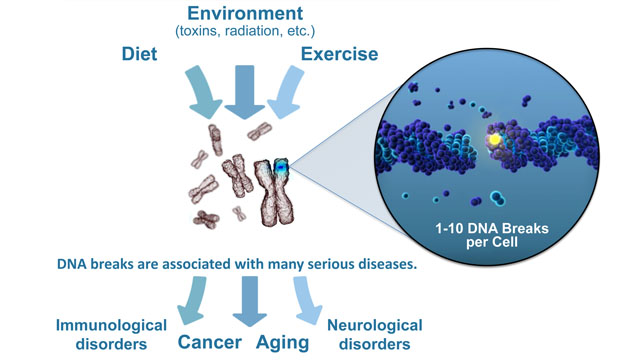
Summary of the factors that cause DNA damage and the associated diseases. (Courtesy of Sylvain Costes)

DNA stores the genetic information in each living cell, so its integrity and stability is essential to life.

DNA is constantly being damaged by environmental factors like exposure to ionizing radiation, ultraviolet light and toxins. DNA replication is also prone to error during normal cell division. So your body is busy constantly repairing damaged DNA. However, sometimes this normal DNA repair process fails, causing DNA damage and genetic mutations to accumulate which leads to serious health problems like cancer, immunological disorders and neurological disorders.

If your annual checkup included a simple blood test to determine how much DNA damage you have in your body, you may be able to optimize your long-term health by taking action to minimize DNA damage due to your diet, exercise and environment.

A start-up company called Exogen Biotechnology wants to provide the public with a way to monitor their DNA health, so they can act to reduce their DNA damage. Exogen has developed technology that can rapidly quantify a type of DNA damage called double-strand breaks.

“DNA double-strand breaks are when the two strands of the DNA are cut, so they can move apart,” explained Sylvain Costes, a Staff Scientist at Lawrence Berkeley National Laboratory and co-founder of Exogen.  “This is linked to mutation and chromosome rearrangement, so it’s a big deal – it’s the dangerous type of DNA damage. That’s what we look at.”

Exogen’s DNA damage measurement is based on technology developed over 15 years ago called immunocytochemistry – a technique that uses a primary antibody that recognizes the protein that is repairing the DNA break, along with a secondary fluorescent antibody that binds to the primary antibody. This creates bright spots in the microscope image where there are double-strand DNA breaks, so scientists can take a picture and count the breaks.

Exogen is moving this technique out of the laboratory to make it publicly available. They have significantly improved the technology, so that it’s feasible to rapidly test small blood samples for the level of DNA double-strand breaks. A customer collects tiny blood samples using an in-home kit, combines the blood samples with a fixative solution to preserve them, logs on to the Exogen website to register the samples and complete the questionnaire, and mails the samples to Exogen for analysis.

Exogen tested their new technology in two pilot studies with a total of 97 people. They observed a significant increase in the level of DNA damage with age, where 70 year olds had double the number of DNA double-strand breaks compared to 20 year olds. The four people who had suffered from cancer also had a higher level of DNA damage compared to others in their age group.

“When we did the first pilot study, we saw the excitement of the people,” said Costes. “They realized that this is something totally new; something we know in the research field, but that’s never been given to the people.”

Inspired by the initial pilot studies, Exogen wants to build a large database of DNA damage levels for research purposes so they can better understand the meaning of an elevated level of DNA damage and how certain factors affect DNA health. Of course, their data collection process and database are secure, encrypted and fully HIPAA compliant.

In order to get the necessary blood samples, they are currently running a crowdfunding campaign on Indiegogo. People that donate $99 receive a kit to safely collect three blood samples at home, and then they receive a report on their current level of DNA damage. Exogen is calling the campaign a “citizen science project” since volunteers also fill out questionnaires about their medical history and lifestyle. They’ve already collected $76,000 and the crowdfunding campaign runs through March 26. They plan to spend the money on a microscope and liquid handler, which will allow them to fully automate their system so they can analyze up to 400 blood samples per day.

Currently, Exogen can’t interpret the results or give people advice about how to lower their DNA damage, because the Food and Drug Administration (FDA) hasn’t approved them as a diagnostic test. The goal of the crowdfunding campaign is to collect blood samples from 1000 people so they can go to the FDA.

“Once we have FDA approval, we can start counseling,” said Costes. “Primary care doctors can start engaging and testing it further with their patients, because we’ll provide a guideline to help them understand what it means.”

Costes stressed that their test is very different from genetic testing provided by companies like 23andme. Exogen isn’t looking at the genetic makeup. Instead, they are looking at a physiological response, so they compare it to a cholesterol test.

“To me this is identical to cholesterol,” clarified Costes. “Your genetics places you in a certain range, but your lifestyle can change where you are within that range. In contrast to genetic testing, we feel like this test can bring hope because you have a way to act.”

One of their applications is to determine how DNA damage is affected by lifestyle factors like diet.  Exogen plans to study a group of people for a long time to better understand how DNA damage correlates with specific diseases and with health improvements due to people’s actions. They want to evaluate whether people can improve their DNA health by changing their lifestyle or environment, instead of their fate being driven entirely by genetics.

However, none of the exciting applications can happen until Exogen collects data from a larger number of people. “We need your help to make it happen,” Costes concludes. “We can’t do it alone.”

This is a repost of my KQED Science blog.
Don’t Depend on Diet Drinks To Lose Weight

boxes of diet Coke
Photograph courtesy of Beau B via a Creative Commons license.

Beverages like soda, sports drinks and energy drinks are loaded with sugar and empty calories. Soda is the number one source of added sugar in the American diet, which isn’t surprising since a 20-oz bottle of soda contains about 17 teaspoons of sugar.

So it makes sense that overweight people often turn to diet drinks to help them slim down. But recent research suggests that this weight-loss tactic may backfire.

Researchers from the Johns Hopkins Bloomberg School of Public Health studied the patterns in diet drink consumption and calorie intake among US adults of various body-weight categories. Their results were recently published in the peer-reviewed American Journal of Public Health.

They analyzed data obtained from the National Health and Nutrition Examination Survey (NHANES), which is a population-based survey designed to collect information on the health and nutrition of the US population. The researchers used the NHANES data collected from 1999 through 2010. The study sample consisted of 23,965 adults who reported all of the food and beverages that they had consumed in the previous 24 hours.

The study found that overweight and obese adults drink more diet beverages than healthy-weight adults. Overall, 11% of healthy-weight, 19% of overweight and 22% of obese adults drink diet beverages. This suggests that overweight and obese people may indeed switch to diet drinks to reduce their calorie intake when trying to control or reduce their weight.

Unfortunately, the researchers also found that the overweight and obese diet drinkers made up the calories by eating significantly more food during meals and snacks, in comparison to overweight and obese adults who drank sugar-sweetened beverages. The net increase in daily food consumption associated with diet drink consumption was 88 calories for overweight and 194 calories for obese adults.

In comparison, healthy-weight diet drinkers ate less food calories  – 73 less calories per day – than their counterparts who drank sugar-sweetened beverages.

High doses of artificial sweeteners are found in diet drinks. Earlier research found that the regular consumption of these artificial sweeteners alters the reward a person experiences from sweet tastes and disrupts appetite control. This could explain why the heavy adults who drank diet beverages ate more food calories. But it doesn’t explain why this wasn’t the case for healthy-weight diet drinkers.

Further research is needed to understand both the biological and psychological response to regularly drinking diet beverages with artificial sweeteners. But it is clear that you aren’t going to drop pant sizes by simply switching from Coke to Diet Coke.

“Heavier adults who drink diet beverages will need to reduce their consumption of solid-food calories to lose weight,” concluded the Johns Hopkins researchers. “More research is needed to identify and promote concrete behavioral targets.”

This is a repost of my KQED Science blog.

New Imaging Method to Detect Heart Attack Risk

Image courtesy of NIH / Wikimedia Commons

785,000 people have an initial heart attack and another 470,000 people have a recurrent heart attack every year in the United States, according to the American Heart Association. This means that an American has a heart attack every 34 seconds and one dies from heart disease every minute. A new imaging technique may help identify who is at high risk.

The primary cause of heart attacks is clogged arteries. Arteries are blood vessels that carry oxygen-rich blood throughout the body. Blood flows easily in healthy arteries with smooth walls. But blood flow is reduced or blocked completely in clogged arteries, when a substance called plaque builds up on the inner walls of the arteries.

Artery-clogging plaque is made up of fat, calcium, cholesterol and other substances found in the blood. Over time, this plaque can harden and rupture. If it breaks apart, a blood clot can form on its surface and completely block the artery, preventing blood from reaching the heart muscle and causing a heart attack. If the blood flow isn’t quickly restored, the portion of the heart fed by the artery begins to die.

Coronary angiography is the “gold standard” way to identify these plaque blockages in the heart, but it’s an invasive surgical procedure. During a coronary angiography, a thin flexible tube called a catheter is put into a blood vessel in your arm, groin or neck and threaded into your coronary arteries. Then a special die is released through the tube, making your coronary arteries visible on X-rays pictures taken as the die flows through them.

New study results, recently published in The Lancet medical journal, show that these high-risk plaque blockages can also be identified using a non-invasive imaging technique. The study was carried out by Dr. Nik Joshi and his research team from the University of Edinburgh, the Royal Infirmary of Edinburgh and the University of Cambridge.

The study involved 40 people who had recently suffered a heart attack and 40 additional people who had stable chest pain (angina). The patients were given a standard coronary angiography and a non-invasive imaging PET-CT scan.

A PET-CT scan measures metabolic activity using positron emission tomography (PET) and anatomical structure using X-ray computed tomography (CT). A trace amount of radioactive drug is injected into the patient’s vein and used to produce 3D images. Joshi and his research team used a radioactive drug called sodium fluoride (NaF).

The study aimed to show how well a PET-CT scan using sodium fluoride detected plaques that had already ruptured or were at high risk of rupturing. The coronary angiography was used as a gold standard to identify the culprit plaque deposits that blocked the arteries.

The researchers measured the sodium fluoride distribution to determine if the artery-clogging plaques took up a significant amount of the drug. In 93% (37/40) of the people who had had a heart attack, significant sodium fluoride uptake was seen in the plaque responsible for the heart attack. The average drug uptake in these culprit plaque deposits was 34% higher than anywhere else in the heart.

In 45% (18/40) of the people with stable chest pain, culprit plaque deposits also took up significant amounts of the sodium fluoride drug. For both sets of patients, the culprit plaque deposits identified by PET-CT imaging were confirmed by histology or intravascular ultrasound to have high-risk characteristics such as calcification and a dead tissue core.

Further research studies with a broad range of patients are now needed before PET-CT sodium fluoride imaging is accepted as a standard clinical technique. These studies are likely to take several years to complete. If they confirm the initial promising results, the technique could then move immediately into clinics since it is already approved and commonly used for other applications.

“If the results are confirmatory then this technique has the potential to fundamentally alter the way we treat coronary artery disease,” concluded the investigators. “It could, for example, permit the identification of the vulnerable patient with single or multiple high-risk or silently ruptured plaques, providing an opportunity to treat and modify their risk to prevent future adverse cardiovascular events.”

This is a repost of my KQED Science blog.

Garcinia Cambogia: Fastest Fat-Buster or Fad Diet?

Garcinia cambogia fruit
Garcinia cambogia fruit, photograph courtesy of Vssun via Wikimedia Commons

The holiday season is rich with traditions, and many of these involving eating. Most of us indulge in more snacks, finger foods, desserts, alcohol and large holiday meals from Thanksgiving through the New Year. The resulting weight gain frequently leads to another tradition – a New Year’s resolution to diet.

There are many popular diets such as the Atkins, South Beach, Weight Watchers, Jenny Craig and Slim-Fast diets. But the latest buzz is about a weight-loss supplement called Garcinia cambogia. On the Dr. Oz television show, Garcinia cambogia was called the ”newest, fastest fat-buster” and a “magic ingredient that lets you lose weight without diet or exercise.” It sounds like the perfect solution for all that holiday over-eating, especially since celebrities like Britney Spears and Kim Kardashian lost significant body fat using it.

Are Garcinia cambogia supplements really the weight-loss “holy grail” that Dr. Oz claims? What is it? Is it safe and effective?

Garcinia cambogia is a small, pumpkin-shaped fruit that comes from parts of Asia, India, Africa, and the Polynesian islands. Also known as Malabar tamarind, the fruit pulp and rind have been used for centuries for culinary and therapeutic purposes. For instance, it’s frequently used in chutneys and curries.

Since Garcinia cambogia has been ingested for centuries without reports of adverse side effects, it appears to be safe for most people when taken at normal doses. This is supported by scientific studies that showed no difference in side effects between people treated with Garcinia cambogia and those treated with a placebo. The most common side effects included headaches, upper respiratory tract symptoms, and gastrointestinal symptoms. However, it’s not recommended for some people such as diabetics and women who are pregnant.

In terms of weight loss, the active ingredient in Garcinia cambogia extract is hydroxycitric acid (HCA). Some scientists have suggested that HCA causes weight loss by blocking the enzyme that converts sugar into fat, allowing your body to turn sugar into energy instead, so you build more muscle mass and less fat. HCA is also reported to increase the release of serotonin in your brain, which can improve your mood, promote sleep and provide a satiated feeling from food. There is also some evidence that HCA reduces low-density lipoprotein (“bad”) cholesterol and triglycerides, while increasing high-density lipoprotein (“good”) cholesterol.

There have been many scientific studies with animals and humans to evaluate the effectiveness of Garcinia cambogia supplements. Unfortunately, the results are inconsistent. Some studies found that using these supplements resulted in significant weight and fat loss, but other clinical trials disagree. A review article in the Journal of Obesity analyzed the efficacy of Garcinia extract based on nine randomized, double blind, placebo-controlled clinical trials, in which neither the scientists nor participants knew who received the placebo. The study found that participants who received the Garcinia cambogia pills lost 1 kg more on average than those who received placebo. The scientists concluded, “The magnitude of the effect is small, and the clinical relevance is uncertain.”

Another recent review article in Critical Reviews in Food Science and Nutrition also suggests that Garcinia cambogia does not cause significant weight loss or fat loss. The paper summarized, “There is still little evidence to support the potential effectiveness and long-term benefits of G. cambogia.”

Currently, most studies in humans have been conducted on small groups over short periods (12 weeks maximum), so more extensive research is needed to determine its long-term effectiveness and safety.

Meanwhile, you probably want to skip the second piece of pie, or take an after dinner walk to burn off some of those extra holiday calories. And doctors still recommend a healthy lifestyle, including eating nutritious meals and exercising regularly.

This is a repost of my KQED Science blog.

Great American Smokeout: Time to Quit

photo of cigarette stubs in ashtray
Photograph courtesy of olumi_day via a Creative Commons license.

Smoking used to be portrayed as being glamorous in advertisements and movies. In old films, actors constantly smoked cigarettes and a tough guy usually had one hanging out the side of his mouth. It’s debatable whether smoking still makes you look cool though, especially since there are fewer and fewer public places you’re even allowed to smoke. Plus we now better understand the health risks of tobacco products.

Tobacco use is the single largest preventable cause of disease and premature death in the United States, but nearly 44 million Americans still smoke cigarettes – 1 in every 5 adults. There are also 14 million cigar smokers and 2 million pipe smokers.

Tobacco use is not quite as widespread in California, where just over 1 in every 7 adults smokes cigarettes. In the past year, 61 percent of these smokers attempted to quit.

There are many good reasons to quit smoking, and health concerns usually top the list. Half of all smokers who keep smoking die from a smoking-related illness, including lung cancer, other types of cancer, heart attack, stroke, or lung disease. Women who smoke are also more likely to miscarry or have a baby with a low birth-weight.

There are both immediate and long-term health benefits when smokers quit. After quitting for:

  • 20 minutes, your heart rate and blood pressure drop.
  • 12 hours, the carbon monoxide level in your blood drops to normal.
  • 2 weeks – 3 months, your circulation improves and lung function increases.
  • 1 – 9 months, your coughing and shortness of breath decrease.
  • 1 year, your risk of heart disease due to smoking cuts in half.
  • 5 years, your risk of various cancers (mouth, throat, esophagus, and bladder) is cut in half.
  • 15 years, your risk of heart disease is the same as a non-smoker.

Cigarettes are also expensive. You can use a savings calculator to see how much money you would save if you quit smoking. For example, a pack of cigarettes costs $6.77 on average in California. If you smoke a half pack (10 cigarettes) per day, this adds up $24 per week or $1220 per year.

Of course, the nicotine in tobacco is very addictive so quitting can be difficult, but the chance of success is increased with help. There are many treatment options used to help smokers quit and many of these treatments are covered by health insurance.

The most effective quitting method is a combination of counseling, social support and the use of cessation medication. The most common form of counseling is through telephone-quit lines, which provide free support and advice from an experienced cessation counselor. The counselor can provide a personalized quit plan, self-help materials, the latest information on cessation medications, and social support. For instance, 1-800-QUIT-NOW is a free national counseling service. Many clinics and hospitals also have counselors and support groups that you can meet with face-to-face. Counseling and support groups are also available online.

There are a variety of cessation medications that are available either over the counter or with a prescription. Nicotine replacement therapies deliver nicotine to help reduce the severity of nicotine withdrawal symptoms. The nicotine dose is gradually reduced over time. Nicotine gum, lozenges and patches can be purchased over the counter, whereas nicotine inhalers or nasal sprays require a doctor’s prescription.

Bupropioin SR (Wellbutrin or Zyban) is a non-nicotine prescription medication that acts on the chemicals in the brain that are related to nicotine craving. It can be used alone or with nicotine replacement products. Verenicline (Chantix) is a non-nicotine prescription medication that blocks the effects of nicotine, so it should not be used in combination with nicotine replacement products.

It is important for smokers to speak with their doctor and/or a cessation counselor to make a personalized quit plan that is right for them. And this week is a good time to get started, just in time to take part in the Great American Smokeout on November 21. Smokers across the nation will use this Thursday to make a quit plan, or plan in advance and quit smoking.

The Great American Smokeout happens every year on the third Thursday of November. It started in California back in 1976 when nearly 1 million smokers quit for the day, then the American Cancer Society expanded the program nationwide the following year. It has drawn attention to the deaths and chronic diseases caused by smoking, resulting in laws that ban smoking in restaurants and other public places.

The Great American Smokeout is celebrated with rallies, parades, stunts, quit programs, and “cold turkey” menu items. For instance, the community is invited to receive up-to-date cessation information, resources and giveaways at UCSF Medical Center’s Great American Smokeout event from 9-10 am and 12-1 pm on the Parnassus, Laurel Heights, Mission Bay and Mount Zion campuses. UC Berkeley is also celebrating the event with a “cold turkey” give-away – get a free cold turkey sandwich in exchange for a pack of cigarettes from 11 am – 2 pm at Sproul plaza.

This is a repost of my KQED Science blog.

Controversy Over Calcium Tablets

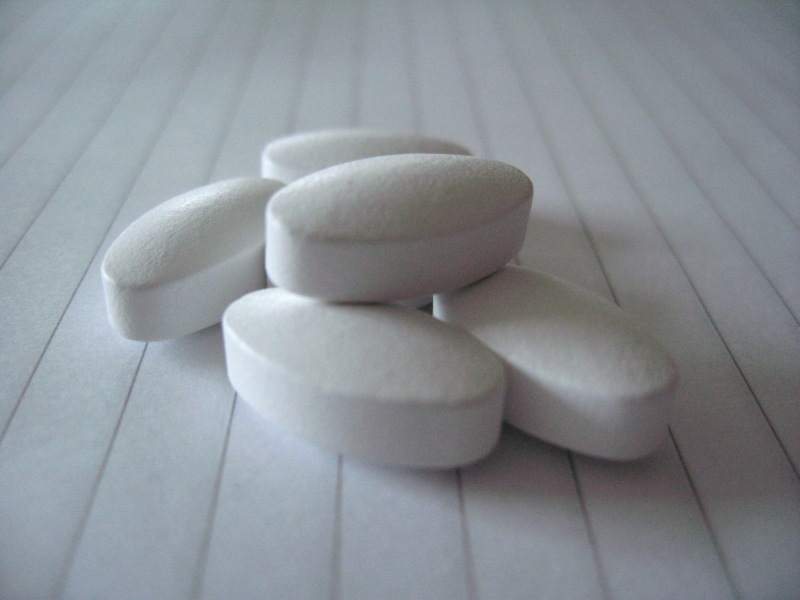
Photograph courtesy of Kham Tran via Wikimedia Commons.

You’ve probably seen the “got milk?” commercials featuring celebrities with milk mustaches, which advertise the nutritional benefit of drinking calcium-rich milk. Your body needs calcium to maintain strong bones and perform other important functions like moving your muscles. If you don’t get enough calcium by eating foods like milk or supplements, then your body pulls calcium from bone.

Your bones are alive. Your body constantly removes old bone and replaces it with new. But as you get older, you often lose bone faster than you can grow it so bones can become weak and break easily. Osteoporosis and low bone mass affect about 52 million people in the United States and result in a fracture every 3 seconds worldwide.

To help prevent Osteoporosis, the use of calcium supplements is common – 43% of U.S. adults and almost 70% of postmenopausal women regularly take calcium supplements. But are these effective and safe? Recent research studies have reported inconsistent results on the benefits and risks of taking calcium supplements.

Calcium supplements commonly cause indigestion and minor constipation, and they infrequently cause kidney stones. Several recent studies suggest that they also increase the risk of heart attacks, but other recent studies disagree.

At the center of the controversy is a 2010 study published in the British Medical Journal. The study analyzed data from 15 randomized, placebo controlled studies of calcium-only supplements. The authors conclude that calcium supplements are associated with a modest increased risk of having a heart attack. Due to the wide use of these supplements, this could affect a large portion of the population. They advise, “A reassessment of the role of calcium supplements in the management of osteoporosis is warranted.”

The authors speculate that taking a calcium supplement causes a dramatic increase in the amount of calcium in your blood, unlike when you gradually get calcium from eating dairy products. This may cause calcifications in your blood vessels and heart, leading to an increased likelihood of having a heart attack. High levels of calcium in the blood may also increase blood clotting and stiffen arteries, both known to cause heart problems.

Although several studies agree with the 2010 British Medical Journal study, they have been criticized by other scientists. The criticisms focus on their patient selection, the number of patients who didn’t take the supplements for the entire study, the methods of statistical analysis, and not monitoring the intake of other dietary nutrients that might alter calcium effects.

In addition, several other research studies recently found no risk of heart problems due to calcium supplement use. For instance, the 2010 Women’s Health Initiative trial analyzed data from over 36,000 women taking calcium and vitamin D supplements and it showed no significant increase in heart problems.

Further research is needed to sort out these inconsistent research findings. But experts seem to agree that it is best to get your recommended daily calcium by eating calcium-rich foods. “A reasonable approach is to preferentially encourage dietary calcium intake and discourage the routine use of calcium supplements,” advises Dr. Douglas Bauer, a professor at the UCSF Medical Center.

How much calcium you need depends on your age. The Institute of Medicine recommends healthy adults to eat foods containing 1000 to 1200 mg of calcium per day. But more calcium isn’t always better. They also recommend avoiding a calcium intake above 2000 to 2500 mg per day to reduce risk of health problems like kidney stones.

In order to meet these recommendations, a useful first step can be to track what you eat during a typical week using a food diary. After calculating how much calcium you usually eat each day, you may need to change your diet to include more calcium-rich foods.

The top calcium-rich foods are yogurt, cheese, milk, sardines, dark leafy greens (collard greens, kale, bok choy, and spinach), fortified cereals, fortified orange juice, and soybeans. For example, you can get the recommended daily 1000 mg of calcium by eating 1 packet of fortified oatmeal (100 mg), 1 cup of 1% milk (305 mg), 8 ounces of nonfat plain yogurt (452 mg) and ½ cup of cooked spinach (146 mg).

“If it is not possible to consume enough calcium from the diet, the use of calcium supplements is most likely safe and not associated with cardiovascular outcomes,” said Dr. Douglas Bauer in a recent press release. But he advises against exceeding the Institute of Medicine guidelines.

This is a repost of my KQED Science blog.
Prescription Drug Take-Back Day

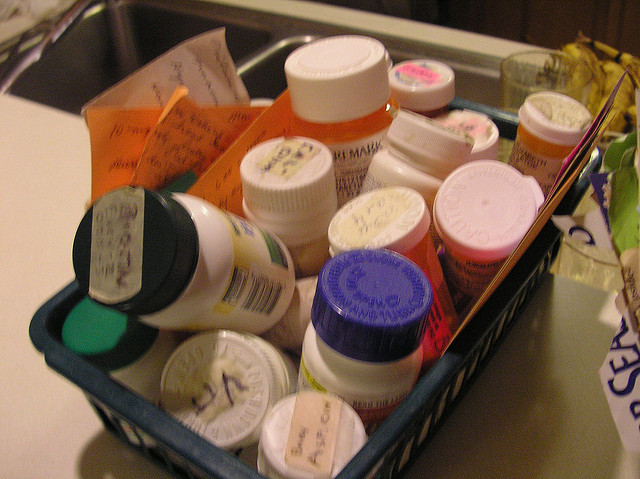
prescription bottles
Photograph courtesy of joguldi via a Creative Commons license.

Do you have expired or unused prescription drugs stacked up in your medicine cabinet? It’s not safe to flush them down the toilet or throw them out with the trash. But you can get rid of them safely, easily and for free at sites across the US tomorrow. Yep, it is National Prescription Drug Take-Back Day on Saturday October 26 from 10 am – 2 pm. Drop them off at a local collection site.

Infections During Pregnancy May Increase Autism Risk

B&W photograph of pregnant woman sitting on couch
Photograph courtesy of Stuart Handy via a Creative Commons license.

Every day our brains help us make sense of the world around us, interpreting the things we see, hear, taste, touch, smell and experience. But if someone’s brain has trouble processing this incoming information, it can be hard to communicate, understand or learn.

Autism spectrum disorders (ASD) are characterized by difficulties in social interaction, verbal and nonverbal communication, and repetitive behaviors. These disorders include autism, Asperger syndrome and Pervasive Developmental Disorder-Not Otherwise Specified.

About 1 in 88 children have been identified with an autism spectrum disorder and over 2 million people are affected in the United States, according to the Centers for Disease Control and Prevention. Government statistics also suggest that the proportion of people with autism spectrum disorders have increased 10 to 17 percent annually in recent years. This is in part due to wider awareness and better screening, but the continued increase is not fully understood.

The cause of ASD is also not fully known, but current research indicates that it is likely due to a complex combination of genetic predisposition and environmental risk factors that influence early brain development. Significant environmental risk factors include the advance age of either parent at the time of conception, maternal illness during pregnancy, extreme prematurity, and very low birth weight.

Over 40 years ago, epidemiological studies determined that the risk of having a child with ASD is increased when the mother has an infection early in the pregnancy. Since a wide range of bacterial and viral infections can increase the risk, studies suggest that activation of the mother’s general immune system is responsible. However, scientists do not completely understand how the activated immune system can disrupt normal brain development to cause ASD.

Research at the University of California Davis Center for Neuroscience provides new insight. Recently published in the Journal of Neuroscience, their studies identify a new biological mechanism that links maternal immune activation to neurodevelopmental disorders.

Kimberley McAllister, a senior author of the study, explained in a press release, “This is the first evidence that neurons in the developing brain of newborn offspring are altered by maternal immune activation. Until now, very little has been known about how maternal immune activation leads to autism spectrum disorder and schizophrenia-like pathophysiology and behaviors in the offspring.”

The researchers studied pregnant mice with immune systems that were activated halfway through gestation compared to pregnant control mice without activated immune systems. They found that the mice exposed to a viral infection had offspring with dramatically elevated levels of immune molecules called major histocompatibility complex 1 (MHC1) on their brain surface.

In the affected newborn mice, these high levels of MCH1 disrupted the development of neural cells in the brain. Specifically, the increase in MCH1 interfered with the neurons’ ability to form the synapses that allow neurons to pass electrical or chemical signals to other cells; consequently these offspring had less than half as many synapses than the control offspring. When MCH1 were returned to normal levels in the neurons of maternal immune-activated offspring, the synapses density returned to normal.

However, MCH1 doesn’t work alone. In a series of additional experiments, the researchers identified the new biological signaling pathway that regulates synapses development caused by maternal immune activation. This signaling pathway requires calcineurin, myocyte enhancer factor-2 and MCH1 to limit synapses density.

A better understanding of the underlying biological mechanisms will hopefully lead to the development of improved prenatal health screening, diagnostic tests and eventually therapies for neurodevelopmental disorders.

Of course, not every child of a bacterially or virally infected mother develops a neurodevelopmental disorder like autism. The effect of maternal immune activation depends on a complex interaction involving the strength of the infection and genetic predisposition.

This is a repost of my KQED Science blog.