
Tips for discussing suicide on social media — A guide for youth

cell-phone-791365_1920
Photo by kaboompics

There are pros and cons to social media discussions of suicide. Social media can spread helpful knowledge and support, but it can also quickly disseminate harmful messaging and misinformation that puts vulnerable youth at risk.

New U.S. guidelines, called #chatsafe: A Young Person’s Guide for Communicating Safely Online About Suicides, aim to address this problem by offering evidence-based advice on how to constructively interact online about this difficult topic. The guidelines include specific language recommendations.

Vicki Harrison, MSW, the program director for the Stanford Center for Youth Mental Health and Wellbeing, discussed this new online education tool — developed in collaboration with a youth advisory panel — in a recent Healthier, Happy Lives Blog post.

“My hope is that these guidelines will create awareness about the fact that the way people talk about suicide actually matters an awful lot and doing so safely can potentially save lives. Yet we haven’t, up to this point, offered young people a lot of guidance for how to engage in constructive interactions about this difficult topic,” Harrison said in the blog post. “Hopefully, these guidelines will demystify the issue somewhat and offer practical suggestions that youth can easily apply in their daily interactions.”

A few main takeaways from the guidelines are below:

Before you post anything online about suicide

Remember that posts can go viral and they will never be completely erased. If you do post about suicide, carefully choose the language you use. For example, avoid words that describe suicide as criminal, sinful, selfish, brave, romantic or a solution to problems.

Also, monitor the comments for unsafe content like bullying, images or graphic descriptions of suicide methods, suicide pacts or goodbye notes. And include a link to prevention resources, like suicide help centers on social media platforms. From the guidelines:

“Indicate suicide is preventable, help is available, treatment can be successful, and that recovery is possible.”

Sharing your own thoughts, feelings or experience with suicidal behavior online

If you’re experiencing suicidal thoughts or feelings, try to reach out to a trusted adult, friend or professional mental health service before posting online. If you are feeling unsafe, call 911.

In general, think before you post: What do you hope to achieve by sharing your experience? How will sharing make you feel? Who will see your post and how will it affect them?

If you do post, share your experience in a safe and helpful way without graphic references, and consider including a trigger warning at the beginning to warn readers about potentially upsetting content.

Communicating about someone you know who is affected by suicidal thoughts, feelings or behaviors

If you’re concerned about someone, ask permission before posting or sharing content about them if possible. If someone you know has died by suicide, be sensitive to the feelings of their grieving family members and friends who might see your post. Also, avoid posting or sharing posts about celebrity suicides, because too much exposure to the suicide of well-known public figures can lead to copycat suicides.

Responding to someone who may be suicidal

Before you respond to someone who has indicated they may be at risk of suicide, check in with yourself: How are you feeling? Do you understand the role and limitations of the support you can provide?

If you do respond, always respond in private without judgement, assumptions or interruptions. Ask them directly if they are thinking of suicide. Acknowledge their feelings and let them know exactly why you are worried about them. Show that you care. And encourage them to seek professional help.

Memorial websites, pages and closed groups to honor the deceased

Setting up a page or group to remember someone who has died can be a good way to share stories and support, but it also raises concerns about copycat suicides. So make sure the memorial page or group is safe for others — by monitoring comments for harmful or unsafe content, quickly dealing with unsupportive comments and responding personally to participants in distress. Also outline the rules for participation.

Individuals in crisis can receive help from the Santa Clara County Suicide & Crisis Hotline at (855) 278-4204. Help is also available from anywhere in the United States via Crisis Text Line (text HOME to 741741) or the National Suicide Prevention Lifeline at (800) 273-8255. All three services are free, confidential and available 24 hours a day, seven days a week.

This is a resposting of my Scope blog story, courtesy of Stanford School of Medicine.
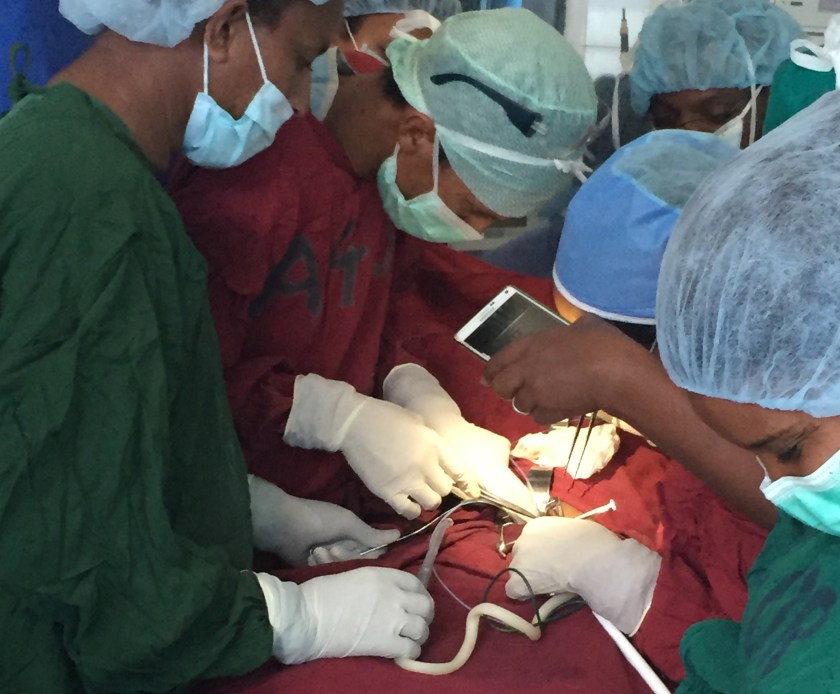
Designing an inexpensive surgical headlight: A Q&A with a Stanford surgeon

2017_Ethiopia_Jared Forrester_Black Lion_Pediatric OR by cell phone_2_crop
Photo by Jared Forrester / © Lifebox 2017

For millions of people throughout the world, even the simplest surgeries can be risky due to challenging conditions like frequent power outages. In response, Stanford surgeon Thomas Weiser, MD, is part of a team from Lifebox working to develop a durable, affordable and high-quality surgical headlamp for use in low-resource settings. Lifebox is a nonprofit that aims to make surgery safer throughout the world.

Why is an inexpensive surgical headlight important?

“The least expensive headlight in the United States costs upwards of $1000, and most cost quite a bit more. They are very powerful and provide excellent light, but they’re not fit for purpose in lower-resource settings. They are Ferraris when what we need is a Tata – functional, but affordable.

Jared Forrester, MD, a third-year Stanford surgical resident, lived and worked in Ethiopia for the last two years. During that time, he noted that 80 percent of surgeons working in low- and middle-income countries identify poor lighting as a safety issue and nearly 20 percent report direct experience of poor-quality lighting leading to negative patient outcomes. So there is a massive need for a lighting solution.”

How did you develop your headlamp specifications?

“Jared started by passing around a number of off-the-shelf medical headlights with surgeons in Ethiopia. We also asked surgeons in the U.S. and the U.K. to try them out to see how they felt and evaluate what was good and bad about them.

We performed some illumination and identification tests using pieces of meat in a shoebox with a slit cut in it to mimic a limited field of view and a deep hole. We asked surgeons to use lights at various power with the room lights off, with just the room lights on and with overhead surgical lights focused on the field. That way we could evaluate the range of light needed in settings with highly variable lighting, something that does not really exist here in the U.S.”

How do they differ from recreational headlamps?

“Recreational headlights have their uses and I’ve seen them used for providing care — including surgery. However, they tend to be uncomfortable during long cases and not secure on the head. Also, the light isn’t uniformly bright. You can see this when you shine a recreational light on a wall: there is a halo and the center is a different brightness than the outer edge of the light. This makes distinguishing tissue planes and anatomy more difficult.”

What are the barriers to implementation?

“While surgeons working in these settings all express interest in having a quality headlight, there is no reliable manufacturer or distributor for them. Surgeons cannot afford expensive lights, and no one has stepped up to provide a low-cost alternative that is robust, high quality and durable. We’re working to change that.”

What are your next steps?

“We are now evaluating a select number of headlights and engaging manufacturers in discussions about their current devices and what changes might be needed to make a final light at a price point that would be affordable to clinicians and facilities in these settings. By working through our networks and using our logistical capacity, we can connect the manufacturer with a new market that currently does not exist  — but is ready and waiting to be developed.

We believe these lights will improve the ability of surgeons to provide better, safer surgical care and also allow emergency cases to be completed at night when power fluctuations are most problematic. These lights should increase the confidence of the surgeon that the operation can be performed safely.”

This is a reposting of my Scope blog story, courtesy of Stanford School of Medicine.

The future hope of “flash” radiation cancer therapy

aqua-1756734_1920_crop.jpg

The goal of cancer therapy is to destroy the cancer cells while minimizing side effects and damage to the rest of the body. Common types of treatment include surgery, chemotherapy, targeted therapy and radiation therapy. Often combined with surgery or drugs, radiation therapy uses high-energy X-rays to harm the DNA and other critical processes of the rapidly-dividing cancer cells.

New innovations in radiation therapy were the focus of a recent episode of the Sirius radio show “The Future of Everything.” On hand was Stanford’s Billy Loo, MD, PhD, a professor of radiation oncology, who spoke with Stanford professor and radio host Russ Altman, MD, PhD.

Radiation has been used to treat cancer for over a century, but today’s technologies target the tumor with far greater precision and speed than the old days. Loo explained that modern radiotherapy now delivers low-dose beams of X-rays from multiple directions, which are accurately focused on the tumor so the surrounding healthy tissues get only a small dose while the tumor gets blasted. Radiation oncologists use imaging — CT, MRI or PET — to determine the three-dimensional sculpture of the tumor to target.

“We identify the area that needs to be treated, where the tumor is in relationship to the normal organs, and create a plan of the sculpted treatment,” Loo said. “And then during the treatment, we also use imaging … to see, for example, whether the radiation is going where we want it to go.”

In addition, oncologists now implement technologies in the clinic to compensate for motion, since organs like the lungs are constantly moving and patients have trouble lying still even for a few minutes. “We call it motion management. We do all kinds of tricks like turning on the radiation beam synchronized with the breathing cycle or following tumors around with the radiation beam,” explained Loo.

Currently, that is how standard radiation therapy works. However, Stanford radiation oncologists are collaborating with scientists at SLAC Linear Accelerator Center to develop an innovative technology called PHASER. Although Loo admits that the acronym was inspired because he loves Star Trek, PHASER stands for pluridirectional high-energy agile scanning electronic radiotherapy. This new technology delivers the radiation dose of an entire therapy session in a single flash lasting less than a second — faster than the body moves.

“We wondered, what if the treatment was done so fast — like in a flash photography — that all the motion is frozen? That’s a fundamental solution to this motion problem that gives us the ultimate precision,” he said. “If we’re able to treat more precisely with less spillage of radiation dose into normal tissues, that gives us the benefit of being able to kill the cancer and cause less collateral damage.”

The research team is currently testing the PHASER technology in mice, resulting in an exciting discovery — the biological response to flash radiotherapy may differ from slower traditional radiotherapy.

“We and a few other labs around the world have started to see that when the radiation is given in a flash, we see equal or better tumor killing but much better normal tissue protection than with the conventional speed of radiation,” Loo said. “And if that translates to humans, that’s a huge breakthrough.”

Loo also explained that their PHASER technology has been designed to be compact, economical, reliable and clinically efficient to provide a robust, mobile unit for global use. They expect it to fit in a standard cargo shipping container and to power it using solar energy and batteries.

“About half of the patients in the world today have no access to radiation therapy for technological and logistical reasons. That means millions of patients who could potentially be receiving curative cancer therapy are getting treated purely palliatively. And that’s a huge tragedy,” Loo said. “We don’t want to create a solution that everyone in the world has to come here to get — that would have limited impact. And so that’s been a core principle from the beginning.”

This is a reposting of my Scope blog post, courtesy of Stanford School of Medicine.

The future of genomics: A podcast featuring Stanford geneticists

diverse-group-silhouette
Image by Pat Lyn

Every living organism on Earth has a genome, the complete set of DNA containing all of the information needed to develop and maintain the organism. Humans inherit three billion long strings of DNA called chromosomes from each parent, so your genome can help identify your personal ancestry. But genomes can also identify the movement of human populations based on who is similar to whom.

Carlos Bustamante, PhD, a professor of biomedical data science, of genetics and of biology at Stanford, discusses the blossoming uses of genomes on a recent episode of “The Future of Everything” radio show.

For example, Bustamante told host Russ Altman, MD, PhD, a professor of bioengineering, of genetics, of medicine and of biomedical data science, about the genomic fingerprints of the history of slavery in the United States. As part of an international collaboration, he studied the DNA of modern individuals and individuals from slave cemeteries, tracing their history to particular tribal groups in Africa.

“A lot of that history has been lost and African Americans want to reclaim parts of that history using DNA,” Bustamante said. “What’s interesting, at least in the United States, is that most of the slave ships went first to the Caribbean and Brazil. Only a couple hundred thousand people came in straight to the Port of Charleston. So the history of the slave trade is actually written in the DNA of the Caribbean, Brazilian and U.S. African descendant populations.”

But that is only one of the many genomic applications discussed on the episode. Another important use is predicting disease risks. Genetic tests are now available for many hereditary conditions, including cancer risk assessment, at Stanford.

This raises a challenge, however, because our knowledge of DNA is primarily based on people of European descent. As Bustamante explained, this occurred because European countries were the first to recognize the potential impact that DNA sequencing could have on health care, once the cost of DNA sequencing technology plummeted.

“They invested quickly and by the year, say 2009, they’d done about a thousand studies and 95 percent of the participants in those studies were of European descent — be they from the countries in Europe or in Iceland.”

Since humans are 99.9 percent identical in their genetic makeup, maybe this doesn’t sound like a problem. But Bustamante said the differences may be important because they could help lead to improvements in health care. He described this lack of diversity as both a problem and an opportunity.

Take blond hair, for example. Bustamante explained that two main populations have blond hair: Europeans and Melanesians from the Solomon Islands. When the scientists started a research project, they hypothesized that a European went to Melanesia and had a lot of kids. But that isn’t what the genetics showed.

“The genetics of blond hair in Europe are different than the genetics of blond hair in Melanesia. They look the same, but it turns out that the underlying genes are different,” he said. “And why is that interesting? From the point of view of medical genetics, if this is true for blond hair — which is about as simple a trait as you can get — what about diabetes? Why would we assume the genetic basis of diabetes is the same in every population, when we know diabetes actually presents differently in different populations?”

He also argued that new drug discovery would be more successful if it was based on genetic leads. Cholesterol lowering drugs called PCSK9 inhibitors, for instance, were found by studying families with naturally high or low levels of cholesterol. Successes like these are the reason he thinks it’s important to study diverse populations.

“If we spread our bets across different human populations, we’re much more likely to find interesting biology that then benefits everybody,” he said. “Because these cholesterol lowering drugs aren’t just good for those people with high cholesterol for genetic reasons. That’s the key. You can mimic it in others and it benefits everybody.”

Of course, the potential for genomics goes beyond human applications. Altman and Bustamante also discuss plant and animal uses, including designing your dream dog.

This is a reposting of my Scope blog story, courtesy of Stanford School of Medicine.

Can AI improve access to mental health care? Possibly, Stanford psychologist says

artificial-2970158_1920
Image by geralt

“Hey Siri, am I depressed?” When I posed this question to my iPhone, Siri’s reply was “I can’t really say, Jennifer.” But someday, software programs like Siri or Alexa may be able to talk to patients about their mental health symptoms to assist human therapists.

To learn more, I spoke with Adam Miner, PsyD, an instructor and co-director of Stanford’s Virtual Reality-Immersive Technology Clinic, who is working to improve conversational AI to recognize and respond to health issues.

What do you do as an AI psychologist?

“AI psychology isn’t a new specialty yet, but I do see it as a growing interdisciplinary need. I work to improve mental health access and quality through safe and effective artificial intelligence. I use methods from social science and computer science to answer questions about AI and vulnerable groups who may benefit or be harmed.”

How did you become interested in this field?

“During my training as a clinical psychologist, I had patients who waited years to tell anyone about their problems for many different reasons. I believe the role of a clinician isn’t to blame people who don’t come into the hospital. Instead, we should look for opportunities to provide care when people are ready and willing to ask for it, even if that is through machines.

I was reading research from different fields like communication and computer science and I was struck by the idea that people may confide intimate feelings to computers and be impacted by how computers respond. I started testing different digital assistants, like Siri, to see how they responded to sensitive health questions. The potential for good outcomes — as well as bad — quickly came into focus.”

Why is technology needed to assess the mental health of patients?

“We have a mental health crisis and existing barriers to care — like social stigma, cost and treatment access. Technology, specifically AI, has been called on to help. The big hope is that AI-based systems, unlike human clinicians, would never get tired, be available wherever and whenever the patient needs and know more than any human could ever know.

However, we need to avoid inflated expectations. There are real risks around privacy, ineffective care and worsening disparities for vulnerable populations. There’s a lot of excitement, but also a gap in knowledge. We don’t yet fully understand all the complexities of human–AI interactions.

People may not feel judged when they talk to a machine the same way they do when they talk to a human — the conversation may feel more private. But it may in fact be more public because information could be shared in unexpected ways or with unintended parties, such as advertisers or insurance companies.”

What are you hoping to accomplish with AI?

“If successful, AI could help improve access in three key ways. First, it could reach people who aren’t accessing traditional, clinic-based care for financial, geographic or other reasons like social anxiety. Second, it could help create a ‘learning healthcare system’ in which patient data is used to improve evidence-based care and clinician training.

Lastly, I have an ethical duty to practice culturally sensitive care as a licensed clinical psychologist. But a patient might use a word to describe anxiety that I don’t know and I might miss the symptom. AI, if designed well, could recognize cultural idioms of distress or speak multiple languages better than I ever will. But AI isn’t magic. We’ll need to thoughtfully design and train AI to do well with different genders, ethnicities, races and ages to prevent further marginalizing vulnerable groups.

If AI could help with diagnostic assessments, it might allow people to access care who otherwise wouldn’t. This may help avoid downstream health emergencies like suicide.”

How long until AI is used in the clinic?

“I hesitate to give any timeline, as AI can mean so many different things. But a few key challenges need to be addressed before wide deployment, including the privacy issues, the impact of AI-mediated communications on clinician-patient relationships and the inclusion of cultural respect.

The clinician–patient relationship is often overlooked when imagining a future with AI. We know from research that people can feel an emotional connection to health-focused conversational AI. What we don’t know is whether this will strengthen or weaken the patient-clinician relationship, which is central to both patient care and a clinician’s sense of self. If patients lose trust in mental health providers, it will cause real and lasting harm.”

This is a reposting of my Scope blog story, courtesy of Stanford School of Medicine.

Soda taxes increase prices but lower consumption, studies find

beverage-drinks-soda-3008
Photo by Breakingpic

Local surcharges on sugar-sweetened beverages are becoming the latest “sin tax” designed to reduce our consumption of unhealthy products, like soda, tobacco and alcohol. Driven by the growing health concerns of diabetes, obesity and heart disease, their goal is to improve public health while generating tax revenues.

Commonly called soda taxes, they typically also include sweetened energy, sports and fruity drinks and presweetened tea and coffee — leaving water, milk and natural juices untaxed. If you live in the Bay Area, you’ve probably heard of them since Berkeley, San Francisco, Albany and Oakland imposed soda taxes in the last several years. But do these kinds of surcharges work?

“There’s a lot of debate about whether to pass those kinds of taxes and how to design them,” says Stephan Seiler, PhD, an associate professor of marketing, in a recent Stanford Graduate School of Business news article. “How high should the tax rates be? What type of products should be covered — regular or diet or both? And should the tax be levied at the city or county level?”

Two studies recently investigated the long-term effectiveness of beverage taxes. The first study analyzed sales data from over 1,200 retail stores in Philadelphia, which imposed a 1.5-cent-per-ounce tax on sweetened beverages starting in 2017. As part of the multi-institutional team, Seiler says they wanted to learn how the tax affected things like tax revenue and people’s financial burdens, and use that to contribute to ongoing policy discussions.

As expected, the Philadelphia study found that beverage manufacturers passed on almost all of the tax to consumers by raising prices by 34 percent. As a result, local demand for the taxed drinks dropped by 46 percent. But that didn’t necessarily mean that residents consumed less. Instead, they traveled four or five miles to purchase sweetened beverages outside the taxed area. Taking this into account, the researchers found the demand actually dropped by only 22 percent.

Another recent study analyzed the effectiveness of Berkeley’s 1-cent-per-ounce soda tax using beverage frequency questionnaires from 2014 to 2017 — polling 1,513 people in high-foot-traffic areas in demographically-diverse neighborhoods in Berkeley, as well as  3,712 people in Oakland and San Francisco before their soda taxes were implemented for comparison. This multi-institutional research team included Sanjay Basu, MD, an assistant professor of medicine, health research and policy at Stanford.

After implementation of the Berkeley tax and corresponding increase in prices, the researchers reported a 52 percent decrease in consumption of sweetened drinks and a 29 percent increase in water consumption. The comparison groups in Oakland and San Francisco had similar baseline drink consumptions but saw no significant changes.

One difference between these soda taxes concerns diet soda, which is taxed in Philadelphia but exempt in Berkeley. It may be easier to switch from regular to diet soda, so Seiler suggests that a better design is to tax regular sodas but not their diet counterparts and to levy the tax across a wide geographic area.

In fact, some countries — including Mexico, France, United Kingdom and many others — have implemented a national soda tax. “That type of tax would be harder to avoid,” Seiler says.

This is a reposting of my Scope blog story, courtesy of Stanford School of Medicine.
Myths and facts: Stanford psychiatrist discusses schizophrenia

surreal-402830_1920
Image by geralt

Inaccurate stereotypes and erroneous beliefs abound concerning schizophrenia. Stanford psychiatrist Jacob Ballon, MD, dispelled a few of these myths in a recent article in Everyday Health. Here are the takeaways and a bit of basic info regarding the disease:

  • There is an underlying, complex genetic component to schizophrenia that is not understood well enough to provide a diagnosis or guide treatment. Ballon said about 10 percent of the disease risk can be attributed to genetics.
  • Schizophrenics do not have multiple personalities — that is called dissociative identity disorder.
  • Most cases of schizophrenia develop between adolescence and age 30; children rarely develop schizophrenia.
  • People with schizophrenia as a group are not more prone to violent behavior. Although there is an association between violence and schizophrenia, the additional risk is largely due to substance abuse.
  • People with schizophrenia have a significantly higher risk of suicide and depression.
  • People with schizophrenia can have delusions and hallucinations. A delusion is a belief and a hallucination is a sensory experience, like a vision. Delusions can include persecutory delusions of feeling watched or followed, thoughts of feeling contaminated or delusions of grandeur. If you are with someone with schizophrenia, keep in mind that the delusion or hallucination is very real to them.
  • Movement can be affected and people with schizophrenia may have difficulty speaking or struggling to pay attention or remember things. Their decision-making may also be compromised.
  • Although there is no cure for schizophrenia, there are effective treatments, including psychotherapy and medications.
  • Starting treatment soon after the disease develops is thought to be the most beneficial.

“There are a number of people who are treated for schizophrenia and are doing quite well,” said Ballon in the article. He added, “If people are able to participate in psychotherapy, they can better extend the value of the medication and also apply some helpful principles to actual experiences in their life. I want people to get help and support with school and employment because I believe they’ll be able to get back on an upward trajectory much more quickly if they get help at an early stage.”

This is a reposting of my Scope blog story, courtesy of Stanford School of Medicine.

A medical mystery: Diagnosing dead artists by their works of art

Leonardo_da_Vinci,_Salvator_Mundi,_detail_of_face_med
Close-up photo of Leonardo da Vinci’s Salvator Mundi

More and more students are staring at paintings as part of medical school curriculum. For instance, Stanford students observe art alongside their faculty at the Cantor Arts Center as part of the Medicine & the Muse Program to improve their observational and descriptive abilities — skills that are essential to health care providers.

Some doctors are taking it a step further. Fascinated by how health problems have affected famous artists, they are combing historical records and works of art for diagnostic clues, as a recent article in Artsy explains. And then they are publishing their studies in peer-reviewed medical journals.

According to a study published in JAMA Ophthalmology, for example, Leonardo da Vinci had crossed eyes — a vision disorder called strabismus — that caused him to lose depth perception. Researcher Christopher Tyler, PhD, DSc, from the City University of London, hypothesized this by assessing two sculptures, two oil paintings and two drawings by da Vinci that are thought to portray him. Measuring the average angular divergence of the pupils in these works, he found the mean angle of misalignment to be consistent with strabismus.

Another case study published in the British Journal of General Practice suggests that impressionist painter Claude Monet’s color selection was affected by poor eyesight, since his color palette changed after cataract surgery. “Monet’s postoperative works are devoid of garish colors or course application,” said National Health Service ophthalmologist and author Anna Gruener, MD, in the Artsy article. “It is therefore unlikely that he had intentionally adopted the broader and more abstract style…”

However, Michael Marmor, MD, a Stanford ophthalmology professor and author of several books on artists and eyesight, warns doctors against making firm conclusions.

“Artists have license to paint as they wish, so style is mutable and not necessarily an indication of disease,” Marmor told Artsy. “Speculation is always fun, but not when it is presented as ‘evidence’ in scientific journals.”

This is a reposting of my Scope blog story, courtesy of Stanford School of Medicine.

Translating horror into justice: Stanford mental health physician advocates for human rights

IMG_9409
Photo taken in Fiji courtesy of Daryn Reicherter

It may seem obvious that the trauma of genocide, mass killings, rape and torture will cause mental health issues in the victims. But courts require evidence. So the Human Rights in Trauma Mental Health Program at Stanford provides the evidence needed in such judicial processes.

The program is an interdisciplinary collaboration between the WSD Handa Center for Human Rights and International Justice, Stanford Law School and Stanford University School of Medicine. I recently spoke with Daryn Reicherter, MD, a Stanford psychiatrist and the director of the program.

How did you become a human rights advocate?

“I was clinically treating survivors of human rights violations at refugee clinics and the center for survivors of torture. So I became familiar with treating issues like depression and post-traumatic stress disorder. And the very obvious cause of the mental health issues I was seeing was political trauma and torture — basically human rights violations.

Another major catalyst was working with the bigger network that supports these patients, particularly human rights attorneys. I’ve remained involved with the clinical part, the rehabilitation of victims of human rights violations. As doctors, my colleagues and I are starting with patients who already have terrible outcomes because of what happened to them. The attorneys are starting with how to get people access to mental health resources, or how to stop a crime from ever happening or how to hold a human rights violator accountable in a court. I started recognizing that the person in front of me has a larger problem that affects more people. So I started collaborating on how to use the science of psychology to make changes in human rights.

What kinds of traumas does the program handle?

“Our program has worked on a whole bunch of different projects, spanning from mass rapes in the Central African Republic to torture in Somalia. We’ve even worked on preventing California from putting men in solitary confinement for longer than 10 years.”

What is your role?

“We consult with attorneys who are trying to use the science of mental health to demonstrate a point about human rights violations. Our final product is usually a written report about an individual or situation, which is used by the attorneys in court. And we’re often asked to testify to clarify things in the report.

For instance, we write expert reports demonstrating that individuals have post-traumatic stress disorder from torture, which is likely to help them win asylum in immigration courts around the world.  And if there are many asylum claims that outline human rights violations happening in a country, we put together a report that is delivered to programs concerned with human rights violations and that ultimately may help create sanctions against the country that’s committing the violations.”

What is it like to work in international courts?

“I’ve testified at the  International Criminal Court on two occasions. In U.S. courts, lawyers argue in front of judges. In international courts, it’s really a dialogue between attorneys, judges and experts. And that’s very exciting.

Being an expert witness for something that’s so clear cut is actually quite simple. For instance, I testified in an egregious child rape case in the Fiji High Court. I presented evidence showing the man that raped his daughter over 300 times caused a lot of damage to her psychology, including the likelihood of her suffering from PTSD, depression, regular nightmares and other mental issues. The man got a life sentence, which had never happened before. And the attorney also used our report and my testimony in the Fiji Supreme Court, which extended the possible sentence for child rape. That’s exactly how our program hopes to work with attorneys and courts, in the U.S. and internationally.”

How do you personally cope with this work?

“I’m passionate about doing clinical treatment, but I actually find it to be more emotionally challenging than my advocacy work. It’s more difficult to work with somebody who’s been through this kind of human rights violations than to write a detailed report, go into a court of law and present the facts.

And in court, I sometimes see justice. I see reparations given for mental health. I see someone winning asylum because they really ought to, and now they have access to mental health treatments. So for me the program is the morale booster.

Of course, I still need self-care. I can recall five or 10 stories that in an instant can bring tears to my eyes. And I’ve heard some stories I wish I could un-hear, but that’s the reality. If I’m able to translate that pain and grief into something that’s advantageous for that person or situation, wow, that’s power. And overall, I find our program to be very light, not dark.”

What are your future goals?

“We don’t want to be limited to cases with data published in psychiatry journals, but our program doesn’t have the manpower to collect all the data needed for court cases. So we’re developing validated screening tools from the Diagnostics and Statistical Manual of Mental Disorders that shouldn’t require an expert for data collection.

For example, if our attorney colleagues can ask a five-point questionnaire to see if someone has the hallmark symptoms of PTSD, then we can interpret the data. I think that’s the next big thing for our program, in addition to continuing and expanding our cases.”

This is a reposting of my Scope blog story, courtesy of Stanford School of Medicine.

Medical professional in the family? That may boost your health

kevin-curtis-3308-unsplash
Photo by Kevin Curtis

Poor people are more likely to have health problems starting at birth and to die younger than rich people. This stark inequality is firmly established, but the underlying causes and their relative contributions are not well understood.

A new Stanford study investigated whether unequal access to informal health expertise contributes to this problem. Specifically, they explored whether having a physician or nurse in your family improves your health.

The multidisciplinary team analyzed public records for Swedish residents, including socioeconomic, health care, educational and birth records. Despite Sweden’s universal health insurance system and generous social safety net, they found that health inequality still emerged early in life and persisted throughout adulthood — at levels comparable with the United States.

“This health inequity appears to be extremely stubborn,” said Petra Persson, PhD, an assistant professor of economics, in a Stanford news article. “We can throw a universal health insurance system at it and yet substantial inequality persists. So, is there anything else that can help us close that health gap between rich and poor?”

Diving deeper, the researchers divided the Swedish individuals into two groups — those with or without medical professionals in their immediate or extended families.

The team discovered that having medical expertise available from a family member led to far-reaching health improvements at all ages. Those individuals lived longer, were significantly healthier, were more likely to engage in preventive health behaviors and were more likely to adhere to medications. For example, the older relatives of medical professionals were 27 percent more likely to adhere to medications to prevent heart attacks and the younger relatives were 20 percent more likely to be vaccinated against human papillomavirus, their paper reported.

These effects occurred across all incomes, but they were even more pronounced for low-income families. This implies, according to the researchers, that the scarcity of access to medical expertise in low-income households could create and sustain inequality in health outcomes.

However, this may point to new ways to tackle the health disparity. The authors concluded in the paper, “Our analysis suggests that access to expertise improves health not through preferential treatment, but rather through intra-family transmission of ‘low-tech’ (and hence, cheap) determinants of health, likely ranging from the sharing of nuanced knowledge about healthy behaviors, to reminders about adherence to chronic medication, to frequent and trustful communication about existing health.”

Persson added in the piece, “If the government and health care system, including public and private insurers, could mimic what goes on inside families, then we could reduce health inequity by as much as 18 percent.”

A key solution may be in creating a closer, longer-term relationship between patients and their doctors, the authors said. But they also warned that the U.S. appears to be moving away from this “old-fashioned” primary care model when their results suggest that we want to do the reverse.

This is a reposting of my Scope blog story, courtesy of Stanford School of Medicine.