
4 H’s and 4 T’s Walk Into a Bar…”: A joke? No, an episode from a medical education podcast

Photo by Patrick Breitenbach

Medical school is jam packed with information to memorize as well as with high-stakes exams and expectations, creating a cauldron of stress and tension. Enter the mnemonic-filled Humerus Hacks podcast, part of a growing movement to make medical education more entertaining and accessible.

I recently learned about Humerus Hacks from its Australian founders and hosts Karen Freilich, MBBS, education coordinator at The Nookie Project, and Sarah Bush, MBBS, medical intern at Western Health. They started the bimonthly podcast to liven up their studies, but have continued it after graduating from medical school despite hectic intern schedules. Each 10- to 40-minute episode is filled with humor and casual conversation, which should be no surprise given episode titles like, “4 H’s and 4 T’s Walk Into a Bar…” (Which, for non-cardiologists, is a reference to potential causes of cardiac arrest.)

What inspired you to create a podcast?

Freilich: “Sarah and I have been mates since we were ten years old, and study buddies since day one of med school. We were both constantly overwhelmed by the sheer quantity of information we had to learn, especially when it came to learning the tongue-twisting names of medications. We began breaking down our curriculum into funny snippets to make it easier to learn, but also more enjoyable to study.

The tables turned in our penultimate year of medicine, when I was commuting over two hours daily to placement and Sarah hurt her back and couldn’t properly sit down at a desk to study. We raked through the medical podcast world to find something aimed at our level that wouldn’t put us to sleep, and there wasn’t too much out there. And so, Humerus Hacks was born. We picked the name because it was dorky, fun and medical — just like us.”

How did you learn to make podcasts?

Bush: “As an avid podcast devourer, going through at least four hours of content a day during my commutes about town, I became interested in the sound engineering — and turn’s out its super simple! We opted for high quality microphones, although we didn’t figure out how to use them properly until episode 3 or 4. And I learnt how to edit using Audacity. And then I just give it to a podcast hosting company, and voila!”

Why do you format the episodes as conversations?

Freilich: “We wanted to create content that was funny and enjoyable to listen to. We always aim to include banter and tangents, because that’s what keeps learning interesting. Before an episode, we often write down the three most important things we want the listeners to learn that episode. If our listeners can learn those things, and be entertained at the same time, then we’ve done our job.”

You mentioned that you’ve had feedback from patients. Isn’t your podcast for medical students?

Freilich: “Doctors, nurses and other health practitioners often have jargon so deeply ingrained that it makes it hard for them to explain a health topic simply. We didn’t initially intend to incorporate patients in our listenership, and we are still surprised and quite honored that people have used our podcast as a way to further understand their condition. It’s great that Humerus Hacks can help improve access to medical education.”

What is your favorite Humerus Hacks episode?

Bush: “My favorite is definitely the murmurs rap (at time 9:20) about ejection and pansystolic murmurs, because it has helped me out in real life diagnosis. And it has the added benefit of teaching people how to beat box: start by saying boots and cats, and we’ll go from there. Also I get to rap, which is always fun and embarrassing.”

This is a reposting of my Scope blog story, courtesy of Stanford School of Medicine.
Engineering better opioids: A podcast featuring Stanford bioengineer Christina Smolke

Obtaining compounds from nature, such as opioids from poppies or taxol from yew trees, is hard and time-consuming. So researchers, including Stanford’s Christina Smolke, PhD, are working to synthesize medically useful compounds by reengineering nature.

Smolke, a professor of bioengineering, describes her efforts to engineer yeast to make opioids on a recent episode of the “Future of Everything” radio show.

“These are compounds in nature that the opioid poppy has evolved to make. And to date, our chemists have not been able to develop efficient processes to make these compounds,” Smolke told show host Russ Altman, MD, PhD, a professor of bioengineering, of genetics, of medicine and of biomedical data science. “So we still farm this drug crop of opioid poppy to produce these molecules and the raw materials to make these molecules. And there are many limitations that come about from doing that.” These limitations include environmental and geopolitical risks, she said.

Smolke explained that she tackled this research even though many experts in the field viewed it as impossible — because it involved reengineering a complicated set of reactions and mix of enzymes that work together within the opioid poppy to build the opioid molecules. Over 10 years, her research team developed the very challenging platform technology to “prove that it could be used with any compound found in nature.”

“The final yeast strain that made the initial opioids molecules had 23 different enzymes put into it. So one of the challenges was identifying the enzymes from the opioid poppy and then moving them into yeast,” Smolke said.

But the trickiest part, she explained, was getting them to work in yeast, which is a very different organism than opioid poppies. The researchers had to modify each of the enzymes to create a yeast strain that could churn out opioid molecules.

There is more work to do though, including creating yeast that are more efficient at making the opioid compounds, as well as using the technology to make better opioids with less side effects so they are less addictive. Luckily, Smolke expects her new research projects to go more quickly now that they’ve developed the basic tools.

“We’re probably around 5 years away from molecules coming from yeast-based platforms to actually be in the medications that you’re taking,” Smolke explained. “Some of that lag is due to the engineering that we have to do to make the processes efficient enough so they can be scaled up at a commercial setting. And others are [due to] regulatory approvals.”

This is a reposting of my Scope blog story, courtesy of Stanford School of Medicine.

Mowing down cancer: A podcast featuring Stanford chemist Carolyn Bertozzi

To explain her work, Stanford chemistry professor Carolyn Bertozzi, PhD, often turns to analogies. Cancer cells, she says, are like M&Ms with a hard sugar coating. As she recently explained on the “Future of Everything” radio show, the coating’s function has remained a mystery for years, but now researchers are making real progress.

“We have come to think of these sugars as kind of a 2D barcode. The patterns are different on different cell types, and yet all of the cells of a certain type have a common pattern,” Bertozzi told show host Russ Altman, MD, Phd. “So there is a code there, but we don’t quite have the means to scan it and we don’t yet understand it.”

So what do the barcodes look like on cancer cells? Bertozzi describes them as a superposition of two barcodes — the original cell’s barcode and a new cancerous one. And the cancerous barcode looks similar for many different cancers. Researchers have found that these sugar barcodes on cancer cells can promote disease progression by turning off the immune system. “They basically tell immune cells, ‘There’s nothing to see here. Move along. I’m perfectly fine and healthy,’” Bertozzi said.

Using an analogy, she explained in the podcast that the cancer cells put on makeup to look fabulous and mesmerize the immune system, fooling it into thinking that the cells are healthy so the cancer can progress unimpeded. Her lab is developing a way to strip off this makeup.

Her team has developed a way to use enzymes to cut off the sugars, making the cells available for immune cells to target. She explained: “They were enzymes that normally play a role in digesting sugars. So what we’ve done is repurposed these enzymes so we can target them right to the surface of the cancer cell. And literally they’ll just go across the surface of the cell mowing off the sugars, like stripping off the makeup. And then the cells can be seen for what they truly are.”

Bertozzi is also involved in a company that hopes to bring this “lawn mower” technology to the clinic within the next two years, but they first need to get good preclinical data as proof-of-concept. The company is currently focused on developing new treatments for breast, lung and kidney cancers.

This is a reposting of my Scope blog story, courtesy of Stanford School of Medicine.

Atrial fibrillation more common than previously reported, study finds

Photo by BruceBlaus

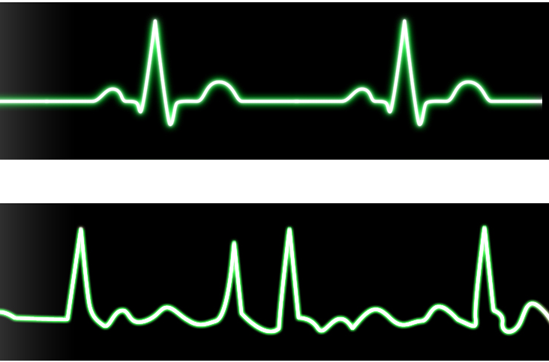
Atrial fibrillation (Afib), the most common type of heart arrhythmia, affects millions of Americans. People with Afib can experience an irregular heartbeat, heart palpitations, shortness of breath, lightheadedness, fatigue and chest pain.

However, some patients with Afib have no symptoms — making it difficult to diagnose the disease early enough to overcome the increased risk of life threatening conditions such as heart failure and stroke. New research suggests this may be a bigger problem than previous thought.

“The incidence and prevalence of Afib have not been well defined as patient symptoms are not a reliable indicator of Afib,” said Javed Nasir, MD, a Stanford cardiac electrophysiology fellow. “Most Afib episodes are asymptomatic and most symptoms thought by patients to be Afib are actually not associated with the arrhythmia. Furthermore, Afib is an intermittent disease and doesn’t lend itself to robust detection with traditional intermittent monitoring modalities, such as ECG or Holter monitors.”

To see just how widespread undetected Afib may be, Nasir led a screening trial using insertable cardiac monitors (ICMs). ICMs are single-lead ECG monitoring devices, about one-third the size of an AAA battery, that are inserted under the skin of the chest. The devices can automatically detect and record Afib episodes and can remotely transmit the data to a doctor’s office.

“Recently there have been significant advances in technology and we now have very small ICMs with the ability to continuously monitor for Afib for years,” Nasir said. “We started this trial with the hopes of using this technology to identify a population with a high risk of Afib.”

The research team used ICMs to screen almost 250 elderly people with a mean age of 74 years and with no history of atrial fibrillation. They followed the patients for 18 months with monthly remote analysis of the ICM data that was reviewed by cardiologists. As recently reported in Heart Rhythm, they found that 22 percent of the participants were newly diagnosed with atrial fibrillation.

“While classically we could give a 40 year old adult a 25% chance of developing Afib in their lifetime, in our trial we nearly saw this with only 18 months of monitoring,” Nasir said.

The study also demonstrated that the majority of these newly diagnosed Afib patients were then treated with oral anticoagulants, which have been shown to significantly reduce the risk of stroke in patients with Afib detected with pulse palpation or an ECG.

Yet more research is needed, Nasir said:

“We have begun to appreciate that stroke risk varies with the amount of Afib, and the Afib found with ICM screening tends to be brief and asymptomatic. Before we recommend routine screening for Afib with ICMs, it is important to wait for the results of on-going trials that are evaluating the risks and benefits of oral anticoagulants in patients with device detected Afib. And we will need to carefully consider the costs of screening with ICMs.”

This is a reposting of my Scope blog story, courtesy of Stanford School of Medicine.

Researchers develop technology capable of real-time drug level monitoring and maintenance

Photo courtesy of Soh Lab

Doctors often struggle to choose the best dose of a drug for each patient — the dose that worked for patient A isn’t enough for patient B, or it is way too much for patient C. The response is governed by a host of factors, including genetics, age, body size, the use of other medications, the presence of diseases and the development of drug tolerances.

Now, Stanford researchers are developing new technology to help deliver an optimal, personalized drug dose. Using their drug delivery system, they were able to automatically administer chemotherapy at the desired concentration in mice, as reported today in Nature Biomedical Engineering.

“This is the first time anyone has been able to continuously control the drug levels in the body in real time. This is a novel concept with big implications because we believe we can adapt our technology to control the levels of a wide range of drugs,” said H. Tom Soh, PhD, senior author and a Stanford professor of radiology, of electrical engineering and of chemical engineering, in a recent news release.

The new technology uses three basic elements to create a closed-loop drug delivery system that continuously monitors and adjusts the infusion rate of the drug as needed.

First, a real-time biosensor measures the concentration of the drug in the bloodstream, using aptamer molecules that bind to a specific target molecule. (Aptamers are like antibodies made out of nucleotides.) When the drug of interest is present in the bloodstream, the aptamers bind to the drug, change shape and cause an electrochemical signal that is detected by an electrode. The more drug present, the more aptamers bind and the larger the detected signal.

Second, a controller with sophisticated software uses this detected signal to determine the optimal drug delivery rate to maintain the desired drug concentration. Third, a programmable infusion pump delivers the drug at the rate specified by the controller.

Although the initial results are very promising, many years of additional research will be needed before the system can be tested on humans. The team also plans to make many improvements, including miniaturizing the device. Currently their system is suitable for chemotherapy drug delivery — using a biosensor the size of a microscope slide, as shown in the photograph — but it is too large to be worn by a patient for continual use.

Still, the authors believe their system could be safely used in humans in the future. They stated in the paper that it would be especially useful for the controlled delivery of chemotherapy drugs to pediatric cancer patients, who are particularly difficult to dose correctly since their drug response varies widely with age and degree of physical development.

This is a reposting of my Scope blog story, courtesy of Stanford School of Medicine.

Stanford study provides new understanding of breast growth disorders

Photo by sasint

Breast underdevelopment at puberty is associated with a shortage of several hormones produced by the pituitary gland, a condition called combined pituitary hormone deficiency (CPHD). This disorder is caused in part by loss-of-function mutations of the GLI2 gene, but the molecular pathways of how CPHD manifests are not fully understood.

Now, researchers at Stanford University School of Medicine have discovered a new way that GLI2 impacts breast development, as recently reported in Science. Led by Philip Beachy, PhD, a Stanford professor of developmental biology and of biochemistry, the research team found that GLI2 activity helps control mammary stem cells in mice.

Stem cells are responsible for the growth, homeostasis and repair of many tissues. The behavior and survival of these stem cells depends on their local microenvironment, called a stem cell niche. During breast growth, the niche must support its associated stem cells while also responding to circulating hormones that trigger the dramatic changes of puberty.

The study showed that this stem cell niche is genetically programmed to produce the signals that control breast development in response to the hormones that regulate puberty. Using mice without a functioning GLI2 gene, the researchers found that a defective stem cell niche environment may lead to the breast growth defects seen in human CPHD. In addition, the research provides insights into a new mechanism to target when developing drugs that may help prevent breast cancer.

The authors conclude:

“Whereas prior studies implicate stem cell defects in human disease, this work shows that niche dysfunction may also cause disease, with possible relevance for human disorders and in particular the breast growth pathogenesis associated with combined pituitary hormone deficiency.”

This is a reposting of my Scope blog story, courtesy of Stanford School of Medicine.


Artificial intelligence could help diagnose tuberculosis in remote regions, study finds

Image courtesy of Paras Laknani

Tuberculosis is an infectious disease that kills almost two million people worldwide each year, even though the disease can be identified on a simple chest X-ray and treated with antibiotics. One major challenge is that TB-prevalent areas typically lack the radiologists needed to screen and diagnose the disease.

New artificial intelligence models may help. Researchers from the Thomas Jefferson University Hospital in Pennsylvania have developed and tested an artificial intelligence model to accurately identify tuberculosis from chest X-rays, such as the TB-positive scan shown at right.

The model could provide a cost-effective way to expand TB diagnosis and treatment in developing nations, said Paras Lakhani, MD, study co-author and TJUH radiologist, in a recent news release.

Lakhani performed the retrospective study with his colleague Baskaran Sundaram, MD, a TJUH cardiothoracic radiologist. They obtained 1007 chest X-rays of patients with and without active TB from publically available datasets. The data were split into three categories: training (685 patients), validation (172 patients) and test (150 patients).

The training dataset was used to teach two artificial intelligence models — AlexNet and GoogLeNet — to analyze the chest X-ray data and classify the patients as having TB or being healthy. These existing deep learning models had already been pre-trained with everyday nonmedical images on ImageNet. Once the models were trained, the validation dataset was used to select the best-performing model and then the test dataset was used to assess its accuracy.

The researchers got the best performance using an ensemble of AlexNet and GoogLeNet that statistically combined the probability scores for both artificial intelligence models — with a net accuracy of 96 percent.

The authors explain that the workflow of combining artificial intelligence and human diagnosis could work well in TB-prevalent regions, where an automated method could interpret most cases and only the ambiguous cases would be sent to a radiologist.

The researchers plan to further improve their artificial intelligence models with more training cases and other artificial intelligence algorithms, and then they hope to apply it in community

“The relatively high accuracy of the deep learning models is exciting,” Lakhani said in the release. “The applicability for TB is important because it’s a condition for which we have treatment options. It’s a problem that we can solve.”

This is a reposting of my Scope blog story, courtesy of Stanford School of Medicine.

California bill aims for later school start times to protect teens’ health

Photo by Sari Choochi-Be

Odds are that you’re feeling tired when you read this. More than one in three American adults don’t get enough sleep on a regular basis, and studies show sleep deprivation is an even greater problem for teens. This poses a public health risk — inadequate sleep is linked to chronic diseases like hypertension, diabetes, depression, obesity and cancer.

“Society has not prioritized sleep,” Rafael Pelayo, MD, a clinical professor in psychiatry and behavioral sciences with the Stanford Center for Sleep Sciences and Medicine, told me. “Teenagers need more sleep than adults, so they are more vulnerable. Biologically teens tend to go to sleep later than when they were younger, but the schools start earlier. Teens should get close to 9 hours of sleep, but they get 7 hours or less.”

This epidemic of sleep deprivation among teens prompted California Senator Anthony Portantino (D-Glendale) to introduce Senate Bill 328, which would require middle and high schools to start no earlier than 8:30 am. Currently the average school start time in California is about 8 am, and some schools have a “zero period” that starts as early as 7 am.

“It is an extra 30 minutes or more every morning for the entire school year,” Pelayo said. “The later start time lets teens and families know that sleep is valued and respected by society. School districts that have changed their school start times have had demonstrable improvements in the health of the students.”

According to the American Psychological Association, studies have shown that starting the school day no earlier than 8:30 am increased attendance rates, grade point averages, state assessment scores, college admission test scores, student attention and student-family relations. They also found a decrease in disciplinary action, students sleeping during class and student-involved car accidents.

Such evidence inspired Pelayo to testify today in Sacramento in support of SB 328. He also rallied support among professional organizations and he plans to present letters of support from the American Academy of Sleep Medicine and the California Sleep Society, of which he is a board member.

Despite the evidence demonstrating the harm of sleep deprivation in teens, there are arguments against the bill. Opponents argue that school start times should be determined locally and that starting school later will be inconvenient. It is also viewed by some as a school policy issue rather than a health issue, Pelayo said.

Nonetheless, Pelayo believes the effort is important:

“Too many families end the day with an argument about bedtimes and homework and start the day with an argument about getting up in time for school. Twenty-five percent of teenagers self-report falling asleep in class and the actual number is likely higher. If a first or second grader fell asleep in class, the teachers would notify the parents since it is so unusual, yet for teens it is a daily occurrence. If this many teenagers were not getting enough food it would be a national crises, but since it is sleep it is ignored. Teens that wake up alert are healthier and do better both academically and in sports.”

The California bill comes at a time of heightened national awareness about teen sleep. Pelayo is speaking at the first national conference on school start times, which will be held in Washington DC later this month.

This is a reposting of my Scope blog story, courtesy of Stanford School of Medicine.

Clinical guidance on genetic testing: A Q&A


Photo by National Human Genome Research Institute

Earlier this month, an FDA ruling gave 23andMe permission to market its personal genetic tests for 10 diseases, including Parkinson’s and late-onset Alzheimer’s.

But with the increase in genetic testing at home and in clinical settings comes challenges. What do physicians do with all of these data? And how do they evaluate the validity and clinical utility of genetic tests?

To tackle these questions and others, the National Academy of Medicine formed a committee to provide guidance. I recently spoke with one of the committee members, Sean David, MD, DPhil, an associate professor of medicine at Stanford, about the committee’s new recommendations and report.

What inspired you to participate in the NAM Committee on the Evidence for Genetic Testing?

“The National Academy of Medicine consensus reports have high impact on national health policy and practices, so I jumped at the chance. In our work at Stanford, we struggle with advising patients on which genetic tests to recommend, which ones to order when requested by a patient and how to interpret results from the many direct-to-consumer genetic tests. We need guidance and a framework for making these decisions. The NAM committee addressed this challenge.

Years ago, I had a patient bring in a whole stack of direct-consumer whole genome sequencing results that showed her genetic risks for different illnesses. She asked me to interpret it for her, but there was far too much for me to consume during our brief office visit. And it was unclear what criteria to use when evaluating these tests. There’s been a rapid increase in the development of genetic tests with thousands of commercially available tests, but limited evidence regarding their validity for diagnosing disease and improving patient outcomes.”

What was the committee’s mission?

“Our charge was to examine the relevant medical and scientific literature to determine the evidence base for different types of genetic tests, as well as recommend a framework for decision-making regarding the use of genetic tests in clinical care.

This is the first consensus report on this topic. Although it was designed for the Military Health System, it should still be applicable to both military and civilian populations and may set benchmarks for private insurance companies. The report also encourages different agencies to cooperate and create a clinical data repository of evidence-based genetic testing decisions, which will be available to everyone. I think someone needs to do this to set the standard. Once that’s been done, at least we’ll have something we can all use as a benchmark.”

How can this decision-making framework help guide clinical practice?

“The decision framework can be used by physicians to determine which genetic tests are really ready for prime time in the clinic. For example, we know that if people are tested based on their family history and found to be at high risk for hereditary breast or ovarian cancer, they can have interventions that will improve their survival and outcomes. By using the decision framework, a physician can come up with a quick triage decision that it’s a ‘yes’ test for someone with several family members with breast and/or ovarian cancer, and one that really all providers should know about.

Other genetic tests like tests for Alzheimer’s aren’t as clear. For instance, there could be a genetic test for a particular rare form of early onset Alzheimer’s associated with a particular mutation. If someone has that mutation, he may have a very high risk of early onset Alzheimer’s disease. Do we screen people for that? It will depend on the clinical testing scenario. If someone has family members who developed Alzheimer’s in their 40s, then it might be a good diagnostic test. Whereas, there might be another genetic test for associated risk of dementia where the causal relationship with Alzheimer’s may not be established. That’s an issue of clinical validity. So we might not offer that test routinely — to avoid giving patients information that might be misleading and might even cause some harm.

In addition, ethical, legal and social implications of genetic testing are important. For many patients — including parents of children with undiagnosed rare diseases — genetic testing may help end a diagnostic odyssey. Oftentimes geneticists will order whole genome testing without testing for something specific. There may be thousands or even millions of different genetic markers that are tested with the hope that they’ll find something that leads to a diagnosis. Evidence of clinical utility may be lacking in scenarios like these, but taking into account the value of tests to patients and their families is important — the context matters. There needs to be a certain amount of clinical judgment, and the committee isn’t saying anything against this.”

This is a reposting of my Scope blog story, courtesy of Stanford School of Medicine.

Sick people are worse for the environment, a study shows

Photo by ryan harvey

Environmental degradation is widely recognized to contribute to human illness. However, little research has been done to investigate the impact of human illness on the environment. This is a critical question particularly for the millions of people around the world who depend on natural resources for food and income while coping with high burdens of infectious diseases.

When people are sick, they often alter their use of natural resources in ways that harm the environment, according to a new study reported in the Proceedings of the National Academy of Sciences.

Specifically, the researchers examined how illness influenced fishing practices in the community around Lake Victoria, Kenya, which has high rates of HIV and other illnesses. They interviewed about 300 households several times over 16 months, collecting and analyzing data about household fishing habits and mental and physical health. They found that healthy people are better for the environment.

“Studies suggest that people will spend less time on their livelihoods when they are sick, but we didn’t see that trend in our study. Instead, we saw a shift toward more destructive fishing methods when people were ill,” said lead author Kathryn Fiorella, PhD, a postdoctoral scholar at Cornell University, in a recent news release.

The study found that sick fishermen were less likely to legally fish in deep waters or overnight to target the more sustainable mature fish. Instead, they used destructive fishing methods that were concentrated along the shoreline — such as using a beach dragnet that captures a high proportion of juvenile fish and disturbs shallow fish breeding habits.

Basically, sick fishermen just wanted to get their catch quickly with less energy. They were focused on their short-term goal and not worried about depleting the fish stock.

In light of this study, the authors suggest that institutions and organizations focused on protecting the environment may need to more deeply consider the health of communities. The paper concludes, “Our study emphasizes the importance of considering health, governance, and ecosystems through an integrative lens.”

This is a reposting of my Scope blog story, courtesy of Stanford School of Medicine.