“Ultimately about discovery”: High school students experience hands-on biology research

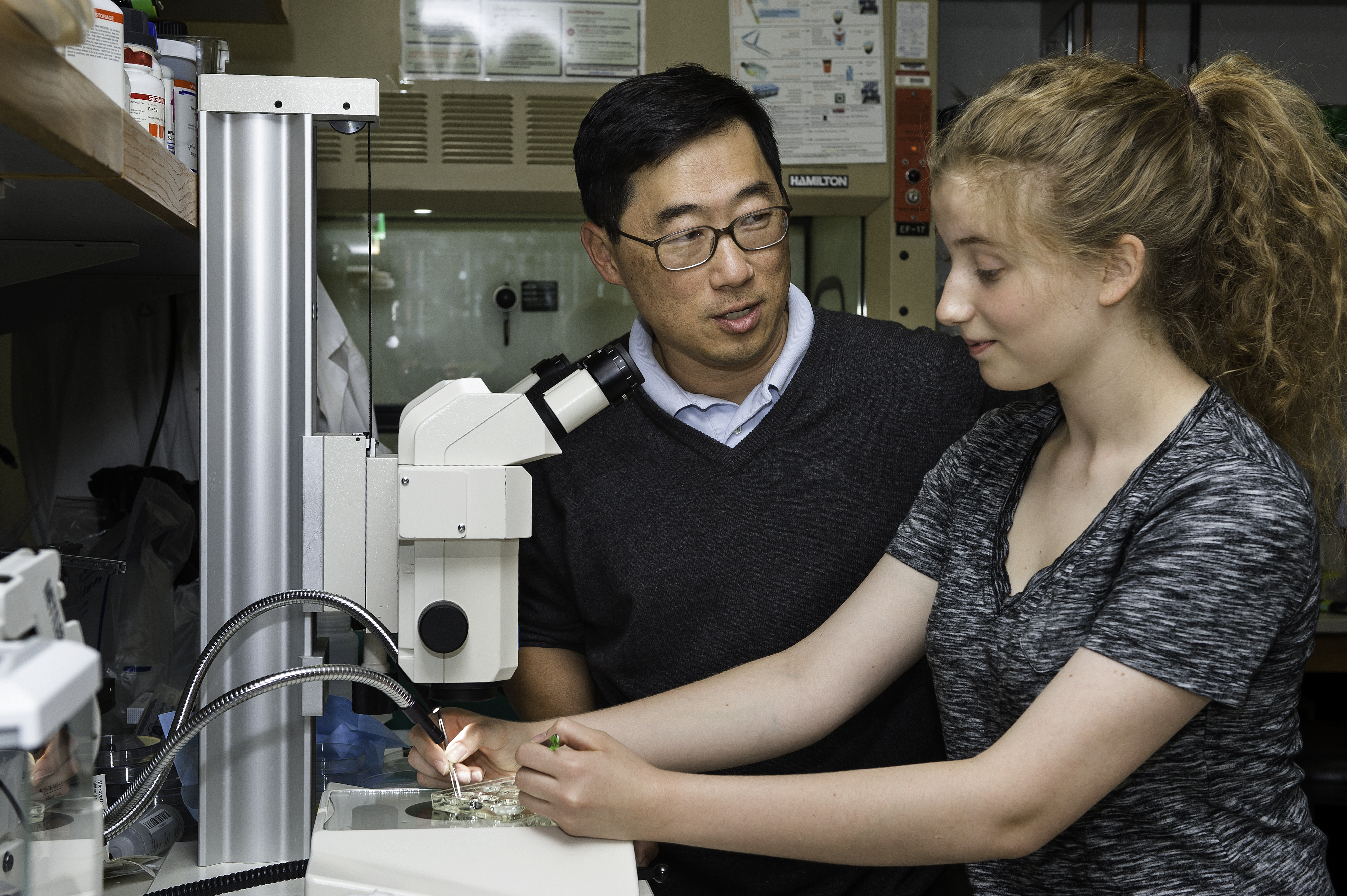
Photo of Seung Kim and former student Emma Herold (Steve Fisch)

In high school, most science classes involve students reading a textbook and doing experiments with known answers. Not Bio 470: Biology Research — an experimental molecular genetics biology course developed in partnership with Phillips Exeter Academy in New Hampshire and Seung Kim, MD, PhD, a professor of developmental biology at Stanford.

Kim was inspired to develop this unique high school biology class several years ago after visiting Exeter, his alma mater. He explained in an interview:

“I became aware that they were teaching science in a way very similar to how I’d learned it, which gave me pause as a practicing scientist because it didn’t reflect how science is really done. When we learn things in school, there should be no distance between us and the primary material. When you learn to play baseball or music, you don’t just read about it in textbooks. Instead, you play and try to mimic what professionals do.”

As a result, two Exeter instructors, Anne Rankin and Townley Chisholm, and a few of their students came to Kim’s research laboratory at Stanford the following summer to learn basic techniques for breeding and genetically manipulating fruit flies. Based on this training, the team launched an 11-week biology research course with 12 upper level students per year. The instructors teach the course at Exeter each spring, but both the teachers and students are in regular contact with Kim and his colleague, Lutz Kockel, PhD.

Drosophila, or common fruit flies, are an important model organism widely used in thousands of bioscience laboratories around the world, because these fast-breeding insects share much of our genetic heritage – fruit flies have 75 percent of genes that cause diseases in humans.

In class, students delve into fly genetics, molecular biology and embryology to generate and characterize new fruit fly strains. Kim explained their research:

“People have developed ways to turn genes on or off in fruit flies, using genetic tools that exploit elements from yeast gene control factors; there are whole libraries of these yeast-based genetically-modified fruit flies stocked around the world. But you need more than one independent system, so you can study complicated things like how cells talk to each other or how they interact in time during development. The research goal of our class was to generate a whole new set of genetically-modified fruit fly stock that used bacteria instead of yeast — creating a resource for the scientific community to perform their own research.”

If they succeed, great. But success isn’t guaranteed.

“The students, instructors and researchers don’t know what the outcome will be of their work, so it creates the actual emotions, effort and experience of being a scientist. The goal is to give young people a deeper understanding of what science is, which is ultimately about discovery,” Kim said.

The model worked well for Maddie Logan, an Exeter alumnus who is now a premed undergraduate at Yale University. She called it an incredible experience: “Biology 470 was very different from other classes in that it was 90 percent lab work. Every day we’d come into class, check in with the theory behind what we were doing that day, and then go to the lab benches to do our research. I learned that things in the lab only occasionally go as planned, and a real scientist has to be able to figure out what went wrong and how to correct it for next time.”

After taking Bio 470, a few students like Logan come to Stanford each summer to continue the research in Kim’s lab. “The whole strategy was to not worry about finishing anything in 11 weeks,” said Kim. “Over the last four years, students have accrued reliable data that we’ve now put together into a unique paper.”

Their paper has just been published in the journal G3: Genes, Genomes, Genetics— a major milestone for the project. According to the manuscript’s peer reviews, the students have produced a novel collection of fruit fly lines that will be “very useful to the scientific community to study diverse biological questions.”

Starting this fall, Kim and Lutz are expanding their genetics educational program to include Commack High School, a public school in Long Island, New York. They are also hoping to create a similar biology research course in a “high-needs” high school in the future.

For Kim, the project is a personal passion. “The thing that gives me the most joy is to see students’ faces light up when they really understand and really engage in the scientific process,” Kim said. “I’m trying to get people to see the beauty in science.”

This is a reposting of my Scope blog story, courtesy of Stanford School of Medicine.
Commentary expresses “building resentment against the shackles” of electronic health records

2048px-Stethoscope_and_Laptop_Computer_-_Nci-vol-9713-300
Photo by Daniel Sone

Current electronic health records, also known as EHRs, have many failings. That’s according to a commentary written by Stanford faculty members Donna Zulman, MD; Abraham Verghese, MD; and Nigam Shah, MBBS, PhD, that appears today in JAMA.

Zulman, assistant professor of medicine, elaborated in a recent email:

“Many physicians are frustrated with the dominant role of EHRs in today’s clinical practice, which is experienced physically in the exam room in the form of a computer that sits between the doctor and patient.

While EHRs facilitate certain tasks, such as medication orders and medical record review, they’ve shifted clinical care away from the profound interactions and relationships that motivate many physicians to pursue careers in medicine. Our objective in this essay was to describe the need for EHRs to evolve in a way that frees physicians to focus on the caring that only they, as humans, are equipped to provide.”

According to the commentary, specific failings of EHRs include: lengthy records that don’t prioritize meaningful information, the generation of too many non-urgent alerts that continually interrupt physician workflow and the absence of key information about patients’ environmental and behavioral stressors. EHRs are basically “designed for billing” rather than easy use by healthcare providers, they write.

Zulman added:

“Many record systems house data for large populations that could potentially inform treatment decisions for individual patients. By synthesizing information about other patients with similar demographic and clinical characteristics, EHRs could provide recommendations to help guide therapy decisions when traditional evidence is lacking. Expanding the types of information in EHRs to include social and behavioral determinants of health would greatly enrich the data available for these purposes, since we know that these factors are often fundamental to a patient’s treatment response and health outcomes.”

The authors also describe ways to improve how information is presented in EHRs, particularly when a patient has a complex medical history. For instance, they suggest capturing the key events of a prolonged illness in a single graph, so physicians and patients can easily visualize the clinical course of the disease and treatment. Overall, they argue that existing technology can be used to more effectively track, synthesize and visualize EHR information.

The authors concluded in their piece:

“There is building resentment against the shackles of the present EHR; every additional click inflicts a nick on physicians’ morale.

Current records miss opportunities to harness available data and predictive analytics to individualize treatment. Meanwhile, sophisticated advances in technology are going untapped. Better medical record systems are needed that are dissociated from billing, intuitive and helpful, and allow physicians to be fully present with their patients.”

This is a reposting of my Scope blog story, courtesy of Stanford School of Medicine.

Kangaroo Mother Care: Researchers search for biological basis of its effectiveness

Photo by Tom Andriaenssen

My niece just had a son. Despite the 110-degree summer heat, she has been holding him against her bare chest using a special newborn carrier because she knows kangaroo mother care is important. This bare skin, chest-to-chest contact has many demonstrated health benefits, including reduced mortality for low-birth-weight infants.

I recently spoke with neonatologist Vinod Bhutani, MD, about kangaroo mother care and his new pilot study — in partnership with Kari McCallie, MD, Susan Crowe, MD, and David K. Stevenson, MD — that is examining exactly how it works.

How is kangaroo mother care beneficial?

“The primary advantages of kangaroo mother care are keeping the baby warm and improving maternal-infant bonding, but there are additional benefits. When the baby is put on the mother’s breast, he is more likely to root and breastfeed. The baby also hears and feels the vibrations of the mother’s voice as she speaks or sings, and he feels the soothing rhythm of the mother’s heart that he’s used to hearing inside the womb. Finally, it improves the brain development of the baby on a long-term basis. We think skin-to-skin care is particularly important for premature babies, since their brains are not fully developed at birth. Fathers and other family members can participate too; many benefits of skin-to-skin care are not just limited to the mother.”

What barriers prevent effective kangaroo mother care?

“There are three main types of barriers: cultural ones, sick or premature babies and healthcare providers’ lack of knowledge or comfort level.

In most developed communities, the baby is separated from the mom for the first six hours after birth while the baby is being evaluated. Wearing clothes is also very important in western society, so direct skin-to-skin contact is not uniformly practiced — particularly in communities where babies are delivered at home or sent home soon after birth and mothers don’t have privacy.

In addition, sometimes babies are very sick so they are separated from their mother, placed in incubators and attached to medical devices. Studies have shown that a premature baby stabilizes better on his mother than in an incubator, but there are problems with implementation. Most hospitals in the U.S. and Western Europe discharge the mother after two days, so there are no places in the hospital for her to sleep with the baby and do kangaroo mother care. Often mothers also need to go back to work to save their maternity leave for when the baby stabilizes and comes home. And sometimes the baby is very sick and is attached to lots of technology, which can be intimidating and frightening to parents. Plus many healthcare providers aren’t convinced that kangaroo mother care is beneficial, particularly for premature or sick babies.”

What are you researching now?

“Our study stems from observations in horses made by our colleagues at the Univeristy of California, Davis led by veterinarian expert John Madigan, DVM. He found that foals exhibiting abnormal behavior shortly after birth had elevated fetal levels of neurosteroids, which was ameliorated by squeezing their chest to mimic the birth canal.

In our pilot study funded by the Gates Foundation, we looked at nine key “brain” hormones in 39 human babies, measuring hormone levels in the umbilical cord blood and 24 hours later in the baby’s blood. We studied the natural history of these neurosteroid hormones to see how they’re related to infants’ sex, mode of delivery (vaginal birth or cesarean section), maturity, and duration of skin-to-skin care.

We just finished collecting the data. Our preliminary analysis shows a significant decrease in most stress hormone levels over the first day. The decrease is more apparent in vaginal deliveries, underscoring the need to institute kangaroo mother care after a C-section. Once our analysis is complete, we hope to identify one or two key hormone levels that are the best index of birthing stress. In future work, we want to develop a test for these key hormones from the baby’s saliva to be used as a point-of-care test. A saliva test is something that a health provider could do to determine if the baby is stressed.

We need to understand the biological basis of kangaroo mother care to convince healthcare providers and policy makers of the importance of skin-to-skin contact. We need mothers and family members to be part of the healthcare team — they have a therapeutic role.”

This is a reposting of my Scope blog story, courtesy of Stanford School of Medicine.

C3 Prize: Your chance to improve cancer care

Image by Thomas Hawk

Robert Herjavec, a star investor on the reality TV show Shark Tank, knows what it’s like to have a family member suffer through cancer treatment. His mother died nearly ten years ago of ovarian cancer.

That experience inspired Herjavec to become an expert judge for the C3 Prize — a new business competition designed to change cancer care beyond medicine and treatment. Created in partnership with Astellas Oncology, the World Medical Innovation Forum, Stanford University Medicine X and MATTER, the C3 Prize is seeking innovative ideas to improve the lives’ of cancer patients and caregivers.

“I believe there is an immense need to improve the lives of patients, like my mother, and their caregivers, like myself,” said Heriavec in a recent Forbes piece. “For me, this is personal. The C3 Prize is one way I can use my passion for entrepreneurship to give back.”

In particular, the competition is looking for novel ways to help patients and their caregivers:

  • Navigate through the healthcare system
  • Adhere to a treatment plan
  • Coordinate how care is delivered
  • Support survivors

Everyone is encouraged to apply — patients, caregivers, healthcare professionals and concerned citizens — but you need to submit your idea by August 8. The top five finalists, as determined by an expert panel, will be invited to pitch their ideas, at no cost, in front of a live panel of judges at the Stanford Medicine X conference on September 17. Three prizes will be awarded: a $50,000 grand prize grant and two $25,000 grants, which can be used to implement the winners’ ideas.

This is a reposting of my Scope blog story, courtesy of Stanford School of Medicine.

Introducing CancerBase: A way to share personal medical data to help cancer research

Photograph by geralt

Early this year, the Obama Administration announced a national Cancer Moonshot Initiative to “eliminate cancer as we know it” by accelerating innovative research.

This call to action was heard by Jan Liphardt, PhD, associate professor of bioengineering at Stanford, and Peter Kuhn, PhD, professor of medicine and engineering at the University of Southern California, who joined forces to create the CancerBase. Their goal is to overcome the difficulties of sharing personal medical information to facilitate cancer research.

“People all over the world already effortlessly share other kinds of information — pictures, movies, ideas, stories, tweets,” said Liphardt in a recent Stanford Engineering article. “Increasingly, they are using the same tools to share personal medical information.”

CancerBase provides patients with an easy-to-use method to share their de-identified health data worldwide. The data is then displayed as a global map of people with cancer, where different colored dots represent people with different types of cancer.

Liphardt explained:

“So that’s the simple idea: A global map and give patients the tools they need to share their data – if they want to. They can donate information for the greater good. In return, we make a simple promise: When you post data, we’ll anonymize them and make them available to anyone on Earth in one second. We plan to display this information like real-time traffic data. HIPAA doesn’t apply to this direct data-sharing.”

For now, participants answer five basic questions such as: What is your diagnosis? Did your cancer metastasize? However, participants can propose new questions to be added to the database in the future.

This anonymized data is available to everyone through a PubNub real-time application. The project has only just begun with 532 participants so far, but Liphardt plans to acquire tens-of-thousands of members to create a viable database for cancer research.

“The dream is to have cancer-relevant medical data flow unimpeded around the world in seconds, so that everyone, wherever they are, can see and use this information,” Liphardt said.

This is a reposting of my Scope blog story, courtesy of Stanford School of Medicine.

One researcher’s journey to understand the molecular basis of aging, using blood

Image by Cliker-Free-Vector-Images

Hanadie Yousef, PhD, studies how the body ages — first as a graduate student at UC Berkeley and currently as a postdoctoral research fellow at Stanford with her mentor, Tony Wyss-Coray, PhD, professor of neurology.

Her current anti-aging research is based on a pivotal study performed at Stanford in the laboratory of Thomas Rando, MD, PhD, professor of neurology and neurological sciences. In this 2005 study, researchers surgically connected the circulatory systems of a young and old mouse. Within a few weeks, the young mouse’s blood began rejuvenating the tissues in the old mouse. Specifically, the young blood rejuvenated organ stem cells in the brain, muscle and liver of the old mouse. When activated, these adult stem cells fend off aging by replenishing depleted cells and regenerating damaged tissues. 

Subsequent studies by the Wyss-Coray lab and others have shown that organ stem cells retain their regenerative capacity, but the biochemical cues that control their function change with age — causing the abandonment of tissue maintenance and repair in the elderly. This can be overcome by injecting young blood to enhance the adult stem cells’ environment.

“In graduate school, I became fascinated with the idea that adult tissues could be rejuvenated by their tissue-specific stem cells, which severely decline in function as we grow old,” said Yousef. “So I wanted to understand the molecular mechanisms underlying this decline.”

Specifically, Yousef examined a molecule called transforming growth factor-beta 1 (TGF-β1). “In young people, TGF-β1 exists at lower levels around stem cells and helps regulate tissue regeneration. However, elevated levels of TGF-β1 in the stem cell microenvironment in older people promotes inflammation and prevents stem cell activity, causing decline in tissue function,” Yousef said.

As a graduate student, to help find a potential treatment, she tested a cancer drug called Alk-5 kinase inhibitor, which decreased the levels of TGF-β1 signaling to stem cells, increasing stem cell activity —when systematically injected into aged mice.

“The control old mice had extensive scar tissue following muscle injury, while the old mice that got the Alk-5 inhibitor were systematically able to generate new muscle fibers almost as well as young animals,” Yousef said. “Additionally, we saw that the inhibitor could cross the blood brain barrier and act locally on neural stem cells to enhance the formation of new adult neurons in the hippocampus, the part of the brain important for learning and memory function that severely declines with age.”

The Berkeley scientists are now considering ways to evaluate the drug’s efficacy in humans. The hope is to be able to inject a drug, like the Alk-5 inhibitor, to prevent the onset of multiple diseases associated with aging, including Alzheimer’s.

And Yousef continues her anti-aging research at Stanford. “I now study the opposite effect: what does old blood do to young brain function?” Yousef said. “We’ve seen that aged blood plasma is more pro-inflammatory than young blood plasma, and it contributes to increased brain inflammation and inhibited neural stem cell function with aging.”

So young blood improves brain function, whereas old blood impairs it. Does this mean that young blood can be injected into older patients to treat degenerative brain disorders like Alzheimer’s? According to Yousef, the answer is:

Potentially, yes! In our lab, my colleagues have shown that young blood can improve brain function in Alzheimer’s mice models, and their results will be published soon. Based on these studies, there is an ongoing clinical trial at Stanford, called the Plasma for Alzheimer’s Symptom Amelioration study, in which Alzheimer’s patients receive young blood transfusions to see if this can reduce the severity of disease progression.

A lot of research is needed before a successful treatment is found for Alzheimer’s, but understanding the rejuvenating factors in young blood may be a key step. “We’re working intensively to find out what those factors might be and from exactly which tissues they originate,” said Wyss-Coray in an earlier news release.

This is a reposting of my Scope blog story, courtesy of Stanford School of Medicine.
Most primary care doctors have favorite patients, study finds

Image by Regina Holliday

As a teacher, I try to treat all my students equally but I definitely have favorites. I’m sure other teachers have favorite students too, so it makes sense to learn that physicians have favorite patients.

A team of researchers led by Joy Lee, PhD, a postdoctoral fellow at the Johns Hopkins Bloomberg School of Public Health, interviewed 25 primary care physicians who worked in clinical settings within the Johns Hopkins medical system about their favorite patients. The participating physicians were predominantly white and about evenly split between male and female.

The doctors were a bit uncomfortable with the term ‘favorite patient,’ the researchers reported in Patient Education and Counseling. It raised concerns regarding boundaries and favoritism. However, all but three of the participating physicians admitted to having favorite patients.

The goal of the study was to identify the common attributes of these physicians’ favorite patients and examine how having favorite patients impacts their physician-patient relationships.

Who were the favorites? Surprisingly, they weren’t typically the most compliant patients or the ones most similar to the doctors. Instead, they were long-term patients who spent more time with their physician while going through a major illness. So the doctors were very familiar with their favorite patients’ personalities and health histories — allowing them to provide the best care.

“For patients, these findings highlight the importance of having a usual source of care, a primary care doctor with whom they can establish a relationship,” said Lee in a recent news release. “Favorite patients might not be consistently sick, but when a crisis comes they have an existing relationship to work off of.”

Of course having favorites isn’t the same as playing favorites. The participating physicians argued that their awareness of having both favorite and challenging patients helps them prevent favoring the care of certain patients over others. They also generally like most of their patients.

“This concern demonstrates that physicians are striving to be fair and to give all their patients the best possible care,” Lee said. “We discovered that doctors really thought about their relationship with patients, which is encouraging from a patient perspective. Their thinking really humanizes the patient-physician relationship.”

This is a reposting of my Scope blog story, courtesy of Stanford School of Medicine.

Trojan Horses: Nanoparticles sneak drugs into brain to battle cancer

Photo by dierk schaefer

I just read an interesting article in the Berkeley Science Review about using nanoparticles to make chemotherapy more effective against a type of brain cancer called glioblastoma. I was then surprised and proud when I realized one my former science-writing students, Dharsi Devendran, wrote it.

Although rare, glioblastoma is an invasive and deadly brain cancer with octopus-like tentacles that are difficult to completely remove with surgery. Even the standard combined treatment of surgery, radiation and chemotherapy isn’t very effective — people typically die within months of diagnosis. So researchers are actively searching for better treatments.

Devendran explains:

Although it is difficult to fight, glioblastoma also has a weakness. In its rush to feed itself, it accelerates the blood vessel formation process and creates hole-riddled blood vessels around the tumor. Because cancer drugs are small enough to slip through these holes, they can exploit this defect—but they also need a strategy to cross the blood-brain barrier in order to reach the tumor.

Acting like a security system for the brain, the blood-brain barrier is a network of blood vessels that allow essential nutrients to enter while blocking harmful molecules. Unfortunately, it also blocks life-saving chemotherapy drugs, unless researchers can find clever ways to sneak them through the barrier.

Ting Xu, PhD, professor of materials science at UC Berkeley, and her collaborators are developing tiny nanocarriers that can envelop and protect chemotherapy drugs as they move through the blood, across the blood-brain barrier, and into the brain to the glioblastoma tumor tissue.

The researchers designed a new nanocarrier, called a 3-helix micelle (3HM), out of proteins with molecules on the surface that fit into specific proteins found only on the surface of the tumor cells — like fitting a key into a lock. Once the 3HM nanocarriers access the tumor cells, they release their chemotherapy drugs to help destroy the glioblastoma.

Xu’s team has shown that their 3HM nanocarrier is twice as effective at reaching glioblastoma cells as liposomes, a nanocarrier made of fatty acids that is a standard in nanotechnology drug delivery. This is in part because the 3HM is five times smaller than liposomes.

“We still don’t understand the mechanism completely,” said JooChuan Ang, a graduate student in Xu’s group, in the article. “Size is definitely a factor, but there could be other factors that contribute…”

This is a reposting of my Scope blog story, courtesy of Stanford School of Medicine.

Quitting smoking: Best drug differs for men and women

Papierosa_1_ubt_0069
Photo by Tomasz Sienicki

It’s tough to quit smoking. I’ve seen friends and family members struggle with nicotine withdrawal symptoms: cravings for tobacco, anxiety, anger, irritation, increased hunger and even trouble thinking.

One out of six adults in the United States currently smoke and about half of them are trying to quit, but the success rate remains low. What’s the best way to stop smoking? A new study may help point the way — for women.

The study found that a medication frequently used to help smokers quit is more effective for women than men. Philip Smith, PhD, assistant medical professor at the City College of New York, led the multi-institutional study: a network meta-analysis of 28 randomized clinical trials involving a total of 14,389 smokers (51 percent female).

The researchers did a head-to-head comparison between the three common types of medications used for smoking cessation: the nicotine patch, varenicline (sold as Chantix and Champix) and sustained-release bupropion (sold as Wellburtin or Zyban). The quit rate of the participants was based on biochemical verification of their abstinence after six months.

The authors reported in their new paper in Nicotine & Tobacco Research:

“Women treated with varenicline were 41 percent more likely to achieve 6-month abstinence compared to women treated with TN [transdermal nicotine patch], and were 38 percent more likely to achieve 6-month abstinence than women treated with bupropion. For men, the benefit of varenicline over TN and bupropion were smaller and were not statistically significant.”

“Before our study, research had shown that among the choices for medications for smokers who wanted to quit, varenicline was the clear winner when it came to promoting quitting,” said Smith in a recent news release. “Our study shows this is clearly the case for women. The story seems less clear among men, who showed less of a difference when taking any of the three medications.”

The research findings identify varenicline as a particularly potent first option treatment for women. However, the good news for all smokers is that all three medicines significantly improved quit rates for both men and women, when compared with placebo.

If you’re trying to quit smoking, a combination of counseling and medication has been shown to be an effective way to treat tobacco dependence — speak with your doctor or contact a smoking cessation program.

This is a reposting of my Scope blog story, courtesy of Stanford School of Medicine.

From art to surgery: Stanford alumna reconstructs new ears for children

Dr Sheryl Lewin in the operating room (courtesy of Lewin)

Some children are born with a missing or malformed small ear due to a rare congenital condition called microtia. In most cases, the child’s ear canal is also very small or absent, resulting in hearing loss.

The surgical procedures used to correct microtia require the skills of both a sculptor and surgeon — making it the perfect specialty for Sheryl Lewin, MD, a craniofacial plastic surgeon who began her training as an artist and architect.

Lewin’s career has been passionately devoted to treating microtia through her private medical practice and nonprofit organization called Earicles, which helps children born without ears through education, research and free or reduced-cost treatment. I recently spoke with Lewin about her work: 

As an architect major, what inspired you to become a physician?

“When I was in architecture school at UC Berkeley, I loved the challenge of design, where you can use your own creativity to solve visual and spatial problems. My program was heavily artistic — we drew, painted and sculpted. But what was missing was the ability to use those skills to directly affect someone’s life in a tangible and meaningful way.

During college, I lived across the street from an elementary school that served underprivileged kids, which inspired me to start a volunteer organization of Berkeley undergraduates that mentored disadvantaged children in the local community. I recognized that I really enjoyed working and helping kids, and medicine was a way to do that.

When I went to medical school at Stanford, I was drawn to surgery as it gave me the ability to work with my hands. I decided to pursue pediatric plastic surgery after I saw my first cleft lip surgery on a tiny infant, whose life was transformed in a couple of hours. I realized it absolutely used the same skill set that I was used to working in: design, thinking three-dimensionally and visualizing symmetry. It was very much like sculpture.

Years later in medical school, I saw my first surgery to correct a rare condition called microtia. Once I saw what was involved, there was no doubt that I would love the challenge of making ears, which is considered by many plastic surgeons to be one of the most technically difficult things we do. But what really sealed the deal was the intangible feeling you get taking care of these children and their families. I came home that day and told my husband, ‘I know what I want to do with the rest of my life.’”

What is microtia?

Microtia ear before and after surgery (Courtesy of Lewin)
Child’s ear before and after microtia reconstruction surgery (courtesy of Lewin)

“Microtia is a congenital condition in which the ear does not develop properly. The word microtia translates to “small ear.” It occurs in about one in 6,000 to 12,000 children worldwide, with a higher prevalence among Hispanics, Asians and Native Americans.

The cause of microtia is not well understood, particularly regarding the role of environmental and genetic factors. Some medications have been linked to microtia when ingested in the first trimester of pregnancy, including Thalidomide and Accutane. However, it’s important to understand that microtia is rarely caused by what a mother does during pregnancy.”

How do you treat microtia? 

“Ninety-five percent of the world treats microtia by removing rib cartilage from the chest, carving it into an ear framework and then slipping it under the skin. In order to have enough cartilage, surgery must be delayed until children are six to ten years old. Three to four surgeries are required with this technique, and the ability to match the opposite ear is limited.

Several colleagues and I use a different technique. In an eight to ten hour outpatient surgery, I customize a porous polyethylene implant into a three-dimensional ear shape that matches the opposite ear. This biocompatible implant is then covered with vascular tissue. This allows for a symmetric and natural appearing ear to be created in just one operation as early as three years of age.

Children with microtia almost always have conductive hearing loss — since the ear canal is missing but the auditory nerve is functional. During the ear reconstruction surgery, I can do an additional scarless procedure to help restore hearing. I implant a titanium device in the skull that is connected to a bone conduction hearing processor, commonly referred to as a BAHA. The hearing processor captures sound and transmits these vibrations to the skull through the implant, which stimulates the auditory nerve that processes it as sound.”

What is most rewarding about your work?

“This surgery not only helps provide functionality, such as giving children the ability to wear eyeglasses, but it’s often about helping children attain the simplest human need: to feel the same as everyone else.

One of my favorite moments involved a four-year old boy named Davin, who had microtia of both ears. I was sitting next to him as he was about to see his second ear for the first time. He looked me in the eyes and said, “Dr. Lewin, do I have two big boy ears now?” I said, “Yes Davin, two beautiful ears.” Then, out of nowhere, he leaned over and planted a big kiss right on my lips and said, “Dr. Lewin, I love you.” For a moment, I was speechless, and then managed to say, “Davin, I love you too.” It really can’t get any better than that in my book.”

This is a reposting of my Scope blog story, courtesy of Stanford School of Medicine.