Dentistry in the hospital: A Q&A

Photo of Dyani Gaudilliere (right) in OR; by Vladimir Nekhendzy

In the U.S., medicine and dentistry are separate — they typically have different insurance systems, training regimes and workplaces. So I was intrigued when I heard about hospital dentists. To learn more about what they do, I spoke with Dyani Gaudilliere, DMD, a clinical assistant professor of surgery and chief of the dental section at Stanford.

Why did you choose to combine dentistry with medicine?

“I started on the path towards dentistry in my teens, planning to become an orthodontist. I became increasingly interested in public health, with the goal of treating underserved populations.

At my dental school (Harvard), the dental and medical school courses were combined for the first two years with the goal of fostering a more integrated approach to dentistry, which prepared me well for my current work.

The split between medicine and dentistry is, in fact, completely artificial. The bacterial diseases of the teeth and gingiva affect the entire immune system and can cause serious systemic consequences. In addition, many systemic diseases and medications have oral manifestations.”

What do you do at Stanford?

“The majority of our patients at Stanford are being treated for cancer, organ transplantation, cardiac disease or joint replacement. Our goal is to rid these patients of bacterial disease in their teeth and gums prior to their treatments. It may be risky to treat them outside the hospital, without access to the their full medical records or emergency services. Lack of dental insurance can also be a barrier for patients whose chronic disease prevents them from being employed.”

Can you tell me more about your patients?

“One large category of patients we see are those with cancer of the head and neck. Targeted radiation to this area and chemotherapy have serious long-term side effects, ranging from dry mouth resulting in rampant tooth decay to severe jaw infections. For this reason, we perform dental examination and patient education prior to these treatments. We also partner with the head and neck surgeons to remove infected teeth during their cancer resection surgery. And we create special oral positioning devices to aid the radiation oncologists in spacing and immobilizing the tissues during radiation therapy.

We also see patients before medical treatments that will leave them immunocompromised, such as chemotherapy or organ transplantation. Chronic tooth or gum infections can suddenly become life threatening in a patient who is immunocompromised.

A third example is trauma. It is common for patients to get in minor bike accidents and fly right over their handlebars onto their teeth. We see these patients in the emergency department urgently in order to put the teeth and supporting bone back into place and then stabilize them with cemented splints.”

Are there many hospital dentists?

“I believe there isn’t enough awareness of the medical necessity of dental care, nor are there enough hospital dentists. Some hospitals are lucky to be affiliated with dental schools, whereas most have no in-house or emergency dental team at all. We regularly receive patients transferred from outside hospitals with large infections or oral trauma, because these hospitals didn’t have anybody with the right expertise to treat the conditions.

There are a lot of barriers we need to cross in order to fully integrate dentistry and medicine, but I think this integration is way overdue.”

What is your view on the separation between dentistry and medicine?

“The reason for the separation seems to be a combination of history and politics. Tooth extractions and other surgeries were historically performed by barber-surgeons rather than physicians, and oral care developed as a separate track from care of literally every other part of the body. Fast forward to today and you have dentists lobbying to sustain this separation in order to spare their profession from the regulations and changes occurring in the medical care world.

The idea that dentists would not need medical knowledge is laughable considering how much surgery they perform. Dentists who don’t understand medications and their mechanisms would not last long after their patient on blood thinners loses pints of blood after an extraction.”

This is a reposting of my Scope blog story, courtesy of Stanford School of Medicine.

“A toxicological experiment:” Additional study needed on e-cigarettes use

Photo by Itay Kabalo

Although the market for e-cigarettes is booming, scientists and health agencies are still debating the extent of their health impacts. Basic questions remain: What chemicals are in the vapor cloud produced by e-cigarettes? And how does this vapor affect users and those around them?

A research team led by Hugo Destaillats, PhD, a chemist in the Indoor Environment Group at Lawrence Berkeley National Lab, is seeking the answers to these questions.

Destaillats and his colleagues have studied the complex chemical composition of vaping aerosols, the cloud of particles the devices emit. In one study, they quantified emissions from three e-liquids with various vaporizers, battery power settings and vaping habits — ranging from heavy to low puff duration and frequency.

The researchers found 31 potentially toxic substances in the vapors, including two not previously detected: propylene oxide in the e-liquids and glycidol in the vapors. Both of these compounds are considered probable carcinogens. They also determined that the base fluids used in vaping, propylene glycol and glycerin, can decompose when heated to produce acrolein, a powerful irritant.

However, the level of these toxins varied depending on the type of e-cigarette and how it was operated. For instance, toxic emissions rates were higher for e-cigarettes with a single heating coil compared to ones with double coils. Toxin levels also increased with the voltage used to power the device. And they rose with repeated use, presumably due to a buildup of residue within the device.

“We hope that one outcome of our research has been to provide useful information to manufacturers to help them improve the safety of their devices,” said Destaillats in a recent article in Analytical Scientist. .

In a follow-up study, the researchers assessed the health impact of firsthand and secondhand exposure to these vapor clouds under various typical use conditions. The integrated health damage from vaping for the various scenarios was lower than, or comparable to, the estimated damage from tobacco smoke, they concluded.

Given the countless unique e-liquid flavors and the on-going development of new devices, this research is difficult to generalize, they said, but they are concerned that more unidentified toxins exist.

Destaillats summarized in the article:

“Vaping is effectively a toxicological experiment being carried out with millions of people around the world.”

This is a reposting of my Scope blog story, courtesy of Stanford School of Medicine.

New way to understand tumor diversity combines CRISPR with genetic barcodes

Photo courtesy of PIXNIO

The growth of a particular tumor depends on multiple genetic factors, so it is difficult for cancer researchers to recreate and study this genetic diversity in the lab.

“Human cancers don’t have only one tumor-suppression mutation [which fuels tumor growth] — they have combinations. The question is, how do different mutated genes cooperate or not cooperate with one another?” said Monte Winslow, PhD, a Stanford assistant professor of genetics and of pathology, in a recent Stanford news release.

Now, Winslow and his colleagues have discovered a way to modify cancer-related gene and then track how these combinations of mutations impact tumor growth, as recently reported in Nature Genetics.

The researchers used a powerful gene-editing tool, called CRISPR-Cas9, to introduce multiple, genetically distinct tumors in the lungs of mice. They also attached short, unique DNA sequences to individual tumor cells — which acted as genetic barcodes and multiplied in number as the tumors grew. By counting the different barcodes, they were able to accurately and simultaneously track tumor growth.

“We can now generate a very large number of tumors with specific genetic signatures in the same mouse and follow their growth individually at scale and with high precision. The previous methods were both orders of magnitude slower and much less quantitative,” said Dmitri Petrov, PhD, a senior author of the study and an evolutionary biologist at Stanford, in the release.

The study showed that many tumor-suppressor genes only drive tumor growth when other specific genes are present. The researchers hope to use their new methodology to better understand why tumors with the same mutations sometimes grow to be very large in some patients and remain small in others, they said.

Their technique may also speed up cancer drug development, allowing a drug to be tested on thousands of tumor types simultaneously. Petrov explained in the release:

“We can help understand why targeted therapies and immunotherapies sometimes work amazingly well in patients and sometimes fail. We hypothesize that the genetic identify of tumors might be partially responsible, and we finally have a good way to test this.”

This is a reposting of my Scope blog story, courtesy of Stanford School of Medicine.

Oncologist disagree on use of value to guide cancer treatments

Photo by Nick Youngson

Cancer care is expensive, with the cost of new chemotherapies exceeding  $100,000 annually and the growth in cancer care costs increasing faster than the growth in general medical care costs. In addition, there is a widely acknowledged mismatch between the costs and benefits of treatment.

“The pricing of cancer drugs doesn’t appear to be related to their health benefit. This is problematic and unaffordable both for the health care system and for patients, who are expected to engage in not-insubstantial cost sharing,” explained Risha Gidwani-Marszowski, DrPH, a health economist at the VA Palo Alto Health Care System and at Stanford.

In response to this gap, oncology professional societies now recommend that oncologists consider the value of a treatment when making clinical recommendations, a major shift in clinical practice. But how are oncologists defining whether a therapy has “high value?” And how are they using this information?

Gidwani-Marszowski investigated these questions in a new study recently published in Value in Health. Her multi-institutional research team conducted in-depth interviews with 31 U.S. oncologists who practiced in a diverse range of environments, including academic medical centers, community medical centers and the Veterans Health Administration.

The researchers asked oncologists open-ended questions about larger questions regarding value – specifically,  about the oncologists’ definitions and measurements of value, as well as about their value-based choices.

“We didn’t want to operate under the erroneous assumption that we knew everything there is to know about the relevant features of the value problem,” said Gidwani-Marszowski. “We felt it would be better to keep things open-ended, so that practicing oncologists could tell us the aspects of value that were most relevant or salient to them.”

Once these in-depth conversations were transcribed, two independent investigators qualitatively assessed the transcripts to identify themes — pinpointing and recording patterns. Their analyses revealed that oncologist have wide ranging views. Gidwani-Marszowski explained:

“One of the most interesting things we found through this work is that the divergent views exist at a very basic level — the definition of value.  For example, in defining value, some oncologists said cost was one of multiple factors that should be considered, while others said cost had no role at all to play in value.”

Additionally, some oncologists looked at cost in relation to a patient’s quality of life, while others looked at quality of life alone to measure value. One oncologist explained in the paper, “I think [value] shouldn’t just be measured by overall survival, but quality of life has to really be integrated into that. I’m extending the patient’s life by two months, if they’re filled with chemotherapy side effects and toxicity, have we increased the value?”

The oncologists also disagreed on how value should be measured, who should assess the value of a treatment and whether value should be discussed with the patient.

For one oncologist, conversations about costs are important: “I tend to explain to them what the cost is and what the benefit is. And some patients actually say, ‘I don’t think it’s worth it.’ … So I will give them [information about the] cost and the side effects and the benefit and we’ll make the decision together.”

For another oncologist, the conversations don’t work well: “Most of the time we don’t [discuss the cost of care] because then the patients and families think hey, these guys are looking at dollars and not providing the care… So that’s kind of really controversial. Plus it’s very uncomfortable even to talk about the money and the care we provide to them…”

Now, the team is using the results from these in-depth interviews to design a closed-ended survey, which they plan to disseminate to a large sample of oncologists across the country. Gidwani-Marszowski explained:

“Oncologists often have the best understanding of the effectiveness of a particular drug in a specific patient and largely guide the purchasing of care for cancer patients. Thus, it is partly through understanding their perspectives that we can improve the value of cancer care.”

Gidwani-Marszowski also told me that for value efforts to be successful, a critical first step is to make sure all of the relevant stakeholders — oncologists, patients, caregivers, other health care providers, payers, health economists and policy makers  — are able to reach a consensus on the definition of value in cancer care.  That will build a foundation for efforts to establish thresholds for value, mechanisms to measure value, and ultimately, efforts to improve the value of cancer care, she said.

This is a reposting of my Scope blog story, courtesy of Stanford School of Medicine.

Stanford and Common Sense Media explore effects of virtual reality on kids

Photo by Andri Koolme

Although we’re still a long ways off from the virtual reality universe depicted in the new movie “Ready Player One,” VR is becoming a reality in many homes. But how is this immersive technology impacting our kid’s cognitive, social and physical well-being?

Stanford researchers and Common Sense Media are investigating the potential effects of virtual reality on children. And a  just-released report provides parents and educators with a practical guide on VR use.

“The truth is, when it comes to VR and kids, we just don’t know that much. As a community, we need more research to understand these effects,” Jeremy Bailenson, PhD, a Stanford communication professor and the founder of Stanford’s Virtual Human Interaction Lab, wrote in an introduction to the report.

The research team surveyed over 3600 U.S. parents about their family’s use of virtual reality. “Until this survey, it was unclear how, and even how many, kids were using virtual reality,” said Bailenson in a recent Stanford news release. “Now we have an initial picture of its adoption and use.”

The report summarizes results from this survey and previous VR research. Here are its key findings:

  • VR powerfully affects kids, because it can provoke a response to virtual experiences similar to actual experiences.
  • Long-terms effects of VR on developing brains and health are unknown. Most parents are concerned, and experts advocate moderation and supervision.
  • Only one in five parents report living in a household with VR and their interest is mixed, but children are
  • Characters in VR may be especially influential on young children.
  • Students are more enthusiastic about learning while using VR, but they don’t necessarily learn more.
  • VR has the potential to encourage empathy and diminish implicit racial bias, but most parents are skeptical.
  • When choosing VR content, parents should consider whether they would want their children to have the same experience in the real world.

Ultimately, the report recommends moderation. “Instead of hours of use, which might apply to other screens, think in terms of minutes,” Bailenson wrote. “Most VR is meant to be done on the five- to 10-minute scale.”  At Stanford’s Virtual Human Interaction Lab, even adults use VR for 20 minutes or less.

One known potential side effect from overuse is simulator sickness, which is caused by a lag in time between a person’s body movements and the virtual world’s response. Some parents also reported that their child experienced a headache, dizziness or eye strain after VR use.

In addition, the researchers advise parents to consider safety. Virtual reality headsets block out stimuli from the physical world, including hazards, so users can bump into things, trip or otherwise harm themselves.

A good option, they wrote, is to bring your child to a location-based VR center that provides well-maintained equipment, safety spotters and social interactions with other kids.

This is a reposting of my Scope blog story, courtesy of Stanford School of Medicine.

Learning from health-related social media posts: A Q&A

Image by Max Pixel

About 6,000 tweets are sent every second and they aren’t all about celebrities. Posts about health or illness can be tremendously valuable to health care professionals, allowing them to track trends, spot epidemics and assess the quality of services provided by health facilities, to name just a few uses.

But how can the researchers make sense of this flood of data? To find out, I spoke with Sidhartha Sinha, MD, an assistant professor of medicine at Stanford, who analyzes social media posts to better understand patient and societal perceptions.

What sparked your interest in online data?

“While there are certainly downsides with working with unstructured data from sources such as social media and online patient forums, there are also tremendous advantages, including the scope of patients we can ‘reach.’

For example, in our work analyzing data from an online patient forum for patients with inflammatory bowel disease, we are able to access tens of thousands of posts from patients with IBD. These patients are describing a variety of issues around their experience with the disease — such as their therapy side effects (some of which have not been seen before and may offer early insights), psychosocial issues with chronic disease, and opinions regarding treatments and interventions. By analyzing this data, we are in effect  ‘listening’ to these patients’ experiences and hopefully gaining insights to better treat the disease.”

I understand you’ve also used online data to better understand public sentiment — could you describe that?

“One of the most important things health care providers do is try to prevent disease.  And one of the best means to do this is through disease screening.  However, millions of people do not get age-appropriate screening for diseases such as breast cancer or colon cancer.  My group’s initial work targeted understanding the perceptions around cancer screening tools.  Understanding how people feel about these screening interventions — particularly on the scale we’re able to examine using social media — allows us to not only identify barriers, but also further ascertain methods that work.”

How did you do that?

“Tens of thousands of tweets mentioning screening tests are created weekly. And while there are clear limitations to the quality of data and its generalizability, the sheer volume of data that we can access is much larger than most other means such as conventional surveys, which carry their own significant limitations. So we developed and validated a machine learning algorithm to classify sentiment (positive, negative, or neutral) around mentions of three common cancer screening tools: colonoscopy, mammography and PAP smears.

We found more negative sentiment expressed for colonoscopy and more positive sentiment for mammography. For example, the words ‘fear’ and ‘pain’ were commonly associated with negative sentiment. We also found that posts that were negative in sentiment spread more rapidly through social media than positive posts.”

How are these findings being used?

“Knowing the types of postings that reach more users, and some of the common issues expressed in them, could certainly influence how professional societies develop outreach interventions to improve engagement with preventive health efforts.

Based on our initial findings, we are developing additional algorithms to hopefully butter understand patient and societal perceptions of disease. We are also now engaged with professional societies such as the Crohn’s and Colitis Foundation to provide organizations with improved methods to understand patient needs and promote health.”

This is a reposting of my Scope blog story, courtesy of Stanford School of Medicine.
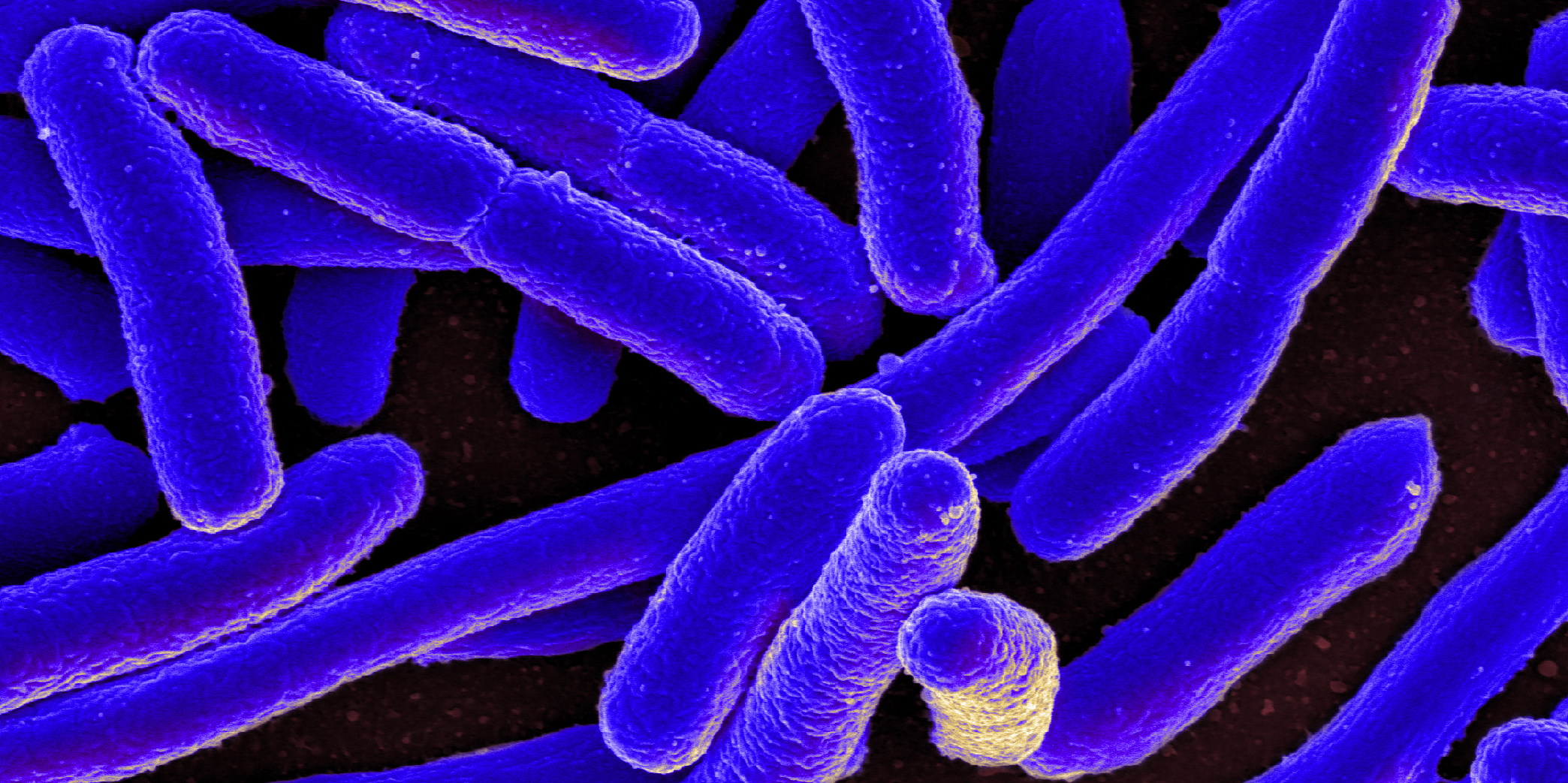
Big bacteria may be easier to kill, new research suggests

Image by NIAID

The size of a cell is intrinsicThe size of a cell is intrinsically linked with its genetic makeup, growth rate and other fundamental properties. What would happen if scientists could control the size of pathogens?

That possibility isn’t completely outlandish: Stanford researchers have discovered a genetic “tuning knob” that can enlarge or shrink bacteria across a wide range — and this knob can be used to fatten up the bacteria to increase their susceptibility to certain antibiotics, as recently reported in Current Biology.

The research team is led by KC Huang, an associate professor of bioengineering and of microbiology and immunology at Stanford. Huang explained in a recent Stanford Engineering  news article:

“Most strategies to killing bacteria are linear: you find a very specific target and block it with a drug. These findings point in the direction of totally orthogonal therapies, in which you predispose cells to death by tweaking a global property like size.”

The researchers found that a single protein in E. coli, called MreB, acts as a master regulator of cell size by coordinating the construction of cell walls. So they manufactured many copies of the E. coli’s DNA, changing in each copy just one of the 347 letters in MreB’s genetic code. Using fluorescence-activated cell sorting, they then separated the individual cells with different sizes to create a library of cell-size mutants.

The team used this library to study how size impacts a cell’s physiology, including how bacterium grow and survive. For instance, they treated the various E. coli mutants with several antibiotics and found that larger E. coli were more sensitive to the drugs. A larger cell has more surface area and that increases the drug uptake, they said in the paper.

Huang said he hopes their techniques can be applied to other bacteria and used to help human health in the future. He added:

“While we don’t yet know how to twist this bacterial size dial in patients, it’s good to have such an exciting new therapeutic approach as antibiotic resistance becomes increasingly prevalent.”

This is a reposting of my Scope blog story, courtesy of Stanford School of Medicine.


Developing “guided missiles” to attack cancer: A podcast featuring a Stanford bioengineer

Photo by Allocer

Chemotherapy attacks cancer by killing cells that are rapidly dividing. But this leads to serious side effects, like intestinal upset and hair fallout, because these normal cells grow quickly.

So researchers like Jennifer Cochran, PhD, a professor and the chair of bioengineering at Stanford, are developing more targeted cancer therapies, dubbed “guided missiles.” She recently described her work to professor and radio show Russ Altman, MD, PhD, on an episode of the Sirius radio show The Future of Everything.

“We, and others, have developed novel proteins that can selectively target cancer cells and then we can attach cargo to them — this is where the missile analogy comes in,” Cochran told Altman. “The cargo that we attach, things like chemotherapy, can then be selectively targeted to the tumor.” The idea is to precisely deliver to the tumor a more poisonous dose than you could deliver systemically, she said.

One way to do this is to bioengineer antibodies, which are molecules that recognize and help neutralize foreign substances like bacteria. However, Cochran’s lab took a slightly different approach. She explained to Altman:

“As amazing as antibodies are, they can have some limitations in that they are very large in terms of molecular size so they have trouble wiggling into a tumor. So we’ve created smaller versions of tumor-targeting proteins that can hopefully penetrate into tumors better. And we’ve then chemically attached chemotherapy molecules to deliver a punch to the cancer cells.”

In order to develop these proteins, her team is expediting protein evolution in a test tube — making favorable properties that would normally evolve over millions of years happen in just a few weeks. To do this, the team uses genetic manipulation to create millions of slightly different protein variants, tests them with high-throughput screening in just a few hours, identifies the ones most desirable for a certain task, and then determines these variants’ DNA sequences.

For example, they used this evolutionary process on a peptide, a small fragment of protein, from the seeds of a plant known as a squirting cucumber to turn the molecule into a favorable drug scaffold. “We ran the protein through this evolution process to create a tumor-targeting protein that we then hooked the chemotherapy agents on to,” said Cochran.

Cochran’s group is also investigating immunotherapy applications for her proteins. She is teaming up with Dane Wittrup, PhD, a professor in chemical engineering and biological engineering at Massachusetts Institute of Technology, who has developed new ways to use the immune system. By combining Cochran’s tumor-targeting technology with Wittrup’s insights into immunotherapy, they are able to give a “one-two punch” and activate multiple factors of the immune system to more effectively attack cancer, she said.

Her research team is also interested in applying their work to other diseases. She explained to Altman:

“We’ve been applying them for cancer, but you can use the same approach to deliver therapies to other types of disease tissue. We have really only just scratched the surface of what we can do. A big driver of this has been the interdisciplinary culture of collaborative research at Stanford. We’ve been working together with physicians, clinicians, scientists, engineers and physicists to tackle really challenging problems.”

Cochran’s bioengineered proteins are not yet available to patients. However, some tumor-targeting molecules are already approved by the U.S. Food and Drug Administration and many more are in the pipeline. “There are a number of molecules that are FDA approved and you might have heard commercials for them,” she told Altman. “But they only work for a subset of patients. So the question is: how do we make them work better for a larger subset of patients?”

This is a reposting of my Scope blog story, courtesy of Stanford School of Medicine.

BrainPost: Neuroscience summarized and delivered to your inbox

Image by Laszlo Ilyes

Like most busy professionals, neuroscientists have trouble keeping up with everything that’s going on in their field. They just don’t have enough time to read all the papers being published.

Neuroscientists Kasey Hemington and Leigh Christopher, PhD, a Stanford postdoctoral researcher, want to help. They created a new weekly e-newsletter, called BrainPost, that sends easy-to-read summaries of the latest neuroscience publications into their readers’ inbox. To learn more, I spoke with Christopher recently.

What inspired you to create BrainPost?

“Throughout my PhD and during my postdoc, I noticed two trends. First, when I talked to other neuroscientists, they were often unaware of research going on in closely related fields. I know that science is specialized, but it dawned on me that if scientists themselves are unable to keep up with other research, there was no way that members of the general public could even begin to stay on top of the latest advances. The second trend is one of too much data. I think with big data comes big confusion. We have too much to consume and therefore we often choose not to consume at all, because it’s overwhelming.

We wanted to simplify the process of consuming neuroscience, which is constantly changing. We also wanted to make the information easily accessible when open access to the original scientific publications is not an option. Hopefully, BrainPost can help make neuroscience convenient, fun and digestible.”

Who is your primary target audience?

“BrainPost summaries provide a little more information than traditional science journalism aimed at the general public. We primarily want to improve awareness about new neuroscience research within the science community. This means anyone who is engaging with neuroscience: a researcher, graduate student, undergraduate student, biotech employee, policy maker, clinician, psychologist, science journalist or science enthusiast. We want to encourage cross-discipline communication and collaboration.”

What is your selection and writing process?

“We choose recently published online articles from reputable journals that we feel are high quality and move neuroscience forward. We would love to cover more, but for now, we are limited by time as only myself and Kasey are working on the newsletter. In the future, we want to bring on more writers.

We send out all of our summaries to authors before publishing the e-newsletter. We’re able to incorporate their edits and comments to ensure our summaries are accurate and don’t sensationalize the findings or misguide the reader.

We hope to eventually cover most of the latest neuroscience publications on our website, acting as a continuously updated resource for neuroscience. Our ultimate goal is to expand and have customized newsletters on topics of interest, as well as a repository of summaries on our website.”

Why do you encourage readers to connect directly with the study authors?

Kasey had this great idea to engage scientists by asking them to comment and to respond on social media. Social media can have a positive impact on the way we communicate about science. We want readers to start discussions with study authors to help create a more cohesive community amongst people engaging with neuroscience. When scientists are more social and vocal about their work, it helps to get the word out and for them to be better understood.

All of the scientists who we’ve reached out to on Twitter so far have been very enthusiastic and responsive. I think they’re excited to have their work recognized, since the academic world does not always offer enough of this recognition. BrainPost will hopefully help with that.”

This is a reposting of my Scope blog story, courtesy of Stanford School of Medicine.

 

On writing about female physicians and the Grand Canyon: A Q&A

Photo by DomCarver

As a voracious reader, I particularly enjoy mystery novels featuring a female detective or medical examiner. And as physicians know so well, medical mysteries can be just as gripping, and surprising, as crimes. So I was eager to read the novel, Only Rock is Real, about a female doctor with a family practice at the Grand Canyon. I spoke recently with the book’s author, Sandra Miller, MD, who is a writer and retired family physician.

What motivated you to write novels?

I have always written poetry and essays, but crafting a novel pushes my writing to another level. The process of weaving a plot — while creating compelling and authentic characters, developing their growth and showing their stumbles — is riveting to me. The greatest compliment is when readers tell me they feel like they know my characters personally and care about them.

I’m also on a mission to promote family medicine and women physicians through fiction. I really want to encourage physicians to write, and especially to write fiction. There is little medical fiction being written currently, with the exception of the crime scene/thriller genre. I would love to see more fiction about everyday physicians and their trials and joys. And I welcome with any medical writers who want to brainstorm, share or seek feedback about their work.

How did you develop the main character, Dr. Abby Wilmore?

Like most fictional characters, Abby is partly a conglomerate of people I have known and partly made up. Every physician wants to be highly competent and strives for excellence, but there are many potholes along that path. Perfectionism and anxiety are common in doctors; finding your peace with an ever changing and critical career like medicine is no small task. I wanted to show how her confidence builds and then derails — the ups and downs of successes and errors, real or perceived, in both her professional and personal life. I wanted to show how very human physicians are.

How did you select which patient cases to include?

I tried to use a mix of cases representing a typical day: some common and some less common, some routine prevention and occasionally a very difficult case. I also wanted to include a mix of physical and mental health issues. I guess the teacher in me is always lurking, because I also selected cases where readers can learn about topics like diabetes, the morning after pill and contraception, heat injury and flu vaccines.

I keep them as realistic as I can. Sometimes you know the diagnosis immediately and other times it takes detective work. Sometimes you’re wrong because people aren’t textbooks and they don’t always follow the rules. I’ve put much effort into making all the science — medicine, geology and astronomy — as accurate as I can.

Why did you set your books in national parks?

For the last thirty years of my career in academic medicine, I helped train family medicine residents who often did a rotation at the Grand Canyon clinic. And I have friends who worked there for years. I know their stories, the human dynamics in such unusual places. Only a few national parks actually support a physician.

In addition, I have always felt a deep connection to the natural world. We’re all constructed of the same molecules; all follow the same rules of development and decay. The wonders around us are simply stunning and worth celebrating.

How do you describe your books?

I’m calling my books ‘evidence-based medical adventures.’ There is romance and a bit of a thriller plot, but the books are also filled with tons of real medicine, science and the quandaries physicians face every day. And the poetry of the night sky and the rock under our feet, not to mention the value of humor.

Are there similarities between writing and being a family physician?

I think it helps for both to know you can never know everything. And that much of life comes at us in tones of gray. Being a family physician certainly gives you a broad view of the world and the vagaries of the human mind. You need to know as much as you possibly can and you need to know what you don’t know. You keep trying your best. I think this experience helped me as a writer.

Photo by DomCarver

This is a reposting of my Scope blog story, courtesy of Stanford School of Medicine.